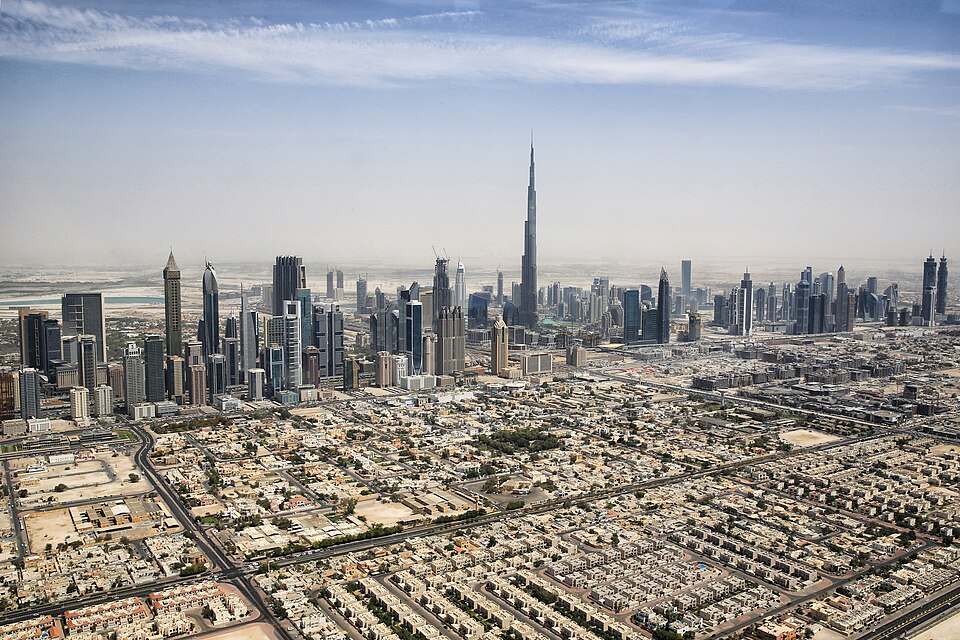
From Fishing Village to Global City
Just 50 years ago, Dubai was a small village where people made their living by fishing and diving for pearls. When oil was discovered in the region during the 1960s, everything changed. The rulers of Dubai used oil money to build roads, schools, airports, and skyscrapers at a rapid pace. Today, Dubai’s oil reserves are nearly gone, but the city kept growing by focusing on tourism, trade, and finance instead. This transformation is one of the fastest in modern history.
The Burj Khalifa and Record-Breaking Buildings
Dubai is home to the Burj Khalifa, the tallest building in the world. Completed in 2010, it stands 828 meters (2,717 feet) tall — more than twice the height of the Empire State Building. The city also boasts the Dubai Mall, the world’s largest shopping mall, which includes an aquarium, an ice rink, and hundreds of stores. Inside the Mall of the Emirates, visitors can ski on real snow at Ski Dubai, the world’s largest indoor ski slope. Dubai loves to set world records with its bold construction projects.
Islands Built by People
One of Dubai’s most famous features is its artificial islands, which were built by dumping sand and rock into the Persian Gulf. The Palm Jumeirah is shaped like a giant palm tree and can be seen from space. It contains hotels, apartments, and beaches along its fronds and trunk. Another project, called The World, is a collection of small islands arranged to look like a map of the Earth. These engineering marvels show how Dubai pushes the boundaries of what is possible.
Climate and Daily Life
Dubai has a hot desert climate, and summer temperatures can soar to 48 degrees Celsius (118 degrees Fahrenheit). Because of the extreme heat, many people spend summer days inside air-conditioned buildings, malls, and indoor attractions. Winters are much milder and pleasant, with temperatures around 20 to 25 degrees Celsius. The city receives very little rain throughout the year. Despite the harsh climate, Dubai has created lush parks and green spaces using advanced irrigation systems.
A Center for Travel and Trade
Dubai International Airport is one of the busiest airports in the world for international passengers. Millions of travelers pass through it each year on their way to destinations across Asia, Africa, and Europe. The city’s location makes it a natural crossroads between East and West. Dubai is also a major port for shipping goods, and its free-trade zones attract businesses from around the globe. The city hosts world-class events, from tennis tournaments to technology expos.
Culture and Traditions
Although Dubai is known for its modern skyscrapers, it also honors its cultural heritage. The Al Fahidi Historical Neighborhood preserves traditional wind-tower houses that were built long before air conditioning existed. Visitors can explore the Dubai Museum and learn about Bedouin traditions, pearl diving, and the desert way of life. Islam is the official religion of the UAE, and the call to prayer can be heard from mosques throughout the city. Traditional markets called souks sell gold, spices, and textiles alongside the modern shopping malls.
Why Dubai Matters
Dubai shows what can happen when a city dreams big and invests in its future. It went from a quiet coastal settlement to a world-famous destination in just a few decades. The city’s leaders focused on building infrastructure, welcoming people from every background, and creating attractions that draw visitors from around the world. Dubai continues to set ambitious goals, including plans for flying taxis and missions to Mars. It stands as an example of rapid growth and innovation in the modern world.
 OtterKnow Kids Encyclopedia