A Look Back in Time
The Elizabeth Tower was completed in 1859 as part of the rebuilt Palace of Westminster, which had been damaged by a terrible fire in 1834. The architect Charles Barry designed the new palace, while Augustus Pugin created the tower’s ornate Gothic details. Nobody knows for certain where the nickname “Big Ben” came from. Some historians believe it was named after Sir Benjamin Hall, the government official who oversaw the bell’s installation, while others think it honors Benjamin Caunt, a famous heavyweight boxing champion of that era.
The Tower Up Close
The Elizabeth Tower rises about 96 meters (316 feet) from the ground, making it one of the tallest clock towers ever built. It is constructed from limestone and features intricate carvings and ironwork in the Gothic Revival style. Over the years, underground tunneling for the London Underground and other construction has caused the tower to lean slightly, tilting about 0.26 degrees to the northwest. Engineers monitor the lean carefully, but it is not considered dangerous. Visitors who want to climb to the top must tackle 334 steps, since there is no public elevator.
The Famous Clock
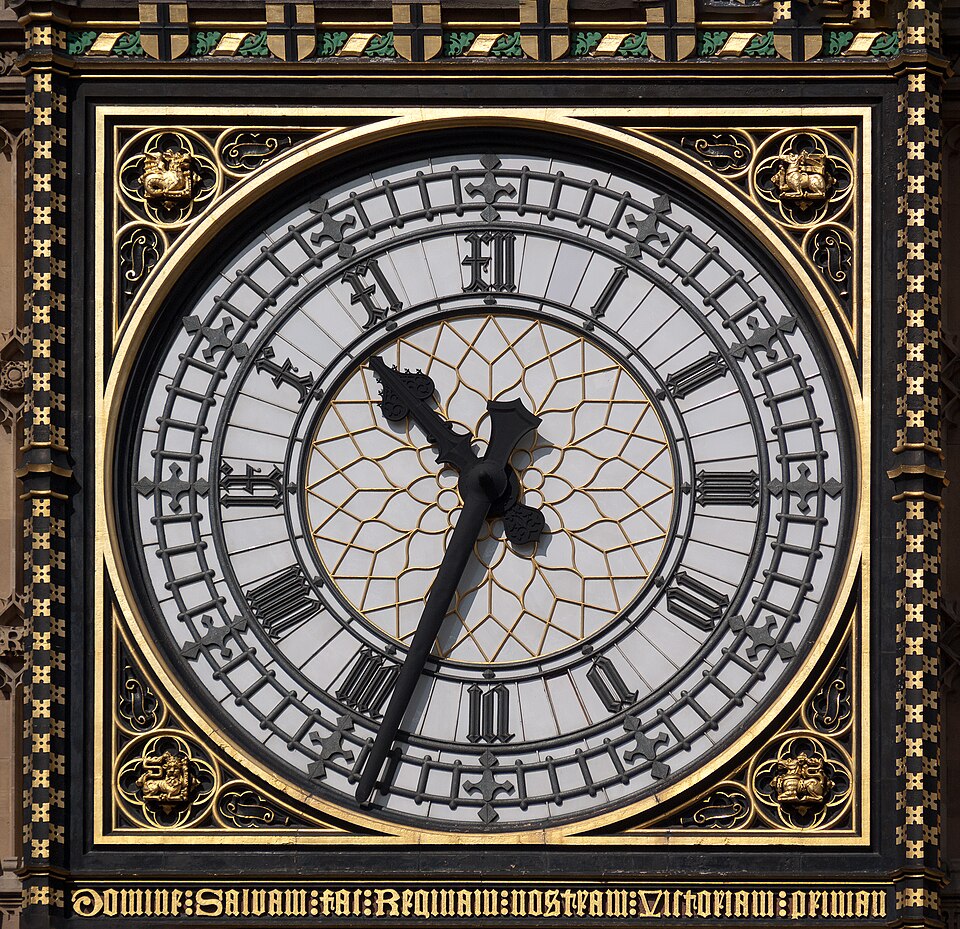
The clock on the Elizabeth Tower is one of the most accurate public timepieces in the world. Each of its four clock faces measures 7 meters (23 feet) across, large enough that the minute hands had to be made from hollow cast iron to keep them light enough to move. The hour hands are made of solid cast iron because they are shorter and do not need to be as light. The clock mechanism was originally powered entirely by gravity-driven weights that had to be wound by hand several times a week. Skilled clockmakers still maintain the mechanism today, making tiny adjustments with old pennies placed on the pendulum to keep it accurate.
The Great Bell
The Great Bell, the one truly called Big Ben, weighs an impressive 13.7 tonnes (about 13,700 kilograms). It was the second bell cast for the tower because the first one cracked during testing. The replacement bell also developed a crack shortly after it began ringing in 1859, which gives Big Ben its distinctive slightly imperfect tone. Rather than replace it again, engineers simply turned the bell so the hammer strikes a different spot. Four smaller quarter bells chime every 15 minutes, while the Great Bell strikes on the hour.
Big Ben and British Culture
The deep, resonant bongs of Big Ben have been broadcast live on BBC Radio since 1924 as a time signal, making the sound familiar to millions of listeners around the world. During World War II, the chimes were broadcast to occupied Europe as a symbol of hope and resistance. The clock continued to run throughout the war, even as bombs fell on London during the Blitz. Big Ben’s image appears on postcards, souvenirs, and in countless films and television shows, cementing its place as an icon of British identity.
Repairs and Restoration
In 2017, a major restoration project began on the Elizabeth Tower, the largest repair effort in the tower’s history. Workers cleaned and repaired the stonework, replaced damaged glass in the clock faces, and updated the mechanical systems. The Great Bell was silenced for much of the project to protect the hearing of workers nearby, though it still rang on special occasions like New Year’s Eve. The restoration was completed in early 2022, revealing the tower’s original vibrant colors that had been hidden under years of grime and pollution.
Visiting Big Ben
The Elizabeth Tower sits at the north end of the Palace of Westminster, right beside the River Thames and near Westminster Bridge. While visitors from the United Kingdom can arrange guided tours through their Members of Parliament, international tourists can admire the tower from the outside and enjoy excellent views from across the river. The surrounding area includes other famous landmarks such as Westminster Abbey and the London Eye. Big Ben remains one of the most recognizable landmarks on Earth.
 OtterKnow Kids Encyclopedia