The Story Behind the Statue
The idea to build a large religious monument on Corcovado Mountain first arose in the 1850s, but the project did not gain real momentum until the 1920s. Brazilian engineer Heitor da Silva Costa designed the statue, while French sculptor Paul Landowski created the head and hands. Construction began in 1922 and took nine years to complete, with the statue officially unveiled on October 12, 1931. Thousands of workers hauled materials up the steep mountainside, often in difficult and dangerous conditions. The finished statue was celebrated across Brazil as a major achievement of art and engineering.
How It Was Built
Building a 30-meter statue on top of a mountain was no small task. The inner structure is made of reinforced concrete, which gives the statue its strength and stability. The outer surface is covered with approximately 6 million small triangular soapstone tiles, chosen because soapstone is durable, easy to cut, and weathers beautifully over time. Workers attached each tile by hand, creating a mosaic-like surface that gives the statue its soft, light appearance. The materials had to be transported up the mountain by a small cog railway that still carries visitors today.
Where It Stands
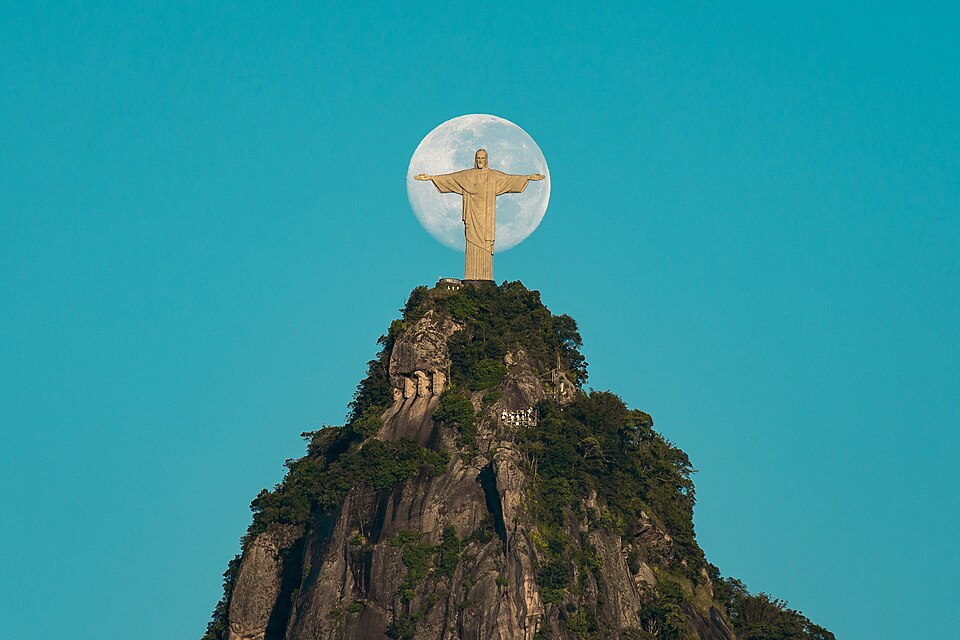
Christ the Redeemer sits at the peak of Corcovado Mountain, which rises 710 meters (2,330 feet) above sea level in the Tijuca Forest, one of the largest urban forests in the world. From this lofty perch, the statue can be seen from many neighborhoods across Rio de Janeiro and even from boats in Guanabara Bay. On clear days, visitors at the base of the statue enjoy sweeping views of the city’s beaches, mountains, and coastline. The surrounding Tijuca National Park is home to hundreds of plant and animal species, making the journey up the mountain a nature experience as well. The dramatic landscape and the towering statue together create one of the most memorable views anywhere on Earth.
Surviving the Elements
Standing at such a high elevation, Christ the Redeemer is exposed to powerful winds, heavy rain, and frequent lightning strikes. The statue is struck by lightning several times each year, and in 2014 a bolt chipped off the tip of one of its fingers. Engineers designed the statue to withstand these strikes, and repair crews regularly inspect and restore any damage. The soapstone tiles occasionally need to be replaced when they crack or fall away due to weather. Despite these challenges, the statue has stood firm on its mountaintop for nearly a century.
A Symbol of Rio and Brazil
Christ the Redeemer is far more than a religious monument. It has become the most recognizable symbol of Rio de Janeiro and one of the most famous images associated with Brazil. The statue is lit up at night in different colors to mark holidays, awareness campaigns, and sporting events. During the 2016 Summer Olympics, held in Rio, the statue served as a dramatic backdrop seen by billions of television viewers around the world. It also appears on countless postcards, posters, and souvenirs, making it one of the most widely recognized landmarks on the planet.
Visiting Christ the Redeemer
About 2 million tourists visit Christ the Redeemer each year, making it one of the most popular attractions in South America. Visitors can reach the top of Corcovado Mountain by riding the historic cog railway, which winds through the lush Tijuca Forest, or by taking vans and shuttle buses along a winding road. At the summit, an escalator and elevator help visitors reach the observation platform at the statue’s base. The best time to visit is on a clear morning, when clouds are less likely to block the panoramic views.
Why It Matters
Building such an enormous statue on a remote mountaintop in the 1920s required bold planning and years of hard work. The statue brings together art, engineering, faith, and national pride in a single image. Its selection as one of the New Seven Wonders of the World shows the admiration people around the globe feel for this landmark. For the people of Brazil, it is a source of deep pride and a reminder that great things can be accomplished when people work together.
 OtterKnow Kids Encyclopedia