How Tall Is It?
Above sea level, Mauna Loa rises 4,169 meters (13,678 feet), which makes it one of the tallest mountains in the United States. But the volcano’s true size is hidden beneath the ocean. Measured from its base on the ocean floor, Mauna Loa is over 9,000 meters tall — that is taller than Mount Everest. Its enormous weight actually pushes the ocean floor down several more kilometers, making the full structure even more impressive.
A Shield Volcano
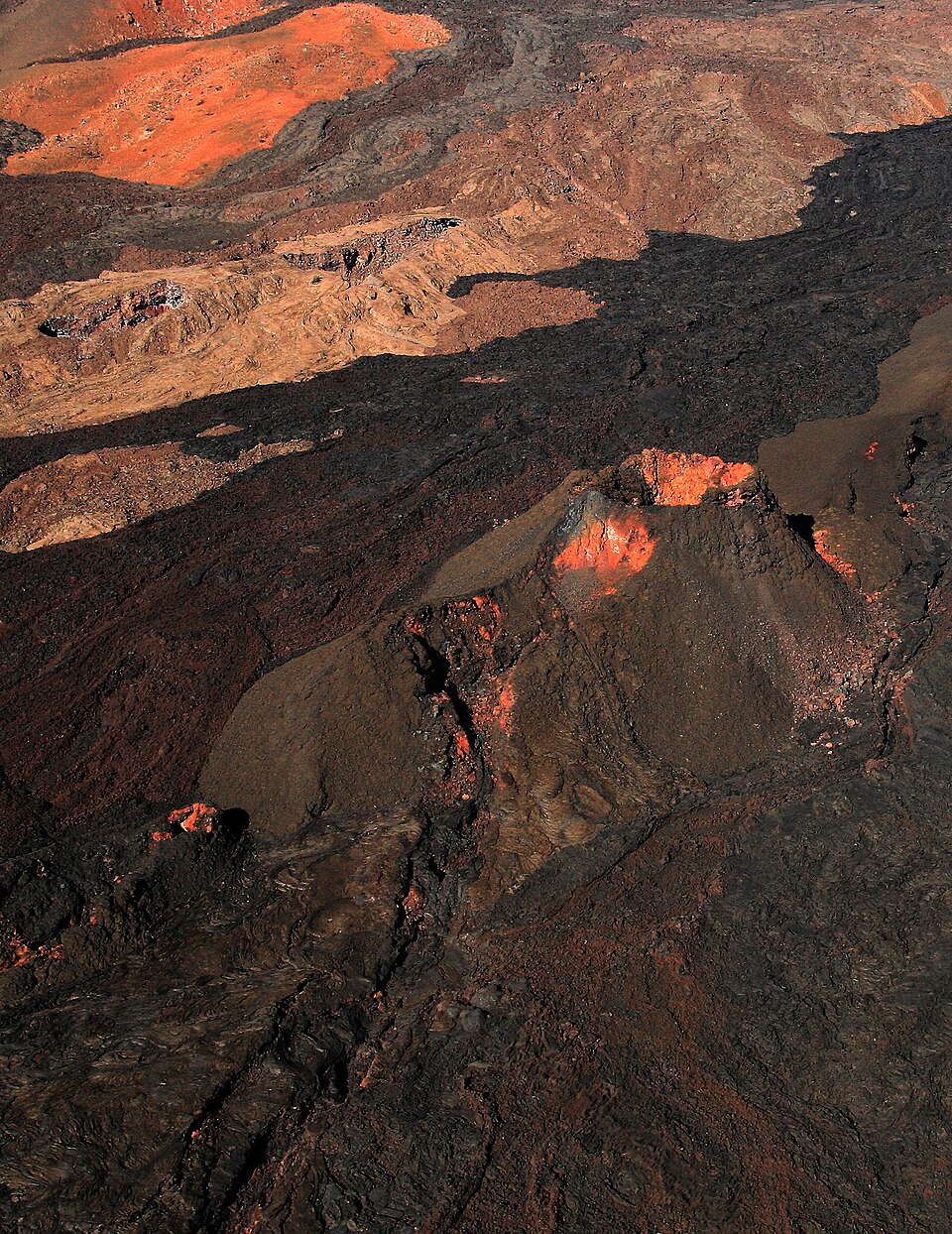
Mauna Loa is a type of volcano called a shield volcano. Shield volcanoes do not usually explode violently like some other volcanoes do. Instead, they produce fast-flowing rivers of basaltic lava that spread out in wide, gentle slopes. Over hundreds of thousands of years, these lava flows have built Mauna Loa into the massive, broad-shaped mountain it is today. The volcano makes up about 85 percent of the total volume of all the other Hawaiian Islands combined.
Eruptions
Mauna Loa has erupted 33 times since 1843, when scientists began keeping reliable records. Its most recent eruption took place in November and December of 2022, when lava flowed from the summit and down the northeast side of the mountain. Eruptions can send rivers of lava toward towns and highways, so scientists at the Hawaiian Volcano Observatory monitor the volcano constantly. Early warning systems help keep people safe when an eruption is about to happen.
The Mauna Loa Observatory
High on the slopes of Mauna Loa sits a scientific research station called the Mauna Loa Observatory. Since 1958, scientists there have been measuring the amount of carbon dioxide in the atmosphere. The data they collect is shown in a famous graph called the Keeling Curve, which clearly shows that carbon dioxide levels have been rising steadily over the decades. This record is one of the most important pieces of evidence in climate science.
Plants and Animals
Despite being an active volcano, Mauna Loa supports a surprising variety of life. Native Hawaiian plants like ohia lehua trees and ferns grow on the lower slopes where older lava flows have broken down into soil. The Ka’u Desert on the volcano’s southwest flank is a barren landscape created by volcanic gases and acid rain. Endangered species such as the Hawaiian goose (nene) and the Hawaiian hawk (io) can be found in and around the volcano’s forests.
Hawaii Volcanoes National Park
Mauna Loa is located within Hawaii Volcanoes National Park, which was established in 1916. The park protects both Mauna Loa and its neighbor, Kilauea, another active volcano. Visitors can hike trails across old lava fields, explore lava tubes, and sometimes even watch active lava flows from a safe distance. The park is a UNESCO World Heritage Site and welcomes over a million visitors each year.
Why Mauna Loa Matters
Mauna Loa is important for many reasons beyond its incredible size. Its eruptions shape the landscape of Hawaii and create new land as lava reaches the ocean. The observatory on its slopes helps scientists understand how our atmosphere is changing. For Native Hawaiians, Mauna Loa is a sacred place connected to the fire goddess Pele. Studying Mauna Loa teaches us about how volcanoes work, how islands form, and how human activity is affecting Earth’s climate.
 OtterKnow Kids Encyclopedia