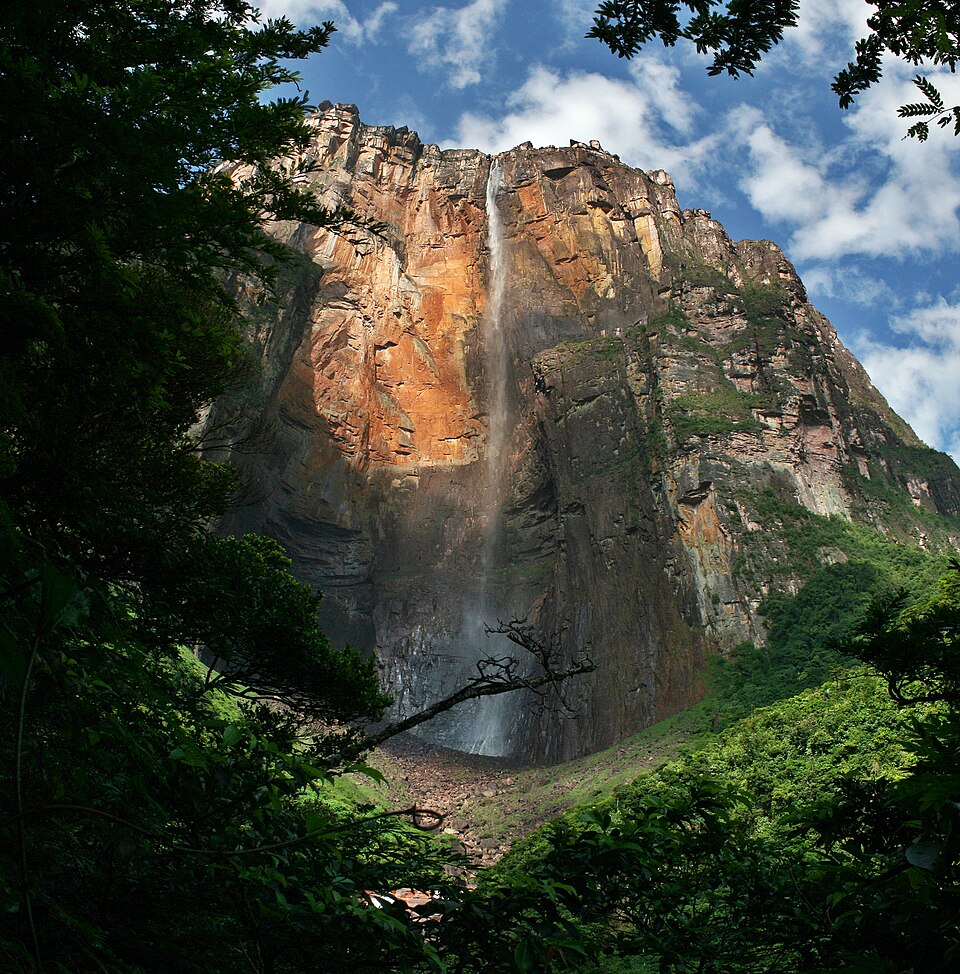
Where Angel Falls Is Located
Angel Falls sits inside Canaima National Park, a vast protected area in southeastern Venezuela’s Gran Sabana region. The park covers about 30,000 square kilometers, making it roughly the same size as the country of Belgium. Canaima National Park was named a UNESCO World Heritage Site because of its unique landscapes and incredible biodiversity. The falls pour over the edge of Auyán-tepui, one of the region’s enormous flat-topped mountains known as tepuis.
The Mysterious Tepuis
Tepuis are ancient table-top mountains with sheer cliff walls and flat summits that rise high above the surrounding jungle. The word “tepui” comes from the language of the Pemon Indigenous people and means “house of the gods.” These mountains are made of sandstone that is roughly two billion years old, making them some of the oldest geological formations on the planet. The tepuis are so isolated that many plants and animals living on their summits are found nowhere else on Earth. The strange, otherworldly tepuis inspired the British author Arthur Conan Doyle to write his 1912 adventure novel The Lost World, about explorers who discover dinosaurs living on top of a remote plateau.
How Angel Falls Got Its Name
The Pemon Indigenous people who live in the region have known about the waterfall for centuries, long before outsiders arrived. They call it Kerepakupai Meru, which means “waterfall of the deepest place” in the Pemon language. The English name comes from Jimmie Angel, an American aviator who flew over the falls in 1933 while searching for gold. In 1937, Angel returned and crash-landed his small plane on top of Auyán-tepui, and he and his companions had to hike for 11 days through dense jungle to reach safety.
Getting to Angel Falls
Reaching Angel Falls is a real adventure because there are no roads leading to the waterfall. Visitors can fly in small aircraft over the falls for an aerial view, or they can take a multi-day trip by river boat and jungle hike. The journey by boat travels up the Churún River through dense tropical rainforest before arriving at the base of the falls. The remote location means that relatively few tourists visit each year compared to more accessible waterfalls around the world.
Climate and Rainfall
The area around Angel Falls receives more than 4,000 millimeters of rain each year, which is about ten times the rainfall of most cities in the United States. This heavy rainfall feeds the rivers and streams that flow over the tepuis and create the waterfall. The rainy season runs from May through November, when the falls are at their most powerful and dramatic. During the drier months from December to April, the flow of water decreases and the falls can sometimes split into two separate streams.
Plants and Animals of Canaima
The forests and rivers surrounding Angel Falls are home to a wide variety of wildlife. Jaguars, giant anteaters, capybaras, and howler monkeys roam the jungle floor and canopy below the tepuis. Hundreds of bird species live in the area, including toucans, macaws, and the Guianan cock-of-the-rock with its bright orange feathers. The rivers are home to giant otters and freshwater dolphins, while carnivorous pitcher plants and unique orchids grow on the misty tepui summits.
Why Angel Falls Matters
Angel Falls and Canaima National Park are important for both conservation and the culture of Venezuela’s Indigenous communities. The Pemon people continue to live in the region and serve as guides and stewards of the land, sharing their deep knowledge of the landscape with visitors. Scientists study the tepuis because their isolated ecosystems can teach us about evolution and how species adapt over millions of years. Angel Falls remains one of South America’s most treasured natural wonders, drawing adventurers, researchers, and nature lovers from around the globe.
 OtterKnow Kids Encyclopedia