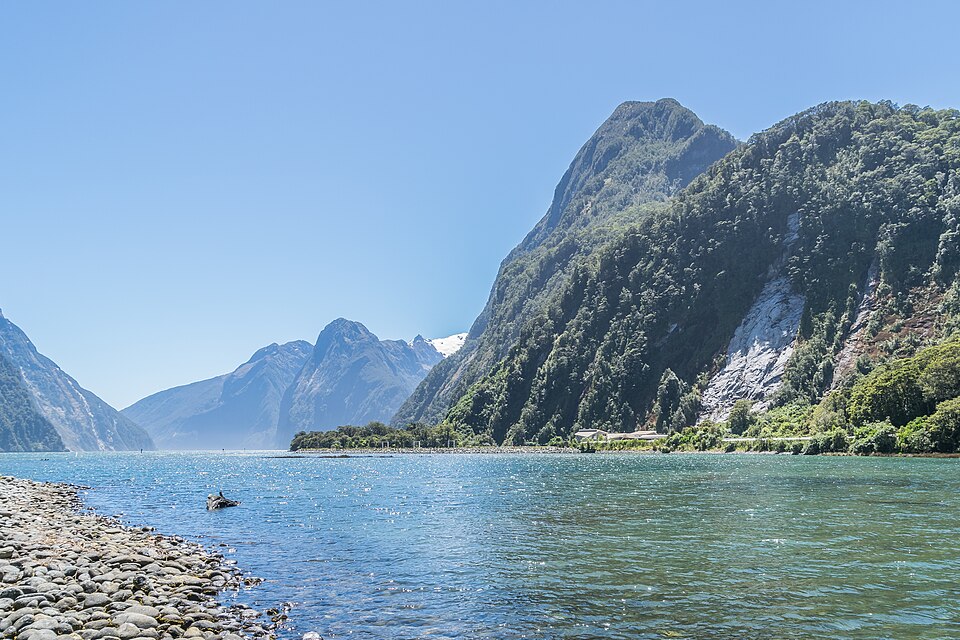
The fiords of Fiordland were carved by massive glaciers during the last ice age, which ended roughly 10,000 years ago. As the glaciers slowly moved toward the sea, they gouged deep valleys into the rock. When the glaciers melted, seawater flooded into these valleys, creating the fiords we see today. The most famous fiords are Milford Sound and Doubtful Sound, both of which plunge hundreds of meters below the water’s surface. Milford Sound is sometimes called the “Eighth Wonder of the World” because of its dramatic scenery.
One of the Wettest Places on Earth
Fiordland is one of the rainiest places in the world. Milford Sound receives up to 6,400 millimeters of rain per year, which is more than ten times the rainfall in most cities. All that rain creates spectacular temporary waterfalls that cascade down the cliff faces after a storm. The heavy rainfall also produces an unusual effect in the fiords: a layer of dark, fresh rainwater sits on top of the salty seawater below. This freshwater layer filters out sunlight, creating deep-sea-like conditions near the surface where rare corals and other deep-water species can live at unusually shallow depths.
Rare and Remarkable Wildlife
Fiordland is home to some of the rarest birds in the world. The takahe, a large flightless bird once thought to be extinct, was rediscovered here in 1948. Kiwi birds, New Zealand’s national symbol, also live in the park’s dense forests. The kea, the world’s only alpine parrot, is known for its intelligence and curiosity. In the waters of the fiords, visitors can spot bottlenose dolphins, New Zealand fur seals, and Fiordland crested penguins. The park’s isolation has helped protect these species from many of the threats they face elsewhere.
Visiting Fiordland
Despite its remote location, Milford Sound attracts about one million visitors per year. Most people reach Milford Sound by driving the famous Milford Road, a winding highway that passes through a hand-carved tunnel blasted through solid rock. Boat cruises through the fiords are the most popular way to experience the towering cliffs and waterfalls up close. The Milford Track, a 53-kilometer hiking trail, is considered one of the “Great Walks” of New Zealand and takes about four days to complete. Visitors must book ahead because only a limited number of hikers are allowed on the track each day.
Threats and Conservation
Like many wild places, Fiordland faces threats from invasive species introduced by humans. Stoats, rats, and possums prey on native birds and their eggs, putting species like the takahe and kiwi at risk. New Zealand’s Department of Conservation runs trapping and pest-control programs throughout the park to protect vulnerable wildlife. Climate change is another concern, as warmer temperatures could affect glaciers, rainfall patterns, and the unique ecosystems that depend on them. Conservation efforts in Fiordland are considered some of the most important wildlife protection projects in the Southern Hemisphere.
Why Fiordland Matters
Fiordland National Park preserves one of the last great wilderness areas on Earth. Its ancient forests, some with trees over 800 years old, have remained largely untouched by human activity. The park helps scientists understand how ecosystems develop in isolation over thousands of years. It also holds deep cultural significance for the Maori people, who have lived in and traveled through this region for centuries. Fiordland reminds us how powerful and beautiful the natural world can be when it is allowed to thrive.
 OtterKnow Kids Encyclopedia