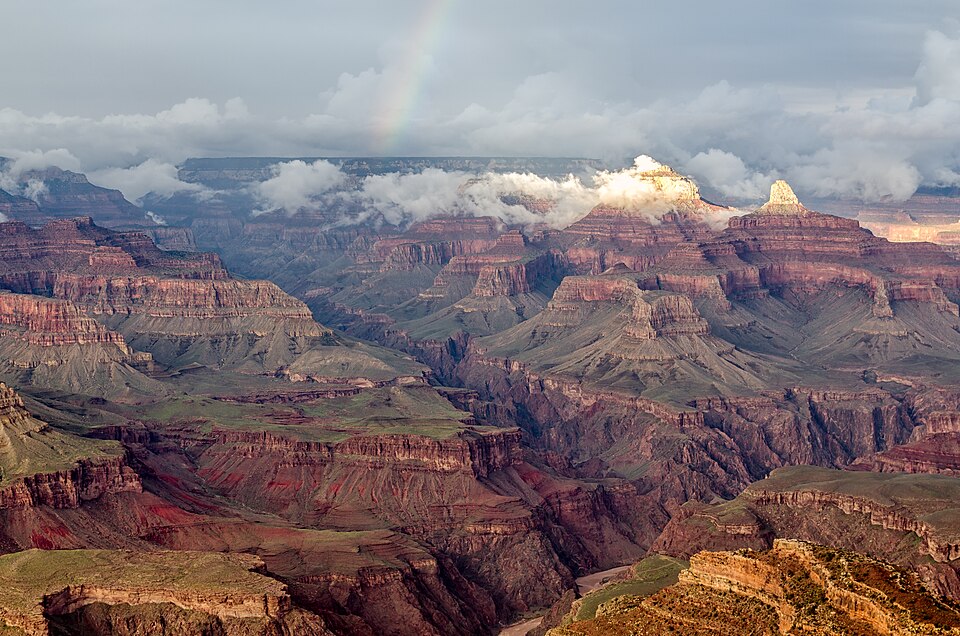
The Colorado River began carving the Grand Canyon about five to six million years ago. Over that enormous stretch of time, the flowing water slowly wore away layer after layer of rock, cutting deeper and deeper into the earth. The process of water wearing away rock is called erosion, and rain, ice, and wind also helped shape the canyon’s cliffs and side canyons. Even today, the river continues to carve the canyon a tiny bit deeper each year. The result is one of the most dramatic examples of erosion anywhere on the planet.
A Window into Earth’s History
The layered rock walls of the Grand Canyon reveal nearly two billion years of Earth’s geological history. The oldest rocks at the very bottom of the canyon are 1.7 to 1.8 billion years old, formed long before any complex life existed. Each layer above tells a different chapter of the planet’s story, from ancient seas and swamps to sandy deserts. Scientists study these layers to learn about the climates, oceans, and creatures of the distant past. Fossils of ancient marine animals, ferns, and even early reptiles have been found within the canyon’s rock.
Indigenous Peoples of the Canyon
The Havasupai, Hualapai, Navajo, Hopi, and other Indigenous nations have lived in and around the Grand Canyon for thousands of years. The Havasupai, whose name means “people of the blue-green water,” still live in Havasu Canyon, a side canyon famous for its stunning turquoise waterfalls. These communities have deep cultural and spiritual connections to the canyon and consider it a sacred place. Their knowledge of the land, water, and plants has been passed down through many generations. Today, several Indigenous nations continue to manage and protect parts of the canyon region.
Becoming a National Park
President Theodore Roosevelt visited the Grand Canyon in 1903 and was so impressed that he worked to protect it. Grand Canyon National Park was officially established in 1919, making it one of the earliest national parks in the United States. The park was later named a UNESCO World Heritage Site in recognition of its outstanding natural value. About six million people visit the park each year to hike, raft, and take in the views. The park’s rangers and scientists work to preserve the canyon for future generations.
Plants and Animals
The Grand Canyon is home to a wide variety of life, including over 1,500 plant species, 355 bird species, 89 mammal species, and 56 reptile species. At the canyon’s rim, forests of pine and juniper trees grow in the cooler air, while the hot, dry canyon floor supports desert plants like cactus and agave. California condors, one of the rarest birds in North America, soar on the canyon’s updrafts after being reintroduced to the area. Bighorn sheep scramble along rocky ledges, and ringtail cats hunt at night among the boulders. The Colorado River itself supports native fish species found nowhere else on Earth.
The Colorado River
The Colorado River flows along the bottom of the Grand Canyon for its entire length, and it is the force that created the canyon in the first place. The river begins high in the Rocky Mountains of Colorado and travels over 2,300 kilometers (1,450 miles) before reaching the Gulf of California. Rafting through the canyon on the Colorado River is one of the most popular outdoor adventures in the United States, with trips lasting from a few days to more than two weeks. The river passes through roaring rapids and calm stretches surrounded by towering rock walls. Dams built upstream, such as Glen Canyon Dam, now control the river’s flow and affect the canyon’s ecosystem.
Visiting the Grand Canyon
Most visitors experience the Grand Canyon from the South Rim, which is open year-round and offers many overlooks, trails, and visitor centers. The North Rim sits about 300 meters (1,000 feet) higher and receives more snow, so it is only open from mid-May through mid-October. Hikers can descend into the canyon on trails like the Bright Angel Trail, but the steep climb back up requires careful planning and plenty of water. The Skywalk, a glass-bottomed bridge that extends over the canyon’s edge, gives visitors a thrilling view straight down. Whether seen from the rim or from a raft on the river below, the Grand Canyon leaves a lasting impression on everyone who visits.
 OtterKnow Kids Encyclopedia