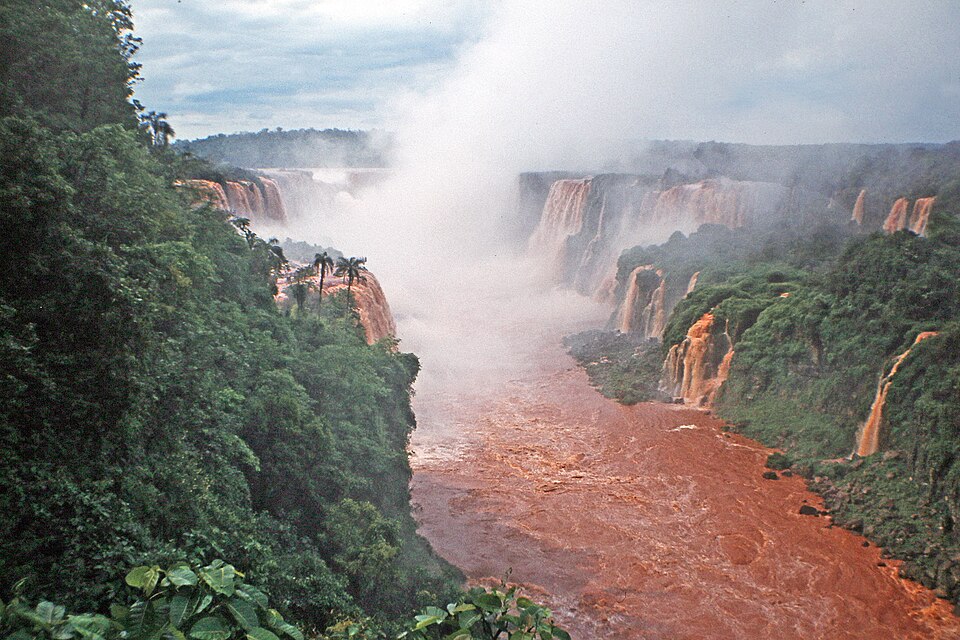
Devil’s Throat
The most dramatic section of Iguazu Falls is called Devil’s Throat, or Garganta del Diablo in Spanish. This U-shaped chasm is about 82 meters (269 feet) high, making it the tallest drop in the entire waterfall system. Water from several rivers crashes together into this narrow gap, sending up enormous clouds of mist and spray that can be seen from kilometers away. The roar of the water at Devil’s Throat is so loud that visitors sometimes have trouble hearing each other speak. On sunny days, rainbows often form in the mist, creating a spectacular sight.
The Power of the Water
On an average day, about 1,756 cubic meters of water flow over Iguazu Falls every second. To picture that, imagine filling about 700 swimming pools every minute. During heavy rains and flood seasons, the flow can increase dramatically, sometimes reaching over 12,000 cubic meters per second. At those times, the individual waterfalls merge together into one enormous wall of rushing water. The constant force of the water has slowly shaped the rocky cliffs over thousands of years, carving out the landscape we see today.
Two Countries, Two Views
One of the unique things about Iguazu Falls is that visitors can experience them from two completely different countries. On the Brazilian side, walkways along the canyon rim offer wide, panoramic views of the entire waterfall system spread out before you. On the Argentinian side, a network of metal catwalks lets visitors walk right above and among the falls, getting close enough to feel the spray on their faces. Many travelers visit both sides to get the full experience. Former U.S. First Lady Eleanor Roosevelt reportedly exclaimed “Poor Niagara!” when she first saw Iguazu Falls, comparing them to the famous Niagara Falls in North America.
Wildlife in the Surrounding Forest
The falls are surrounded by lush subtropical rainforest that is home to many kinds of wildlife. Jaguars, tapirs, and giant anteaters roam the forest floor, though they are rarely spotted by visitors. Colorful toucans fly through the treetops, and thousands of butterflies flutter around the walkways, sometimes landing on visitors. The warm, misty environment near the falls creates perfect conditions for many species of plants, insects, and amphibians. Both Argentina and Brazil have created national parks around their sections of the falls to protect this rich ecosystem.
A World Heritage Site
Both the Argentine and Brazilian national parks surrounding Iguazu Falls have been named UNESCO World Heritage Sites, meaning they are recognized as places of outstanding importance to all of humanity. In 2011, Iguazu Falls was also voted one of the New Seven Wonders of Nature, alongside places like the Amazon Rainforest and Ha Long Bay. These honors help draw attention to the need to protect the falls and their surrounding environment. Conservation efforts focus on preserving the forest habitat and keeping the river water clean. Millions of visitors come to see the falls each year, making tourism an important part of the local economy.
Visiting Iguazu Falls
Most visitors fly into nearby cities on either side of the border, such as Puerto Iguazu in Argentina or Foz do Iguacu in Brazil. The national parks on both sides have well-maintained trails, walkways, and viewing platforms that make it easy to explore. Boat tours take adventurous visitors right to the base of some of the waterfalls, where they get completely soaked by the spray. The tropical climate means the area is warm and humid year-round, with the heaviest rains falling between December and March. Visiting during the rainy season means more water flowing over the falls, while the drier months offer clearer skies and better visibility.
 OtterKnow Kids Encyclopedia