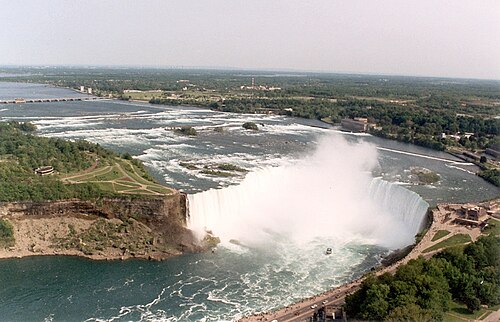
Niagara Falls formed about 12,000 years ago at the end of the last ice age. Enormous glaciers that had covered much of North America began to melt and retreat northward. The meltwater carved new channels through the rock, creating the Niagara River that connects Lake Erie to Lake Ontario. As the river rushed over a steep cliff of hard rock, it created the waterfalls we see today. Over thousands of years, the falls have slowly changed shape as water continues to wear away the rock beneath them.
The Power of Falling Water
During peak flow, about 168,000 cubic meters of water pour over Horseshoe Falls every single minute. That is enough water to fill more than 60 Olympic swimming pools in just one minute. The crashing water creates a thick mist that rises high into the air and can be seen from far away. On sunny days, rainbows often appear in the mist, adding color to the scene. The roar of the water is so loud that visitors standing nearby sometimes have to shout to be heard.
Erosion and Change
Niagara Falls is not staying in one place. The constant force of water erodes the rock at the base of the falls, causing chunks to break off and the falls to move upstream. Scientists estimate that the falls shift about 30 centimeters (1 foot) upstream each year. Over the past 12,000 years, the falls have moved about 11 kilometers (7 miles) from their original location near the mouth of the Niagara Gorge. Engineers have worked to slow down this erosion by diverting some of the water and reinforcing parts of the rock.
Hydroelectric Power
Niagara Falls generates enormous amounts of hydroelectric power for both the United States and Canada. Engineers built tunnels and canals to divert water from the Niagara River to large power plants nearby. About 50 to 75 percent of the river’s flow is sent through these tunnels, especially at night when fewer tourists are watching the falls. The electricity produced at Niagara powers homes, schools, and businesses across Ontario and New York State. Niagara Falls was one of the first places in the world to generate large-scale hydroelectric power, starting in the 1890s.
Daredevils and Famous Stunts
Niagara Falls has attracted daredevils for more than 150 years. In 1859 and 1860, a tightrope walker named Charles Blondin crossed the gorge below the falls on a rope multiple times, sometimes carrying a person on his back or cooking an omelet in the middle. In 1901, a 63-year-old teacher named Annie Edson Taylor became the first person to survive going over the falls in a barrel. Since then, other people have attempted the same stunt, though it is extremely dangerous and is now illegal. The falls have inspired countless visitors with their beauty, but they also demand respect for their incredible power.
Visiting Niagara Falls
Tourists can experience Niagara Falls from both the Canadian and American sides of the border. Popular attractions include boat tours that take visitors close to the base of the falls, where they can feel the mist and hear the thundering water up close. Observation decks and walkways offer views from above and behind the curtain of water. The area around the falls includes parks, gardens, and museums that teach visitors about the history and geology of this natural wonder. At night, powerful colored lights illuminate the falls, creating a colorful display.
Why Niagara Falls Matters
Niagara Falls is important for many reasons beyond its beauty. The hydroelectric power stations supply clean, renewable energy to millions of people. The falls support a huge tourism industry that provides jobs and income for communities on both sides of the border. Scientists study the falls to learn about erosion, geology, and how rivers shape the land over time. Niagara Falls reminds us of the awesome power of nature and the importance of protecting our planet’s most remarkable places.
 OtterKnow Kids Encyclopedia