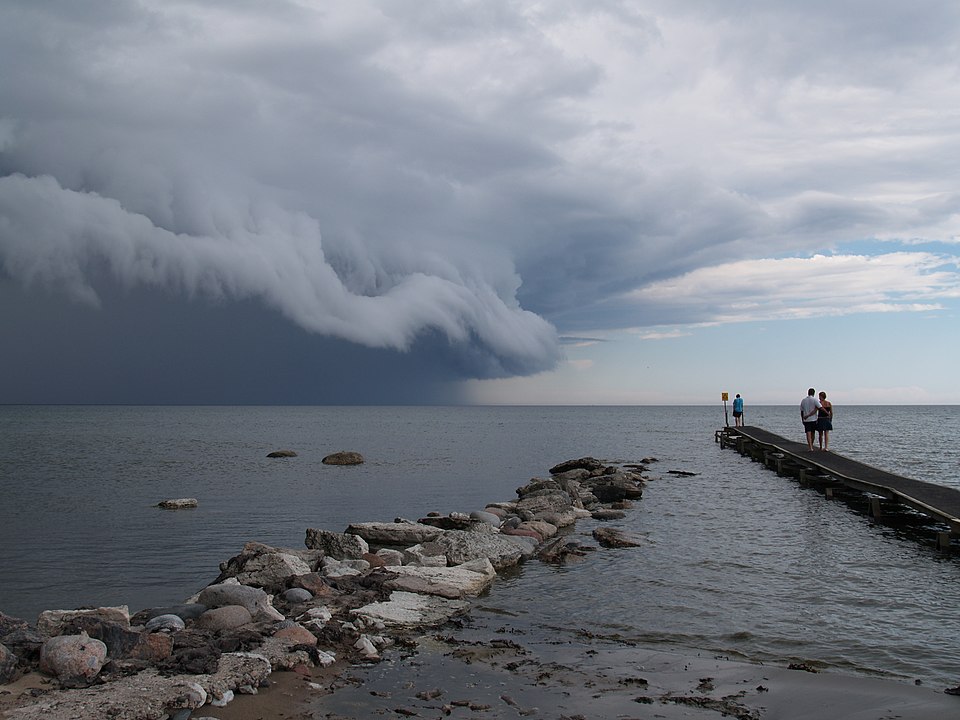
Brackish Water
One of the most unusual things about the Baltic Sea is its water. It is one of the largest bodies of brackish water on Earth, which means its water is a mixture of salt water and fresh water. Dozens of rivers flow into the Baltic, pouring in huge amounts of fresh water from the surrounding countries. Because the narrow straits limit how much salty ocean water can flow in, the Baltic stays much less salty than the open ocean. In some northern parts, the water is so low in salt that it is almost fresh enough to drink.
Wildlife of the Baltic
The Baltic Sea’s unusual mix of salt and fresh water means the animals that live there must be able to handle changing conditions. Important fish species include Baltic cod, herring, and sprat, which have supported fishing communities for centuries. Marine mammals such as gray seals, ringed seals, and harbor porpoises also make the Baltic their home. Because the salinity is so low, the Baltic has fewer species than the open ocean, but the creatures that do live there are specially adapted to this unique environment.
Freezing Winters
The Baltic Sea is one of the few seas in the world where large areas freeze over every winter. The northern section, called the Gulf of Bothnia between Sweden and Finland, regularly develops thick ice cover from November through May. In extremely cold winters, ice can spread across most of the sea’s surface. Icebreaker ships are used to keep shipping lanes open so that cargo vessels can still travel through the frozen waters. The ice has also shaped local culture, with people historically traveling across frozen stretches by sled or even on foot.
Baltic Amber
For thousands of years, people have collected a golden treasure along Baltic beaches: amber. Baltic amber is fossilized tree resin that formed from ancient forests tens of millions of years ago. Waves and storms wash pieces of amber onto the shore, where beachcombers can find them among the sand and pebbles. Ancient civilizations traded Baltic amber across Europe and as far as the Mediterranean, valuing it for jewelry and decoration. Some pieces of amber contain tiny insects or plant fragments trapped inside, giving scientists a window into life millions of years ago.
Trade and History
The Baltic Sea has been an important route for trade and travel for over a thousand years. During the Middle Ages, a powerful network of merchant cities called the Hanseatic League dominated Baltic trade from the 13th through the 17th centuries. These cities, including Lubeck, Gdansk, and Riga, grew wealthy by trading goods like timber, furs, grain, and fish. Control of the Baltic was so valuable that many wars were fought over its ports and shipping lanes. Today, the Baltic remains a busy waterway, with modern cargo ships carrying goods between the countries that line its shores.
Environmental Challenges
The Baltic Sea faces serious environmental problems because it is nearly enclosed and surrounded by densely populated, industrialized countries. Agricultural runoff carrying fertilizers flows into the sea from surrounding farmland, causing harmful algal blooms that use up oxygen in the water. Industrial pollution and sewage have also damaged water quality over many decades. The limited water exchange through the narrow Danish straits means that pollutants stay trapped in the Baltic for a long time. The countries around the Baltic have joined together through organizations like HELCOM to reduce pollution and protect this vulnerable sea.
The Baltic Today
Today, millions of people live along the Baltic Sea’s coastline, and the sea remains central to the region’s economy and way of life. Fishing, shipping, and tourism all depend on healthy Baltic waters. Coastal cities like Stockholm, Helsinki, Tallinn, and Copenhagen attract visitors who come to enjoy the sea’s beaches, harbors, and island archipelagos. Scientists continue to study the Baltic closely, working to understand how climate change and human activity affect its delicate ecosystem. Protecting the Baltic Sea is a shared responsibility for all the nations that call its shores home.
 OtterKnow Kids Encyclopedia