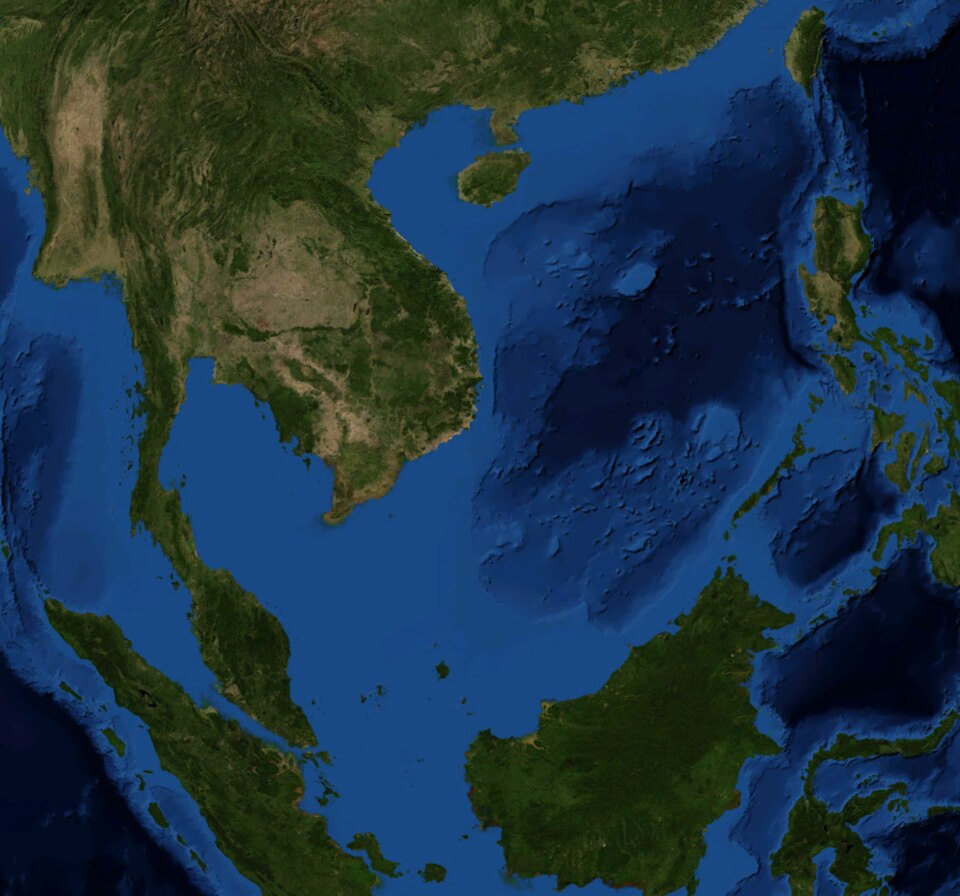
Size and Depth
The South China Sea ranks among the largest seas on the planet by area. Its average depth is about 1,212 meters, but the seafloor drops much deeper in certain places. The deepest known point is the West Philippine Deep (also called the Manila Trench), which plunges to roughly 5,016 meters below the surface. That is deep enough to stack more than five Burj Khalifas, the world’s tallest building, on top of each other. The sea’s floor includes broad, shallow continental shelves near the coasts and steep underwater slopes farther out.
Islands and Reefs
Thousands of small islands, atolls, rocky outcrops, and coral reefs are scattered across the South China Sea. The two most well-known groups are the Spratly Islands in the south and the Paracel Islands in the north. Many of these islands are tiny, some barely poking above the water at high tide. Several countries, including China, Vietnam, the Philippines, Malaysia, Brunei, and Taiwan, all claim ownership of some of these islands, making the South China Sea one of the most politically contested bodies of water in the world. The disputes involve questions about fishing rights, shipping lanes, and possible oil and gas reserves beneath the seabed.
Marine Life and Coral Reefs
The South China Sea is home to an incredible variety of ocean life. Its southern waters overlap with the Coral Triangle, an area recognized as the center of the world’s marine biodiversity. Colorful coral reefs shelter thousands of species of fish, sea turtles, clams, and other creatures. Larger animals such as whale sharks, manta rays, and dolphins swim through its waters. However, overfishing and pollution threaten many of these species, and scientists are working to understand how to better protect the sea’s ecosystems.
Importance for Trade and Shipping
The South China Sea is one of the most important waterways for global trade. Roughly one-third of the world’s shipping passes through it each year, carrying goods worth an estimated three to five trillion dollars. Giant container ships, oil tankers, and cargo vessels use the sea as a shortcut between the Indian Ocean and the Pacific Ocean. The Strait of Malacca, at the sea’s southwestern edge, is one of the busiest shipping lanes on Earth. Because so much trade depends on safe passage through these waters, many countries pay close attention to what happens in the region.
Natural Resources
Beneath the South China Sea’s floor lie significant reserves of oil and natural gas, though exactly how much remains debated among scientists. Fishing is another vital resource, providing food for hundreds of millions of people in the countries that border the sea. Nations such as Vietnam, the Philippines, China, and Malaysia depend on its fish stocks for both food security and jobs. Coral reefs also support local fishing communities by serving as nurseries where young fish grow. Competition over these resources is one reason the sea’s islands and reefs are so hotly disputed.
Weather and Typhoons
The South China Sea sits in a tropical zone where warm water temperatures fuel powerful storms. Typhoons, which are the same type of storm as hurricanes, frequently form over or pass through the sea between June and November. These storms can bring destructive winds, heavy rainfall, and dangerous storm surges to the Philippines, Vietnam, and southern China. Coastal communities have developed early-warning systems and evacuation plans to protect people when typhoons approach. The warm, moist air rising from the sea also drives the monsoon seasons that bring rain to much of Southeast Asia.
People and Culture
For centuries, the South China Sea has shaped the lives of people living along its shores. Ancient traders sailed its waters to exchange silk, spices, and ceramics between China, Southeast Asia, and the Indian Ocean world. Today, millions of fishers still head out onto the sea each day in boats large and small. Coastal cities like Ho Chi Minh City, Manila, and Hong Kong grew in part because of their connections to the sea’s trade routes. The South China Sea remains central to the economy, culture, and daily life of the region’s diverse populations.
 OtterKnow Kids Encyclopedia