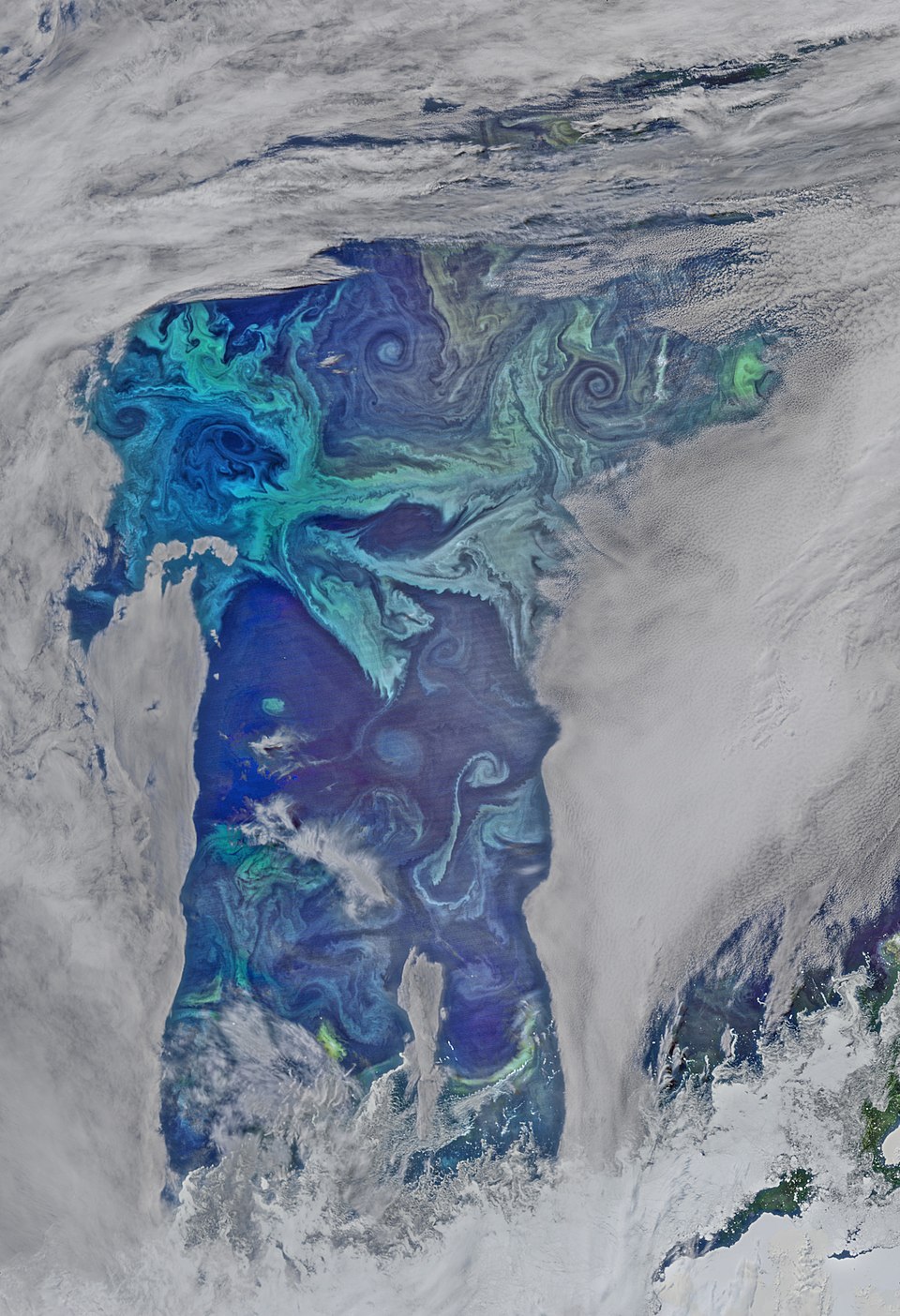
Boundaries and Geography
Unlike most oceans, the Southern Ocean has no continents or large landmasses forming its northern boundary. Instead, scientists define its edge using the Antarctic Convergence, also known as the Antarctic Polar Front. This is the zone where cold Antarctic waters meet warmer sub-Antarctic waters, creating a natural boundary that affects water temperature, salinity, and marine life. The convergence typically lies between 48 and 61 degrees south latitude, shifting slightly with the seasons. South of this line, the water temperature drops sharply, and the ocean takes on a distinctly different character.
The Antarctic Circumpolar Current
The Southern Ocean is home to the most powerful ocean current on Earth: the Antarctic Circumpolar Current. This massive current flows from west to east around Antarctica without any land to block its path, making it the only current that circles the entire globe. It moves about 130 million cubic meters of water per second, far more than any river on Earth. The current acts like a barrier, keeping the cold Antarctic waters separated from the warmer waters to the north. By isolating Antarctica’s waters, the current helps keep the continent frozen and influences weather patterns around the world.
Wild Winds and Waves
Sailors have long feared the Southern Ocean for its fierce storms and enormous waves. The bands of wind that blow across the ocean have dramatic nicknames: the Roaring Forties (around 40 degrees south), the Furious Fifties, and the Screaming Sixties. Because there is almost no land at these latitudes to slow them down, winds build up tremendous speed and push waves to towering heights. Some waves in the Southern Ocean can reach over 20 meters tall. These conditions made early voyages to Antarctica among the most dangerous journeys in the history of exploration.
Marine Life
Despite its harsh conditions, the Southern Ocean teems with life. Antarctic krill, small shrimp-like creatures, are among the most abundant animals on Earth, and a single swarm can weigh up to two million tons. Krill form the foundation of the food chain, feeding penguins, seals, whales, and seabirds. Six species of penguins breed in or near the Southern Ocean, including emperor penguins and Adelie penguins. Blue whales, humpback whales, and orcas migrate to these waters to feast on krill during the Antarctic summer. Leopard seals patrol the ice edges, hunting penguins and fish.
Sea Ice and Icebergs
The Southern Ocean is partly covered by sea ice that grows and shrinks dramatically with the seasons. During the Antarctic winter, sea ice roughly doubles in area, extending far from the continent and covering millions of square kilometers. In summer, much of it melts back, opening up water for ships and wildlife. Enormous icebergs also break off, or calve, from Antarctica’s ice shelves and float through the Southern Ocean. Some of these icebergs are enormous, occasionally larger than small countries. The cycle of freezing and melting plays an important role in regulating global ocean temperatures and sea levels.
Climate and Global Importance
The Southern Ocean has a major influence on Earth’s climate. Its cold waters absorb large amounts of carbon dioxide from the atmosphere, helping to slow climate change. Deep, cold water that sinks near Antarctica drives a global system of ocean currents sometimes called the “global conveyor belt,” which distributes heat around the planet. Scientists study the Southern Ocean closely because changes in its ice, temperature, and currents can affect weather and sea levels worldwide. Warming temperatures in recent decades have raised concerns about the stability of Antarctic ice sheets and what that could mean for coastal communities everywhere.
Exploration and Protection
Humans have explored the Southern Ocean for only a few centuries. Early explorers like James Cook crossed into its waters in the 1770s, and the first confirmed sighting of Antarctica did not happen until 1820. Today, research stations dot the Antarctic coast, and scientists from many countries study the ocean’s unique environment. The Antarctic Treaty System, signed in 1959, helps protect the region by setting it aside for peaceful scientific research. The Commission for the Conservation of Antarctic Marine Living Resources works to manage fishing and protect species like krill, ensuring that this remote ocean remains healthy for generations to come.
 OtterKnow Kids Encyclopedia