History
The Ohlone (Muwekma) people inhabited the Oakland area for thousands of years before Spanish colonizers arrived in the late 1700s. The region was part of a large Mexican land grant called Rancho San Antonio until California became a U.S. state in 1850. Oakland was officially incorporated as a city in 1852 and grew rapidly after the Transcontinental Railroad chose it as its western terminus in 1869, connecting it to the rest of the country by rail. In 1906, when a devastating earthquake and fire struck San Francisco, thousands of refugees crossed the bay and settled in Oakland, causing the city’s population to surge. Throughout the 20th century, Oakland became an important hub for shipping, manufacturing, and civil rights activism.
Neighborhoods and Culture
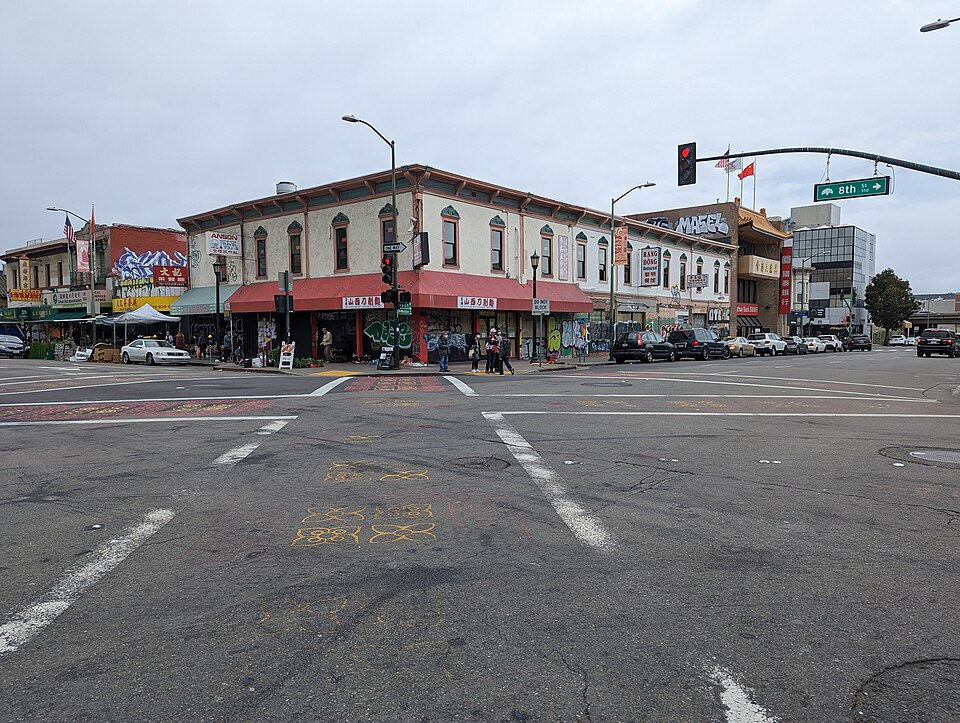
Oakland is made up of over 100 distinct neighborhoods, each with its own character and history. Chinatown, established in the 1850s, is one of the oldest in the country and remains an active center of Asian American culture with restaurants, markets, and community organizations. The Temescal district is known for its arts scene, murals, and popular “alley” of small shops. Rockridge features tree-lined streets and a walkable shopping district along College Avenue. Oakland’s diversity has made it a powerhouse for music and art, playing an important role in the development of blues, jazz, funk, and hip-hop.
Lake Merritt and Parks
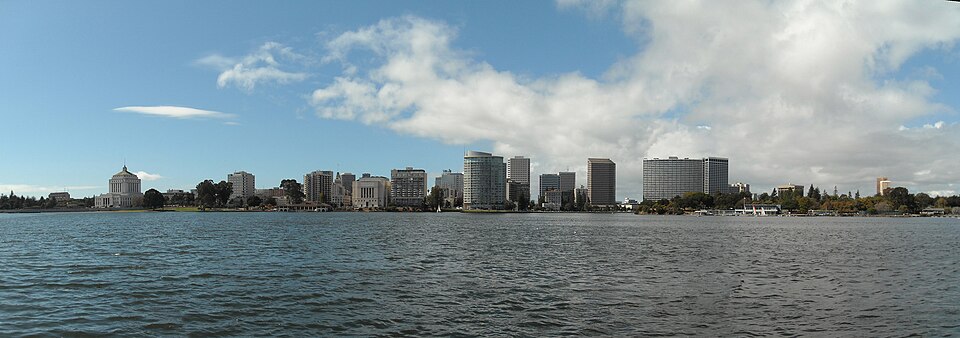
Lake Merritt is a 155-acre tidal lagoon in the heart of downtown Oakland and one of the city’s most beloved landmarks. In 1870, it became the first official wildlife refuge in the United States when the California State Legislature passed a law protecting the birds that nested there. Today people jog, bike, and picnic around its 3.4-mile shoreline path. On the lake’s north shore sits Children’s Fairyland, a storybook-themed amusement park that opened in 1950 and is widely credited with inspiring Walt Disney to build Disneyland. Oakland also has over 100 parks, including the sprawling 1,830-acre Redwood Regional Park, home to towering coast redwood trees.
Transportation
Oakland is one of the most important transportation hubs on the West Coast. The Port of Oakland is the busiest container port in Northern California and one of the top ten in the entire country, handling millions of shipping containers every year. Oakland International Airport connects the city to destinations across the country and around the world. The Bay Area Rapid Transit (BART) system, which has several stations throughout Oakland, carries commuters through the 3.6-mile Transbay Tube beneath San Francisco Bay — the longest underwater transit tunnel in North America. The Bay Bridge, stretching about 4.5 miles, provides a direct road link between Oakland and San Francisco.
The Oakland Zoo
The Oakland Zoo is a 100-acre zoological park located in the hills of Knowland Park in eastern Oakland. It is home to over 850 animals representing more than 100 different species. One of its most popular areas is the California Trail, a large exhibit that showcases native California wildlife including grizzly bears, mountain lions, bald eagles, and gray wolves. The zoo is also committed to conservation, participating in breeding programs for endangered species and supporting wildlife protection efforts around the world.
Fun Facts
- Lake Merritt became America’s first official wildlife refuge in 1870 — more than 30 years before the federal wildlife refuge system was created.
- Children’s Fairyland, which opened in 1950, is believed to have inspired Walt Disney to create Disneyland after he visited the park.
- Oakland’s port handles about 99 percent of all containerized goods moving through Northern California.
- The city is home to over 800 murals, earning it a reputation as one of the top street-art cities in the United States.
- BART’s Transbay Tube, which runs 135 feet below the surface of the bay, was an engineering marvel when it opened in 1974.
 OtterKnow Kids Encyclopedia