What They Look Like
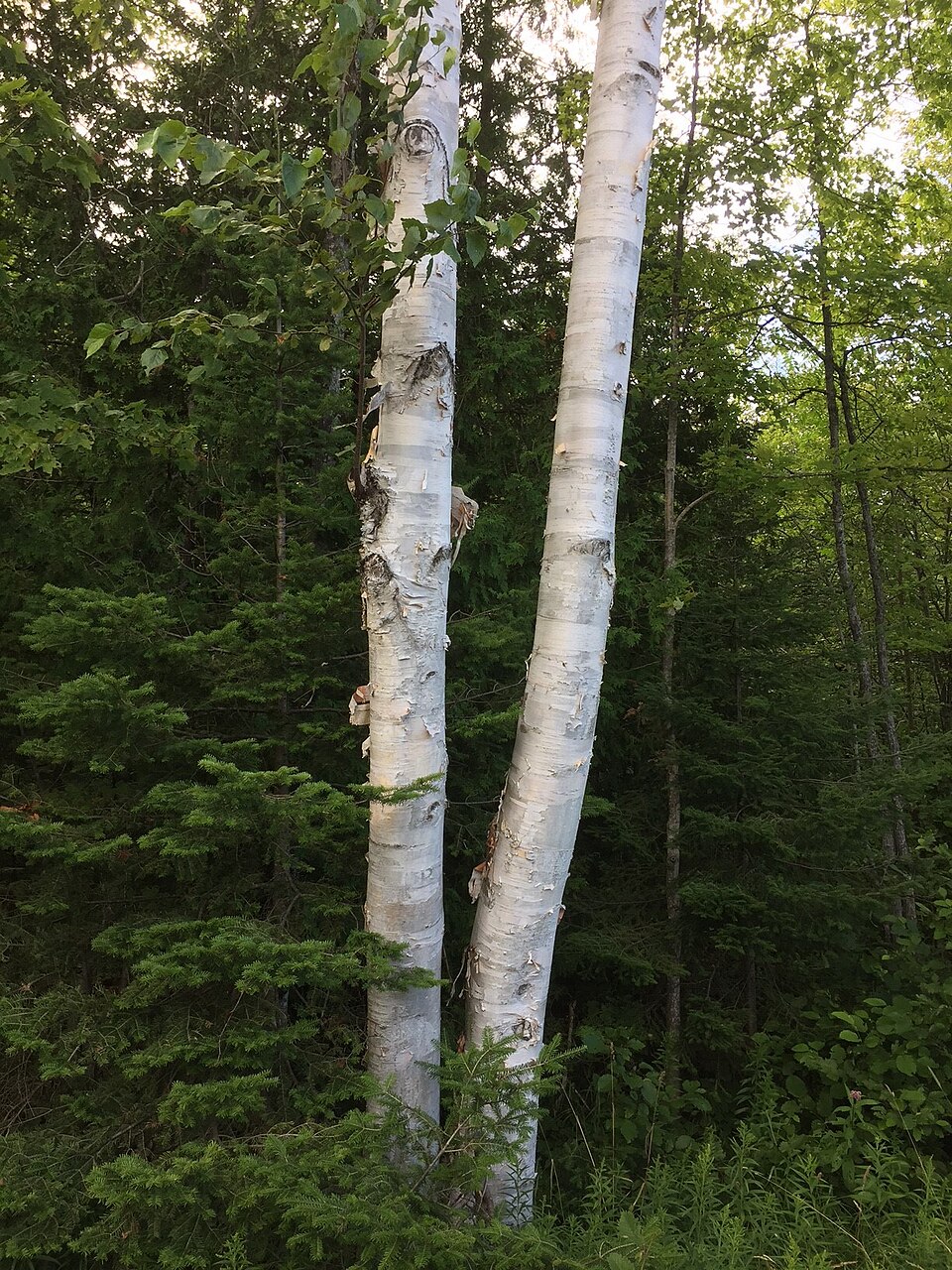
The most famous feature of a birch tree is its papery bark, which peels off in thin, horizontal strips. Depending on the species, birch bark can be bright white, silvery gray, yellowish, or even reddish-brown. The bark of white birches contains a waxy chemical called betulin, which makes it waterproof, fire-resistant, and naturally antimicrobial. Birch leaves are small and triangular with toothed edges, and they turn a rich golden yellow in autumn. Instead of showy flowers, birches produce dangling clusters called catkins that release tiny seeds carried by the wind.
Where They Grow
Birch trees prefer cool, moist environments and are common across Canada, the northern United States, Scandinavia, Russia, and northern Asia. They often grow near rivers, lakes, and wetlands where the soil stays damp. Because birches are pioneer species, they quickly colonize disturbed land such as abandoned fields or areas damaged by forest fires. Paper birch forests are especially common in the boreal regions of Canada and Alaska. In Europe, silver birches are one of the most widespread trees, thriving from the Scottish Highlands to the forests of Siberia.
How People Use Them
For thousands of years, people have found clever uses for birch trees. Native American peoples built lightweight, waterproof canoes from birch bark, which could be carried between rivers and repaired easily on the trail. In the spring, birch sap can be tapped much like maple sap and turned into a sweet syrup or a refreshing drink. Birch wood is pale and strong, making it popular for furniture, plywood, and even toothpicks. The bark’s natural waterproofing made it ideal for writing material, roofing, and containers long before paper was widely available.
Fun Facts
A single birch catkin can release hundreds of tiny seeds, each one light enough to travel long distances on the wind. Birch bark will burn even when soaking wet because of its waxy betulin coating, making it a favorite fire-starter for campers and wilderness survivors. In Finland, people bundle birch twigs into small brooms called vihta and use them in traditional saunas to improve circulation. The birch tree is the national tree of Finland and also of Russia, where it appears in countless folk songs and paintings. Some ancient birch bark manuscripts found in India and Central Asia are over 2,000 years old and still readable today.
 OtterKnow Kids Encyclopedia