What They Look Like
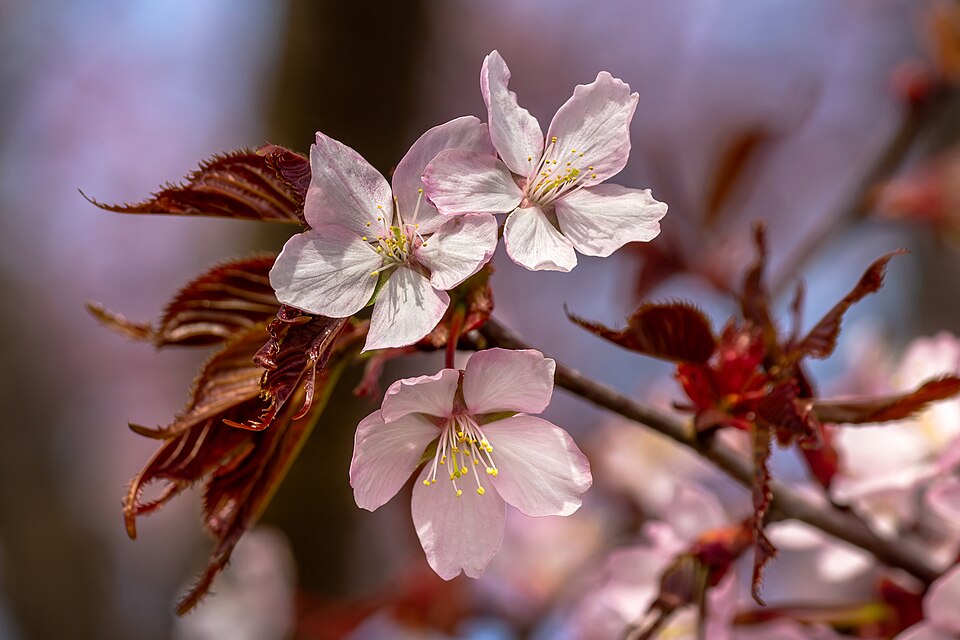
Cherry blossom trees are medium-sized, usually growing between 15 and 30 feet tall, with graceful spreading branches. Their flowers appear in clusters and range in color from pure white to deep pink, with some varieties producing blossoms that shift color as they age. Each flower typically has five petals, though some cultivated varieties called “double blossoms” can have 20 or more petals packed tightly together. The blooming period is remarkably short, lasting only one to two weeks before the petals fall like snow. Most ornamental cherry blossom trees are sterile, meaning they do not produce fruit, because breeders focused all the tree’s energy on producing as many flowers as possible.
Cherry Blossoms in Culture
In Japan, the tradition of hanami, or flower viewing, dates back over a thousand years. Families and friends gather under blooming cherry trees to have picnics, share food, and celebrate the arrival of spring. The Japanese concept of mono no aware, which means a bittersweet awareness of impermanence, is closely tied to cherry blossoms because their beauty fades so quickly. Cherry blossoms appear on Japanese coins, clothing, art, and even military emblems. The trees have become such a powerful cultural symbol that Japan’s weather service tracks and forecasts the “cherry blossom front” as it moves northward across the country each spring.
Cherry Blossoms Around the World
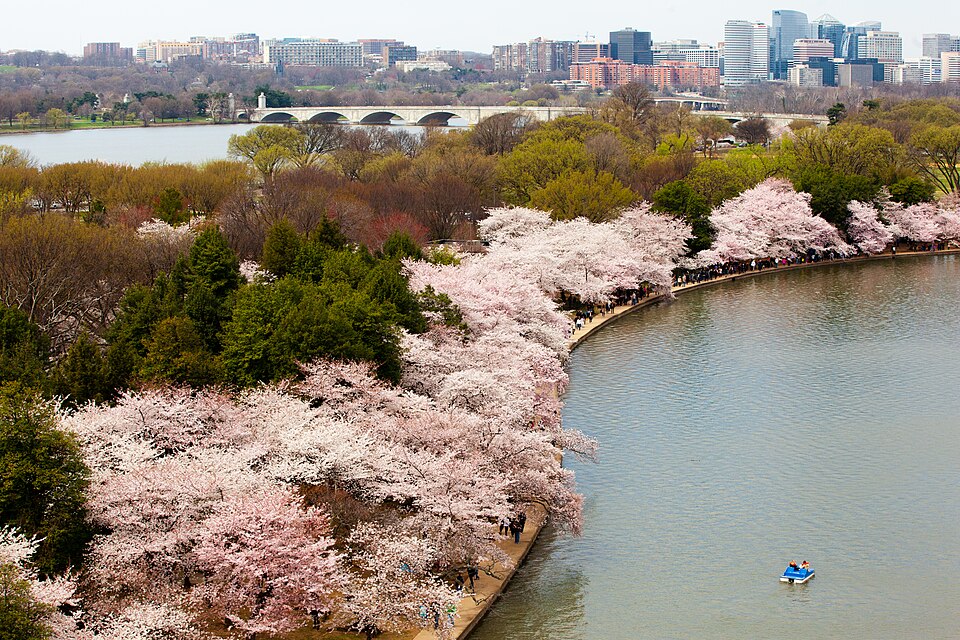
In 1912, Japan gave 3,020 cherry blossom trees to the United States as a gift of friendship, and they were planted around the Tidal Basin in Washington, D.C. Every spring, the National Cherry Blossom Festival draws over a million visitors who come to see the trees in full bloom along the Potomac River. Cherry blossoms now grow in many other cities around the world, including London, Paris, Vancouver, and Seoul. South Korea holds its own cherry blossom festivals, and the city of Jinhae hosts one of the largest, attracting millions of visitors each year. These trees have become a global symbol of friendship and renewal.
Fun Facts
Japanese scientists have developed ways to predict the exact day cherry blossoms will open by tracking winter temperatures and warm spring days. The oldest known cherry blossom tree in Japan is the Jindai Zakura, believed to be around 2,000 years old and still blooming every spring. In 2008, cherry tree seeds were taken to the International Space Station and spent eight months orbiting Earth before being planted back in Japan. Some of those “space cherry trees” bloomed years earlier than expected, puzzling scientists. The falling cherry blossom petals are so beloved in Japan that the phenomenon even has its own word: hanafubuki, meaning “flower blizzard.”
 OtterKnow Kids Encyclopedia