What They Look Like
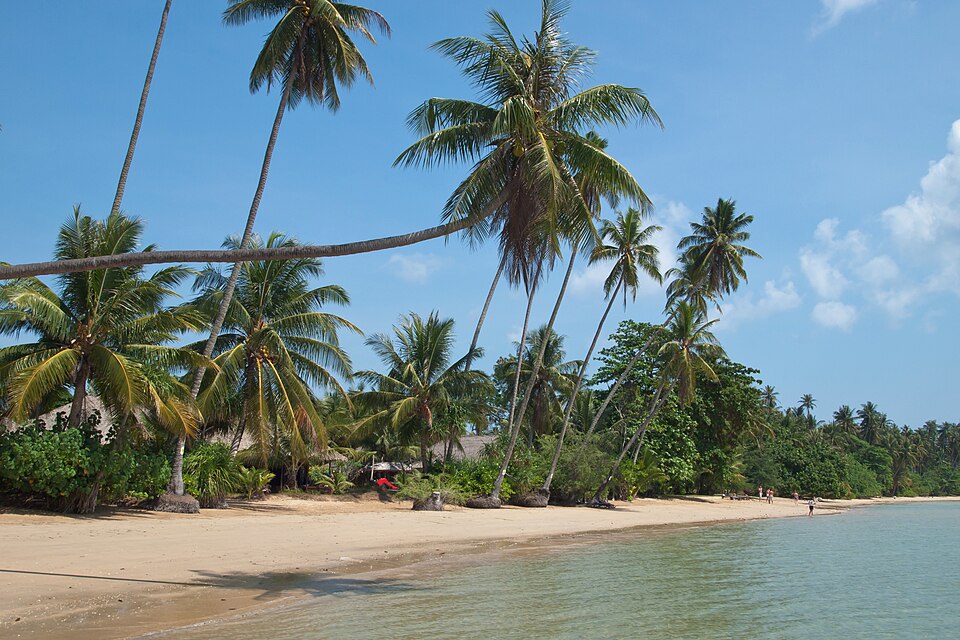
Coconut trees can grow up to 100 feet tall, with a slender, slightly curved trunk topped by a crown of long, feathery fronds. Each frond can stretch 15 to 20 feet long and sways gracefully in ocean breezes. The tree produces clusters of coconuts that take about a year to fully mature, changing from green to brown as they ripen. A single coconut has three layers: a smooth outer skin, a thick fibrous husk called coir, and a hard inner shell that holds the white coconut meat and sweet coconut water. Unlike most trees, coconut palms have no branches at all, and their trunks do not have growth rings because they are monocots, more closely related to grasses than to oaks or maples.
Where They Grow
Coconut trees thrive in warm, humid climates and are found on tropical coastlines around the world. They grow best in sandy soil near the ocean, where temperatures stay above 70 degrees Fahrenheit year-round. One reason coconut trees are found on so many tropical islands is that their fruits can float for months on ocean currents and wash up on distant shores, where they sprout and grow into new trees. The Philippines, Indonesia, and India are the world’s top coconut-producing countries. Coconut palms can tolerate salty soil and salt spray from the sea, which gives them an advantage over many other trees in coastal areas.
How People Use Them
People have found over 100 uses for the coconut tree, earning it the title “tree of a thousand uses.” The white coconut meat is eaten fresh, dried into copra, or pressed into coconut oil used for cooking and skincare. Coconut water, the clear liquid inside a young coconut, is a naturally refreshing drink packed with electrolytes. The fibrous husk, called coir, is woven into ropes, mats, and brushes, while the hard shell is carved into bowls, buttons, and even charcoal. During World War II, coconut water was reportedly used as an emergency intravenous fluid because it is sterile inside the shell and has a similar salt balance to human blood plasma.
Fun Facts
A healthy coconut tree can produce 50 to 200 coconuts per year for up to 80 years. Coconuts are one of the largest seeds in the plant kingdom and can weigh up to five pounds each. In some countries, trained macaque monkeys climb coconut trees to harvest the fruit, a tradition that has sparked debate about animal welfare. The word “coconut” comes from the Portuguese word coco, meaning “grinning face,” because the three dark spots on a coconut shell look like two eyes and a mouth. Coconut oil stays solid at room temperature because it is high in saturated fat, but it melts instantly when warmed in your hands.
 OtterKnow Kids Encyclopedia