What They Look Like
The weeping willow, the most famous species, is instantly recognizable by its long, slender branches that sweep downward almost to the ground, creating a curtain of greenery. Willow leaves are narrow and lance-shaped, often with a silvery-green color that shimmers in the breeze. Most willows have flexible, whip-like twigs that bend easily without breaking, which is why willow branches have been used for weaving baskets and furniture for centuries. Willows produce fuzzy catkins in early spring, and these soft, silvery flower clusters are often one of the first signs that winter is ending. The bark of older willows is deeply ridged and grayish-brown, and the wood inside is lightweight and soft.
Where They Grow
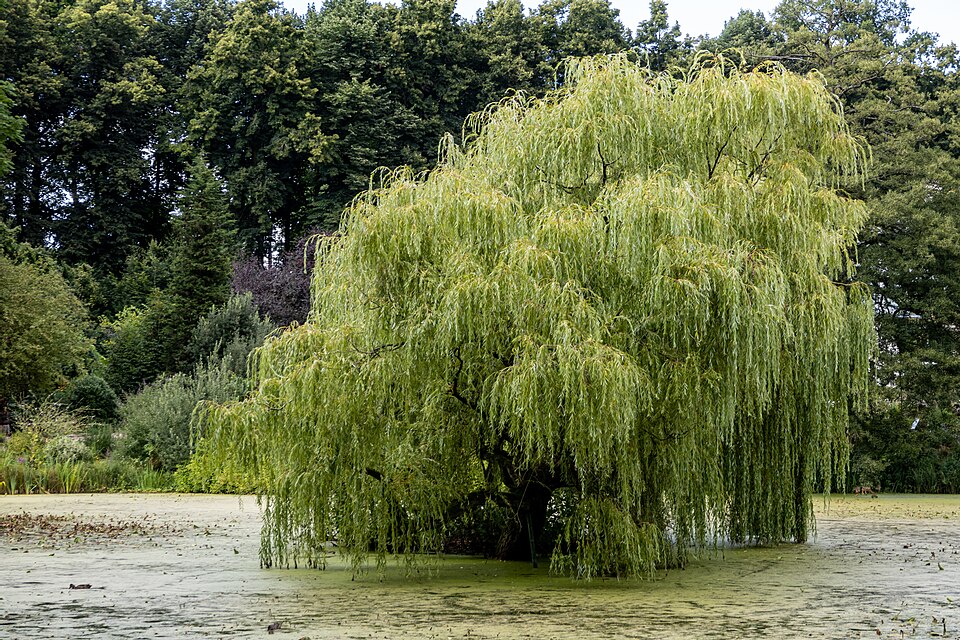
Willows are found across North America, Europe, Asia, and parts of Africa, almost always in places where water is plentiful. They are especially common along streams, rivers, lakes, and marshy areas because their roots need constant moisture. The weeping willow originally came from China and was brought to Europe and North America centuries ago as an ornamental tree. In the Arctic, dwarf willows grow flat against the ground to survive the harsh winds and freezing temperatures, barely reaching two inches tall. Willows are often among the first trees to colonize wet, disturbed ground because they grow so quickly and can even sprout from a broken branch stuck in the mud.
How People Use Them
One of the most important discoveries in the history of medicine came from the willow tree. Willow bark contains a chemical called salicin, which the body converts into salicylic acid, the active ingredient that inspired the creation of aspirin. For thousands of years, people around the world chewed willow bark or brewed it into tea to relieve pain, reduce fevers, and treat inflammation. Native American peoples used willow bark as medicine and wove the flexible branches into baskets, fish traps, and shelter frames. In England, cricket bats are traditionally made from the wood of the white willow because it is lightweight, shock-absorbing, and does not splinter easily.
Fun Facts
Willow roots are so aggressive in seeking water that they can grow into underground pipes and crack them open, which is why plumbers often warn homeowners not to plant willows too close to houses. A willow branch stuck in moist ground will often sprout roots and grow into a new tree, making willows one of the easiest trees to propagate. Vincent van Gogh painted willows in several of his works, capturing their flowing, expressive shapes in his distinctive swirling style. Scientists have discovered that willows can absorb heavy metals and pollutants from contaminated soil, a process called phytoremediation that may help clean up polluted land. The weeping willow is so strongly associated with sadness and mourning that it has appeared as a symbol of grief on tombstones, paintings, and poetry for centuries.
 OtterKnow Kids Encyclopedia