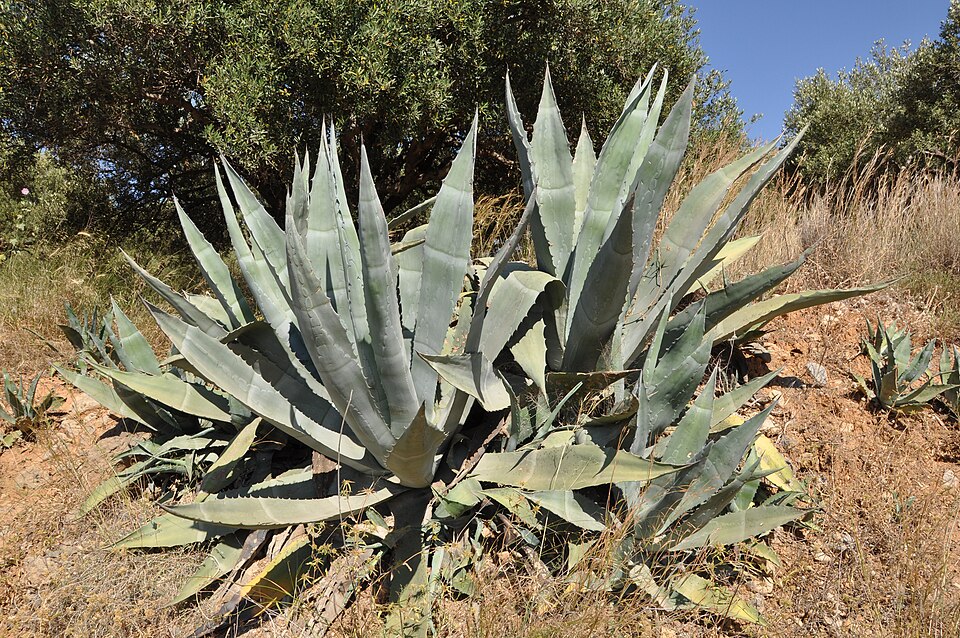
The Once-in-a-Lifetime Bloom
One of the most amazing things about agaves is that most species are monocarpic, meaning they bloom only once in their entire lives. People call them “century plants” because they seem to take forever to flower, though they actually bloom after about 10 to 30 years rather than a full century. When the time finally comes, the agave sends up a massive flower stalk that can shoot up to 30 feet tall in just a few weeks. The stalk bursts with clusters of yellow or greenish flowers that attract bats, hummingbirds, and insects. After producing seeds, the parent plant dies, but it usually leaves behind small offspring called pups that continue growing.
How Agaves Survive the Desert
Agaves are masters of desert survival, using a special type of photosynthesis that helps them save water. Unlike most plants that open their pores during the day, agaves open theirs at night when the air is cooler and less moisture escapes. Their thick, fleshy leaves act like water tanks, storing moisture that the plant can use during long dry spells. The waxy coating on their leaves reflects sunlight and slows evaporation. Even the sharp terminal spine at the tip of each leaf serves a purpose, discouraging thirsty animals from chewing on them.
Agaves and People
Native American peoples have relied on agaves for centuries, roasting the heart of the plant in underground pits to create a sweet, nutritious food. The tough fibers from agave leaves were twisted into rope, woven into sandals, and used to make cloth. Today, the blue agave is famous worldwide as the plant used to produce tequila, while other species are used to make mezcal and the sweet syrup sold in grocery stores. In Mexico, the sap of certain agaves is fermented into a traditional drink called pulque, which has been enjoyed for over a thousand years. From ancient food source to modern industry, agaves remain deeply connected to human culture.
Agaves in the Wild
In the wild, agaves play an important role in desert ecosystems by providing food and shelter for wildlife. Their tall flower stalks are vital feeding stations for Mexican long-nosed bats, which are key pollinators for many agave species. Birds, lizards, and insects also make their homes among the thick rosettes of agave leaves. Several agave species are now threatened because their natural habitats are shrinking due to development and farming. Conservation efforts are underway to protect wild agave populations and the unique animals that depend on them.
 OtterKnow Kids Encyclopedia