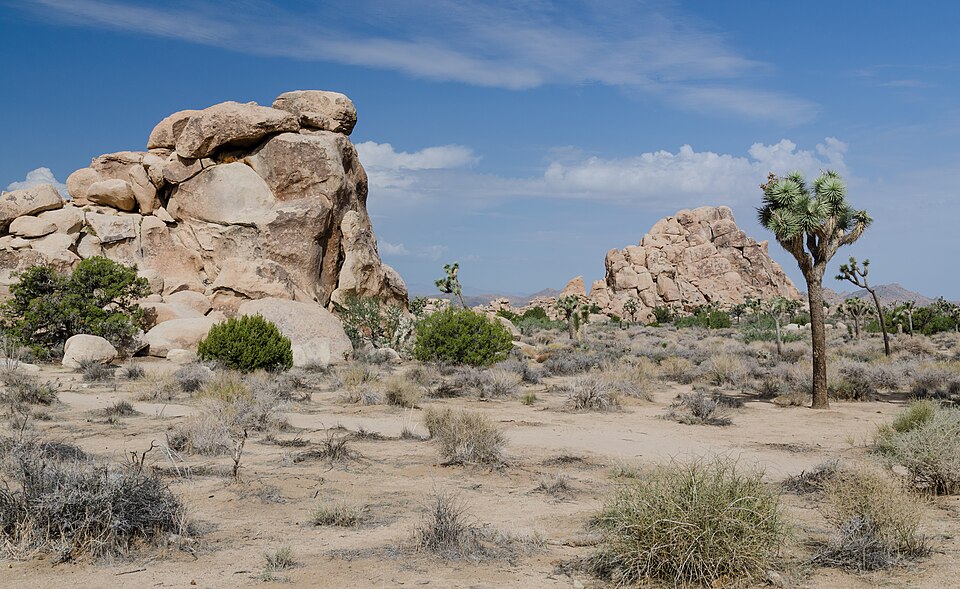
How the Joshua Tree Got Its Name
According to popular legend, Mormon settlers crossing the Mojave Desert in the 1800s named this unusual plant after the biblical figure Joshua. They thought the tree’s upraised branches looked like Joshua lifting his arms in prayer to guide them through the wilderness. Before that, Native Americans of the region had their own names for the plant and used its tough fibers to weave sandals and baskets. The Joshua tree is so beloved that an entire national park, Joshua Tree National Park, was established in 1994 to protect the landscapes where these iconic plants grow. The tree has also inspired musicians, artists, and writers who have been captivated by its strange beauty.
The Joshua Tree and Its Moth
Joshua trees depend on a partnership with a tiny insect called the yucca moth. This relationship is a perfect example of mutualism, where both species benefit from working together. The female yucca moth collects pollen from one Joshua tree flower and deliberately packs it into the flower of another tree, ensuring pollination. At the same time, she lays her eggs inside the flower so her larvae can feed on some of the developing seeds. No other insect pollinates the Joshua tree, so without the yucca moth, these trees could not reproduce.
Surviving in the Desert
Joshua trees are remarkably well adapted to the harsh conditions of the Mojave Desert. Their thick, fibrous trunks store water, and their narrow, pointed leaves reduce moisture loss in the dry desert air. Joshua trees grow very slowly, adding only about one inch of height per year during their early decades. They depend on cool winter temperatures and occasional rainfall to trigger their growth and flowering cycles. A Joshua tree’s root system can spread out widely just below the surface to capture as much rainwater as possible before it evaporates.
Threats and Conservation
Climate change poses a serious threat to Joshua trees, as rising temperatures are making parts of the Mojave Desert too hot for them to survive. Scientists have found that Joshua trees are slowly disappearing from the southern and lower-elevation parts of their range, unable to cope with the increasing heat. Younger trees are especially vulnerable because they need the shade of rocks or shrubs to survive their first years. Researchers are studying whether Joshua trees can migrate northward or to higher elevations fast enough to keep pace with changing conditions. In 2023, California took steps to protect western Joshua trees under the state’s Endangered Species Act, recognizing the urgent need to preserve these desert icons.
 OtterKnow Kids Encyclopedia