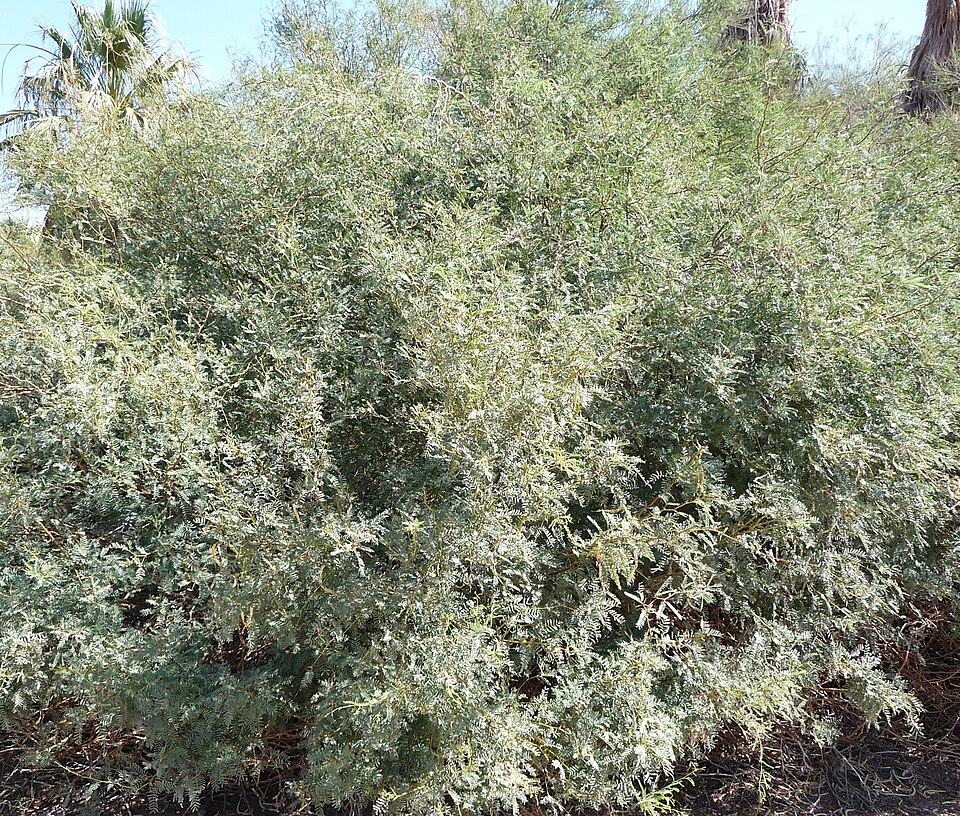
The Deepest Roots in the Desert
Mesquite trees are famous for having some of the deepest root systems of any plant in the desert. Their taproots can plunge down more than 160 feet into the earth, reaching deep underground water sources that no other plant can access. This ability to find deep water allows mesquite to stay green and healthy even during the worst droughts. The roots also spread out widely near the surface to capture rainwater before it evaporates. Because mesquite is a legume, its roots have special nodules that contain bacteria capable of pulling nitrogen from the air and adding it to the soil, enriching the ground for other plants nearby.
A Keystone of Desert Ecosystems
Ecologists consider mesquite a keystone species of the Sonoran Desert because so many other living things depend on it. The tree’s spreading canopy provides shade that can lower ground temperatures by 15 degrees or more, creating a cooler microhabitat where smaller plants, insects, and animals can survive. Birds like the Gila woodpecker, cactus wren, and verdin build their nests in mesquite branches. Coyotes, javelinas, rabbits, and ground squirrels eat the sweet seed pods that hang from the branches in long, straw-colored clusters. Without mesquite, many desert ecosystems would look and function very differently.
Mesquite and People
Native American peoples of the Southwest relied on mesquite as one of their most important food sources for thousands of years. The sweet, protein-rich pods were ground into flour to make cakes, porridge, and a nutritious drink. Mesquite wood is extremely dense and hard, making it prized for building fence posts, tools, and furniture. Today, mesquite is perhaps best known as a barbecue wood, prized by grill masters for the rich, smoky flavor it gives to meat. Mesquite flour has also made a comeback in modern kitchens, where health-conscious bakers use it to add a sweet, nutty flavor to breads and pancakes.
Mesquite’s Complicated Reputation
While mesquite is a vital part of natural desert ecosystems, it has a complicated relationship with ranchers and farmers. When grasslands are overgrazed by cattle, mesquite can spread aggressively and take over, turning open pastures into dense thickets. Ranchers have spent enormous amounts of money trying to clear mesquite from their land, but the trees are almost impossible to kill because their deep roots simply send up new shoots. In some parts of Texas and the Southwest, mesquite has expanded from scattered groves into vast woodlands covering millions of acres. Despite this tension, many people are learning to appreciate mesquite as a valuable native plant rather than simply a stubborn pest.
 OtterKnow Kids Encyclopedia