Growing Up Slowly
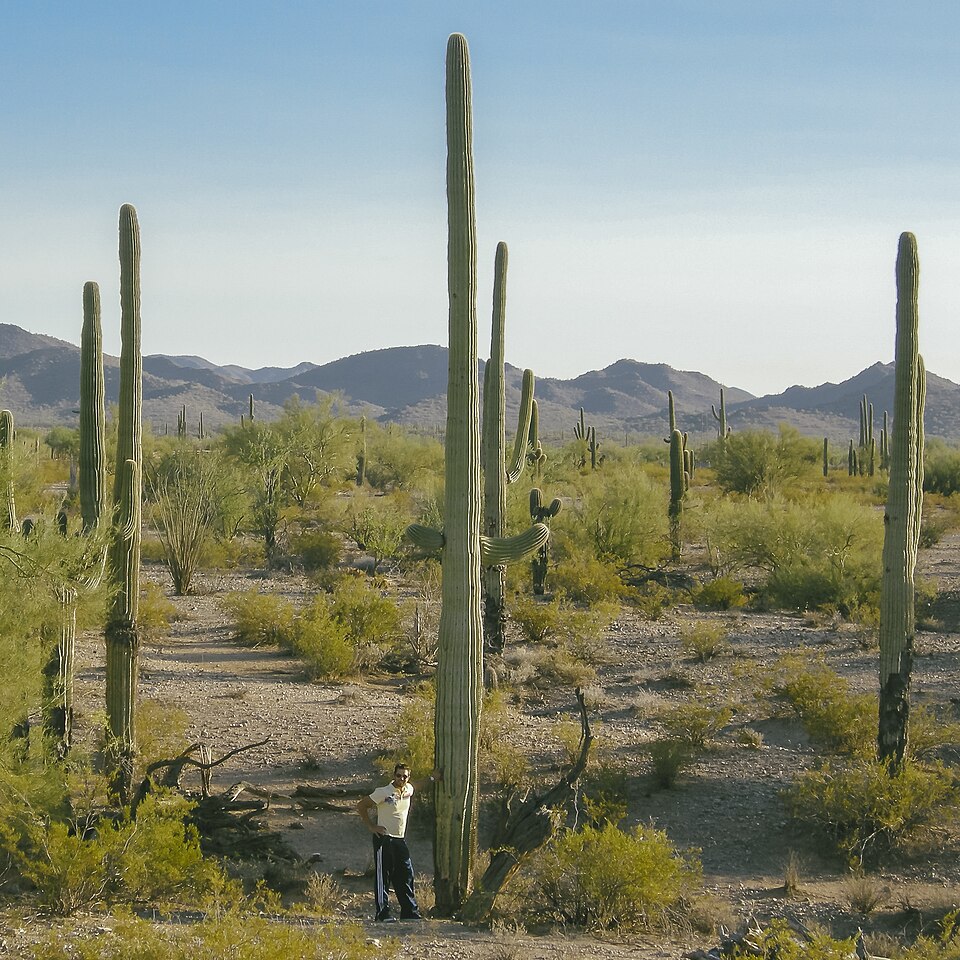
Saguaro cacti are among the slowest-growing plants in the desert. A saguaro that is ten years old might be only a few inches tall, still hiding in the shade of a “nurse plant” like a palo verde tree or creosote bush that protects it from the scorching sun. By age 30, the saguaro may reach just a few feet in height. The famous arms that give the saguaro its distinctive look do not start growing until the cactus is about 75 years old. A fully grown saguaro with multiple arms is likely between 150 and 200 years old, meaning some of the largest saguaros standing today were already growing when the United States was a brand-new country.
A Desert Water Tower
Like other cacti, the saguaro is designed to capture and store as much water as possible during the desert’s brief rainy seasons. A large saguaro can absorb and hold up to 200 gallons of water, which can make up most of its total weight. The accordion-like ribs running down the trunk expand outward as the cactus fills with water and contract during dry periods. A network of shallow roots spreads out in all directions, sometimes extending as far as the cactus is tall, ready to soak up even the lightest rainfall. The thick, waxy skin of the saguaro prevents the stored water from evaporating in the fierce desert heat.
A Desert Apartment Building
The saguaro cactus is like a high-rise apartment building for desert wildlife. Gila woodpeckers and gilded flickers carve out nest holes in the saguaro’s trunk, and the cactus responds by forming a hard, shell-like lining around the cavity called a boot. After the woodpeckers move out, these ready-made homes are taken over by elf owls, American kestrels, purple martins, and other small birds. Hawks and ravens build large nests on top of the saguaro’s arms, using the height advantage to spot prey across the flat desert. Bats, bees, and white-winged doves visit the night-blooming flowers for nectar, pollinating the cactus in return.
Protecting the Saguaro
Arizona takes the protection of saguaro cacti very seriously, and it is illegal to cut down, dig up, or damage a saguaro without a special permit. People who harm these cacti can face serious fines and even jail time. This protection exists because saguaros grow so slowly that a destroyed cactus cannot be easily replaced. Climate change, wildfire, and invasive grasses also threaten saguaro populations by changing the desert conditions these cacti have adapted to over millions of years. Scientists at Saguaro National Park carefully monitor the health and numbers of these cacti, ensuring that future generations will still be able to marvel at these towering desert giants.
 OtterKnow Kids Encyclopedia