How Tumbling Spreads Seeds
The tumbleweed’s rolling habit is actually a brilliant seed-dispersal strategy. When the plant matures and dies, its stems curl inward to form a lightweight ball, and the dried-out base snaps off at ground level. Wind then sends the ball bouncing and rolling across the open landscape, and with each tumble, seeds are shaken loose and scattered across the ground. A single tumbleweed can carry up to 250,000 seeds, dropping them along a path that may stretch for miles. The seeds have a special moisture-sensing ability, meaning they will only release from the plant when conditions are dry, ensuring they land in soil that is ready for the next rainstorm.
A Surprisingly Tough Invader
Tumbleweeds are incredibly successful invasive plants because they grow fast, reproduce in huge numbers, and can thrive in poor, disturbed soil. A single tumbleweed seedling can grow into a bush several feet across in just one growing season. The plant’s roots can reach water deep underground, and its seeds can survive in the soil for years, waiting for the right conditions to sprout. Tumbleweeds are among the first plants to colonize abandoned farmland, construction sites, roadsides, and any patch of bare earth. Because they are so widespread and produce so many seeds, they are nearly impossible to eliminate once they have moved into an area.
Tumbleweeds Causing Trouble
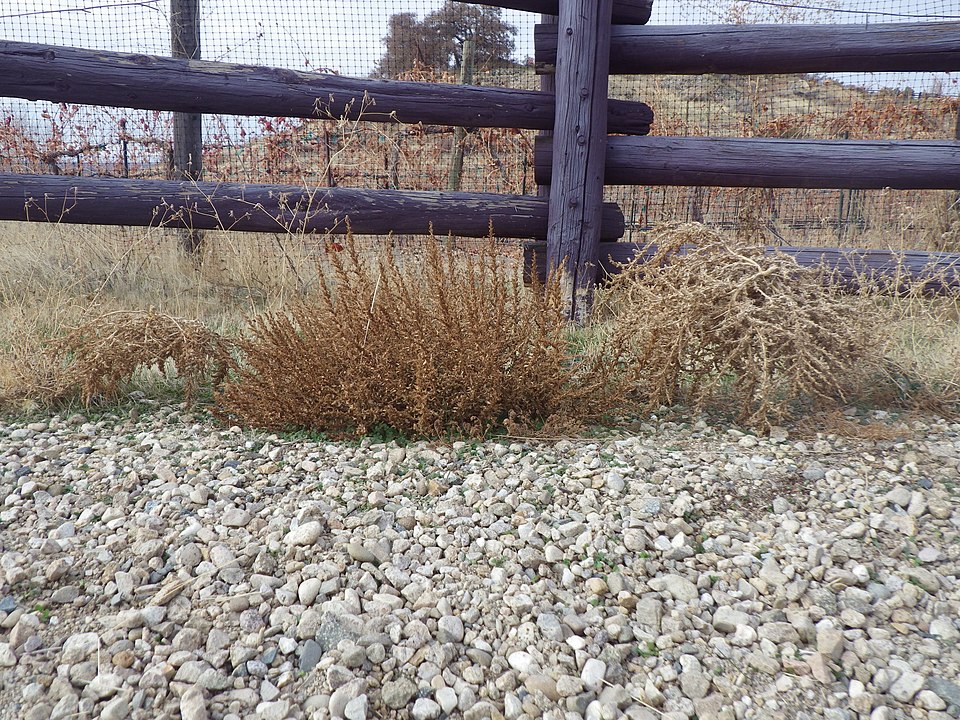
While tumbleweeds may look harmless and even comical as they bounce along, they can cause serious problems. In windy weather, tumbleweeds can pile up against fences, buildings, and highways, sometimes burying entire houses under mounds of dried plants. In 2018, a town in California was buried under tumbleweeds that piled up to 15 feet deep, trapping residents in their homes. Dry tumbleweeds are also a major fire hazard because they burn quickly and can carry flames from one area to another. Along highways, drifts of tumbleweeds can block lanes and create dangerous conditions for drivers who suddenly encounter a wall of rolling plants.
The Real Story Behind the Icon
It is ironic that the tumbleweed, perhaps the most famous symbol of the American West, is actually an immigrant from the other side of the world. Before tumbleweeds arrived, the Western plains were covered with native grasses that held the soil in place. The spread of tumbleweeds was helped by the same forces that transformed the West: farming, ranching, and the building of railroads that disturbed the natural landscape. Some scientists are studying ways to control tumbleweeds using insects from their native range in Central Asia. Whether seen as a charming icon or a frustrating pest, the tumbleweed’s story is a reminder of how quickly an introduced species can reshape an entire landscape.
 OtterKnow Kids Encyclopedia