What It Looks Like
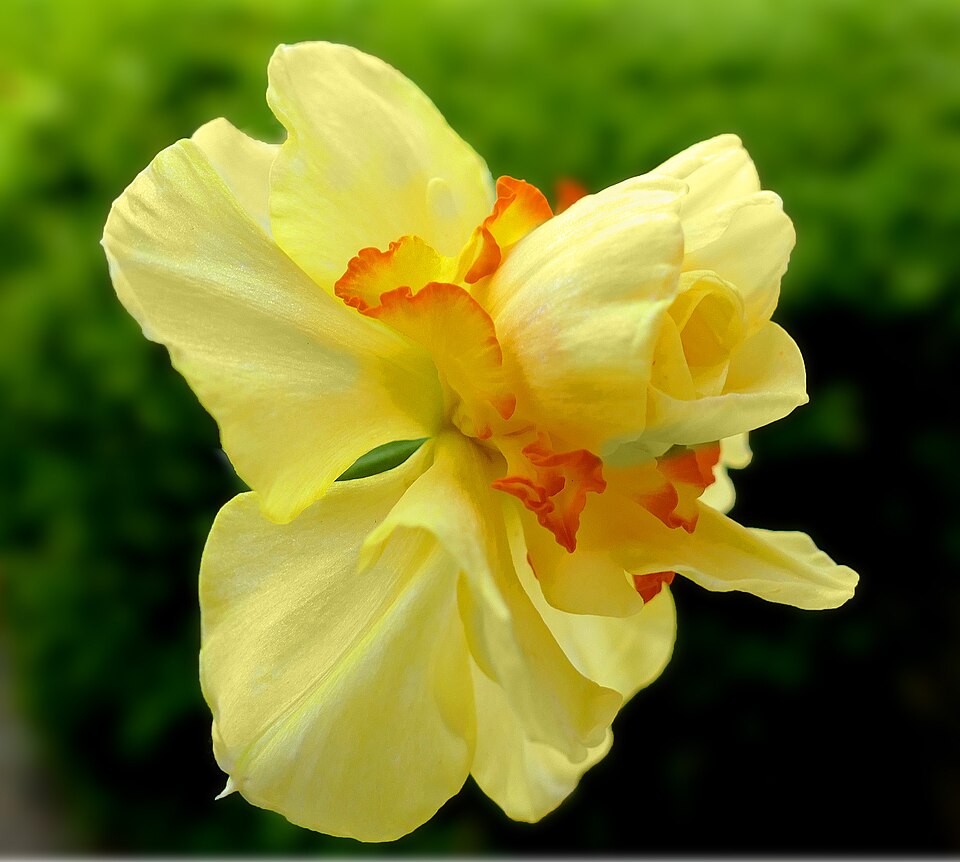
Every daffodil has a central trumpet-shaped structure called a corona, which sticks out from a ring of six flat petals behind it. The corona can be long and narrow like a tube or short and ruffled like a cup, depending on the variety. Most daffodils are yellow, but some varieties come in white, orange, pink, or a mix of colors. The stems are smooth and hollow, usually growing between 15 and 50 centimeters tall, and each stem produces one to several flowers. The leaves are long, narrow, and slightly waxy, growing straight up from the base of the plant.
How It Grows
Daffodils grow from bulbs, which are underground storage organs packed with nutrients the plant needs to survive winter. Gardeners plant the bulbs in autumn, and the cold temperatures of winter actually help trigger the bulb to start growing when spring arrives. After the flowers fade, the leaves stay green for several weeks, soaking up sunlight and sending energy back down into the bulb for next year’s bloom. Over time, each bulb produces smaller bulbs called offsets, which is why a single planting can turn into a large cluster after a few years. This process, called naturalization, allows daffodils to spread across meadows and woodland edges without any help from gardeners.
Where It Grows
Daffodils are native to western Europe and the Mediterranean region, where they grow wild in meadows, rocky hillsides, and open woodlands. Today they are cultivated in gardens across North America, Europe, Asia, and parts of the Southern Hemisphere. The Netherlands is one of the largest producers of daffodil bulbs, growing millions each year for export around the world. Daffodils prefer well-drained soil and can thrive in full sun or partial shade, making them easy to grow in many different climates.
Pollinators and Seeds
Daffodils rely mainly on bees and other insects for pollination, attracting them with bright colors and sweet nectar hidden inside the corona. When a bee crawls into the trumpet to reach the nectar, pollen sticks to its body and gets carried to the next flower. After pollination, the flower develops a seed pod containing small black seeds, though most garden daffodils spread more effectively through their bulbs. Some wild daffodil species depend on ants to carry their seeds to new locations, a process called myrmecochory.
Uses and Symbolism
Daffodils are primarily grown as ornamental plants, brightening gardens, parks, and floral arrangements every spring. All parts of the daffodil plant are toxic if eaten, containing chemicals called alkaloids that can cause serious illness in humans and are especially dangerous for dogs and cats. Despite their toxicity, scientists have found that one of these chemicals, called galantamine, can be used in medicine to help treat Alzheimer’s disease. In many cultures, daffodils symbolize rebirth, new beginnings, and hope because they are among the earliest flowers to bloom after winter.
Interesting Facts
The name Narcissus comes from Greek mythology, where a young man named Narcissus was so fascinated by his own reflection in a pool of water that the gods turned him into a flower. Daffodil bulbs contain sharp crystals of calcium oxalate, which is one reason animals like deer and squirrels avoid eating them. In the Isles of Scilly off the southwest coast of England, daffodil farming has been an important industry since the 1880s, taking advantage of the mild ocean climate. The American Daffodil Society has registered over 32,000 named daffodil varieties, showing just how popular these flowers have become with gardeners and plant breeders.
 OtterKnow Kids Encyclopedia