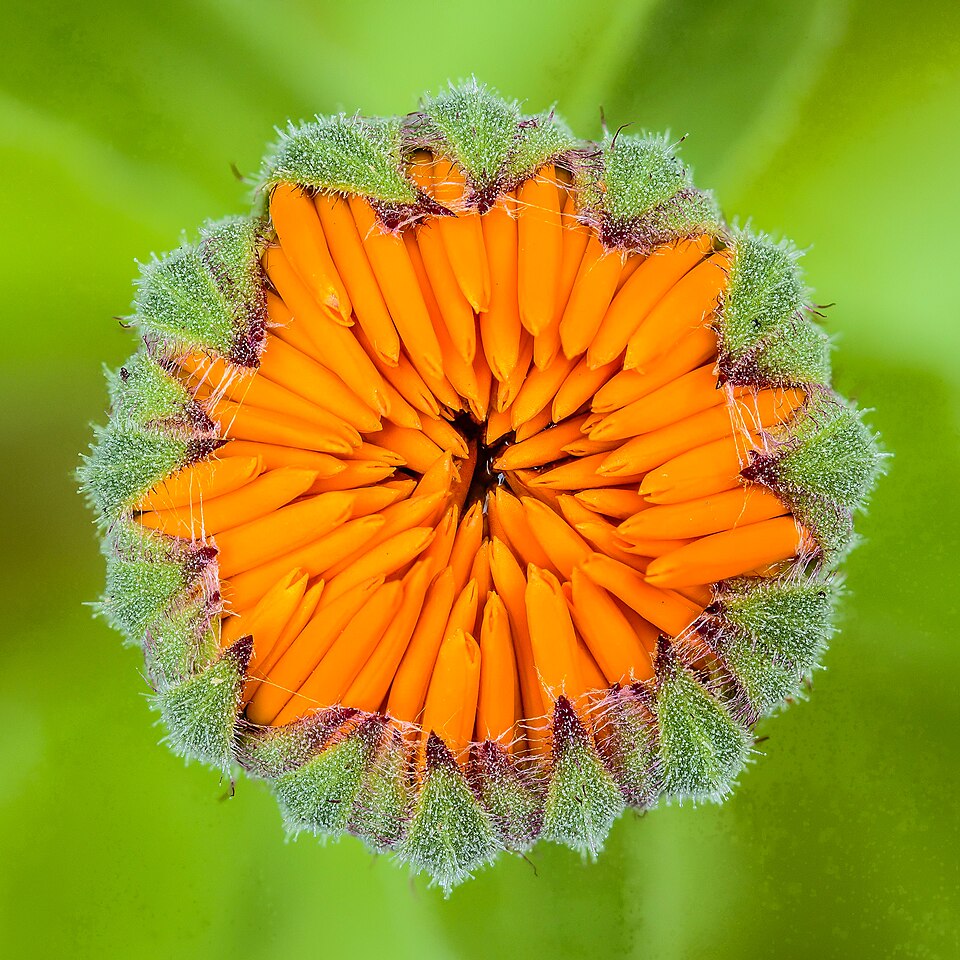
What It Looks Like
Marigold flowers come in warm shades of yellow, orange, gold, and deep red, sometimes with striking bicolored patterns. The blooms can be small and simple with a single ring of petals, or large and fluffy with dozens of layered petals packed tightly together like pom-poms. French marigolds tend to be compact plants growing 15 to 30 centimeters tall, while African marigolds can reach 90 centimeters with flower heads as wide as 10 centimeters across. The leaves are deeply divided into narrow, feathery segments and have a strong, pungent scent that some people love and others find unpleasant. The stems are sturdy and branching, allowing each plant to produce many flowers throughout the growing season.
How It Grows
Marigolds are annual plants, completing their entire life cycle from seed to flower to seed in a single growing season. They are among the easiest flowers to grow from seed, often sprouting in just five to seven days and blooming within eight weeks of planting. Marigolds thrive in full sun and warm temperatures, tolerating heat and drought much better than many other garden flowers. Gardeners often use a technique called deadheading, which means removing faded blooms to encourage the plant to produce even more flowers. At the end of the season, the dried flower heads can be crumbled open to collect seeds for planting next year.
Where It Grows
Marigolds originated in Mexico and Central America, where the Aztecs cultivated them for medicine, decoration, and religious ceremonies long before Europeans arrived. Spanish explorers brought marigold seeds back to Europe in the 1500s, and from there the flowers spread to gardens across Africa, India, and Asia. In India, marigolds became so deeply woven into the culture that many people assume the flower is native there. Marigolds grow well in most warm, sunny locations and can tolerate poor soil, making them popular garden plants in tropical, subtropical, and temperate regions worldwide.
Pollinators and Seeds
Marigolds attract bees, butterflies, and beneficial insects like ladybugs and lacewings to the garden. Their strong scent and the chemicals they release from their roots are known to repel harmful nematodes, aphids, and whiteflies, which is why gardeners often plant them alongside vegetables as companion plants. Each marigold flower head produces many long, narrow seeds with black-and-white striped markings. The seeds are easy to save and share, and marigolds often self-seed in the garden, popping up on their own the following year from seeds that fell to the ground.
Uses and Symbolism
In Mexico, marigolds are called cempasuchil and play a central role in Dia de los Muertos, the Day of the Dead celebration, where their bright petals are scattered to guide the spirits of loved ones home. The petals of certain marigold species are edible and have been used for centuries as a natural food coloring, adding golden hues to cheese, butter, rice, and chicken feed to make egg yolks more vibrant. Marigold extracts contain lutein, a pigment that is now used in dietary supplements because it may help protect eye health. In traditional medicine systems across many cultures, marigold preparations have been applied to skin wounds and irritations.
Interesting Facts
Marigold roots release a chemical called alpha-terthienyl into the soil, which kills harmful root-knot nematodes and can protect nearby vegetable plants for years after the marigolds are gone. NASA has studied marigolds as potential plants for space gardens because they grow quickly, produce seeds reliably, and could help with air purification. The Aztecs considered marigolds sacred and associated them with their sun god, using the flowers in temple offerings and healing rituals. A single healthy marigold plant can produce hundreds of seeds in one season, making them one of the most generous seed producers in the garden.
 OtterKnow Kids Encyclopedia