What It Looks Like
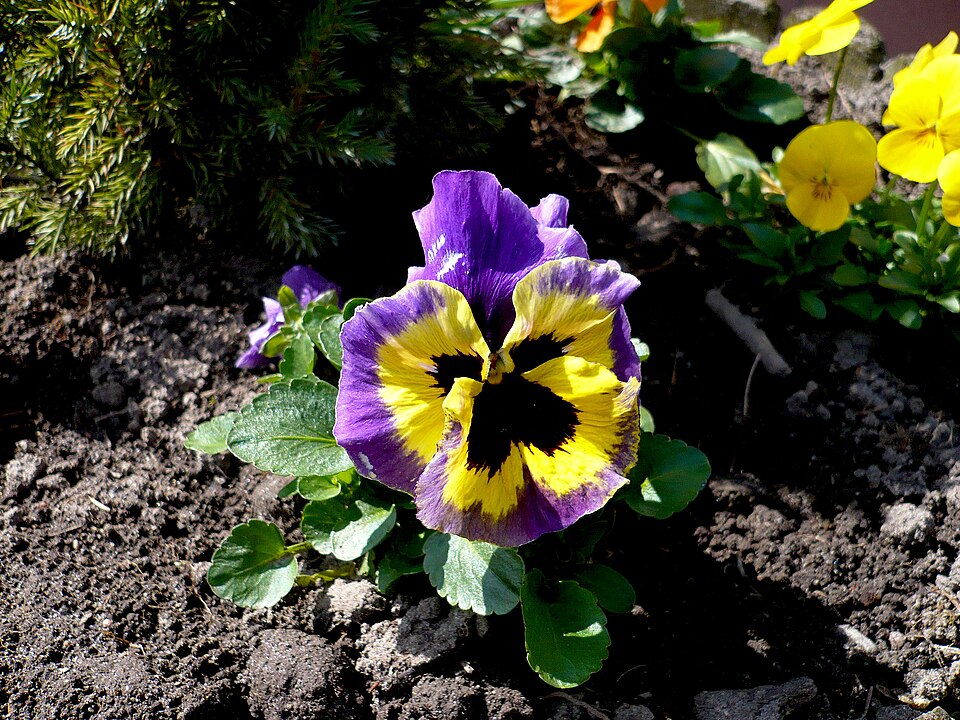
The most distinctive feature of a pansy is the pattern on its petals that looks remarkably like a small face, with dark lines radiating from the center that resemble eyes and a mouth. Pansies have five rounded, overlapping petals, with the two upper petals often a different color from the three lower ones. They come in an extraordinary range of colors, including purple, yellow, orange, red, white, blue, and nearly black, often with dramatic multicolored patterns. The plants are compact and low-growing, typically reaching only 15 to 25 centimeters in height, with oval, scalloped leaves. The flowers themselves are usually 5 to 10 centimeters across, depending on the variety.
How It Grows
Pansies are cool-season plants that grow best when temperatures are between 4 and 18 degrees Celsius, which makes them perfect for spring and autumn gardens. In mild climates, they can bloom all through winter, shrugging off light frosts and even brief snowfalls that would destroy most other flowers. Gardeners usually buy pansy transplants from nurseries or start them from seed indoors about eight weeks before planting outside. Pansies tend to struggle in hot summer weather, becoming leggy and producing fewer flowers as temperatures climb above 25 degrees Celsius. Regular deadheading and feeding with a balanced fertilizer can keep pansies blooming prolifically for months.
Where It Grows
The wild ancestors of modern pansies are native to Europe and western Asia, where they grow in meadows, grasslands, and along forest edges. Today, cultivated pansies are grown in gardens, window boxes, and containers across North America, Europe, Asia, and other temperate regions. They are especially popular in the southern United States, where mild winters allow them to bloom from October through May. Pansies perform best in rich, moist soil with good drainage and appreciate a location with morning sun and afternoon shade in warmer climates.
Pollinators and Seeds
Pansies attract bees and butterflies with their colorful petals and the dark lines on their faces, which act as nectar guides pointing pollinators toward the flower’s center. Each pollinated flower produces a small capsule that splits open when ripe, flinging tiny round seeds in all directions. Pansies can also self-pollinate, meaning a single flower can fertilize itself without needing an insect visitor. Some pansy varieties will self-seed in the garden, producing surprise seedlings the following season that may look different from their parents because the colors mix unpredictably.
Uses and Symbolism
Pansy flowers are completely edible and are often used to decorate cakes, salads, and desserts with their beautiful colors. They have a mild, slightly sweet flavor that works well as a garnish, and can also be crystallized with sugar to create elegant candy-like decorations. In the Victorian era, pansies carried the meaning of loving thoughts and were exchanged between sweethearts as tokens of affection. William Shakespeare featured the pansy in his play “A Midsummer Night’s Dream,” where the juice of a wild pansy was used as a magical love potion.
Interesting Facts
Plant breeders have created pansy varieties with such dark, velvety petals that they appear almost black, though they are actually an extremely deep shade of purple. Some modern pansy varieties have been bred to be heat-tolerant, extending their blooming season well into summer in places where older varieties would have given up. The face-like patterns on pansies are not just decoration but serve as nectar guides that help pollinators find food more efficiently. Pansies and violets are so closely related that the main difference is size: pansies have larger flowers with rounder petals, while violets tend to be smaller and more delicate.
 OtterKnow Kids Encyclopedia