What It Looks Like
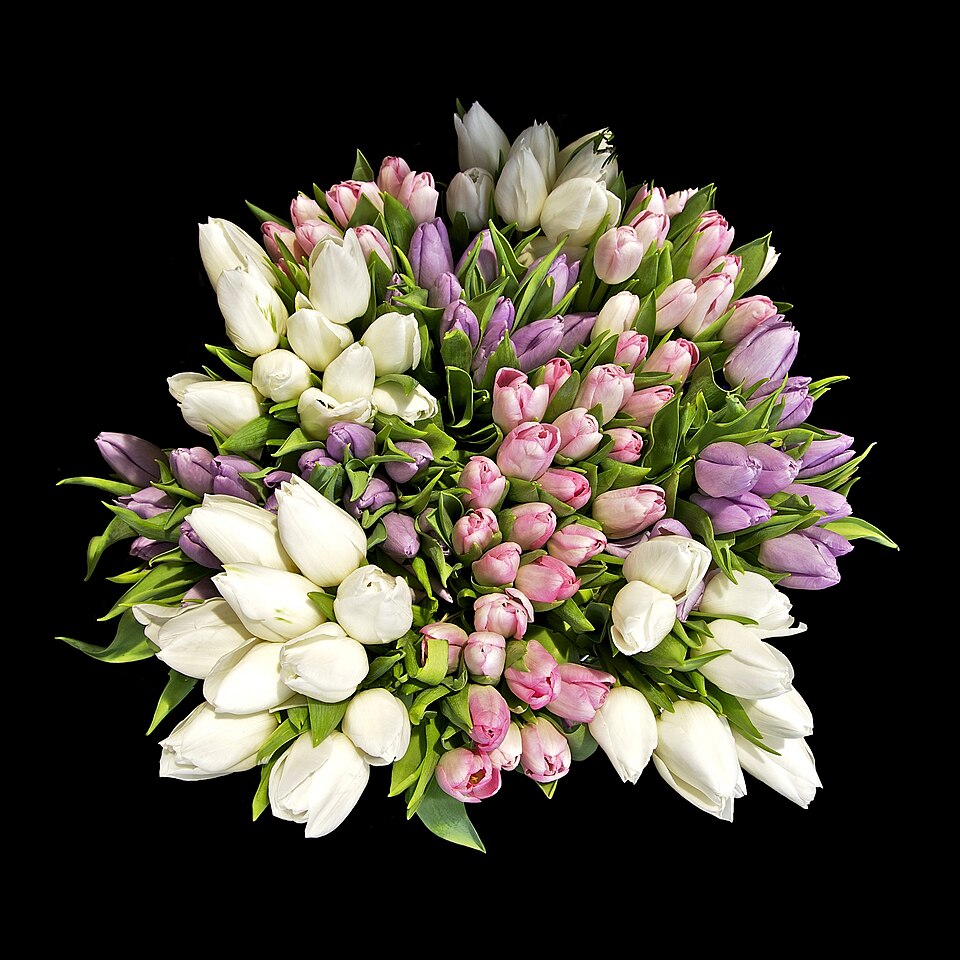
Tulip flowers sit atop a single smooth, sturdy stem and typically have six petals, though some specialty varieties have fringed, ruffled, or doubled petals that look almost like peonies. They come in virtually every color except true blue, including red, yellow, pink, purple, white, orange, and even near-black, with many varieties displaying dramatic streaks, flames, or feathered patterns. Most garden tulips grow 25 to 60 centimeters tall, though some wild species are tiny, barely reaching 10 centimeters. The leaves are broad, waxy, and blue-green, growing from the base of the stem and sometimes having a gently undulating edge. Tulip flowers open wide on warm, sunny days and close up again when it gets cool or cloudy, a movement driven by changes in temperature affecting the growth rate of the inner and outer petal surfaces.
How It Grows
Tulips grow from bulbs that are planted in autumn, about 15 to 20 centimeters deep, and they need a period of cold winter temperatures to trigger their spring growth. Inside each bulb, the flower is already fully formed in miniature, waiting for the right conditions to emerge. When soil temperatures warm in spring, the shoot pushes upward rapidly, and the flower opens within just a few weeks. After blooming, the leaves continue to photosynthesize for several weeks, sending nutrients back into the bulb to fuel the next year’s flower. Many hybrid tulips lose vigor after a few years and need to be replaced, while some species tulips and older varieties can naturalize and return reliably for decades.
Where It Grows
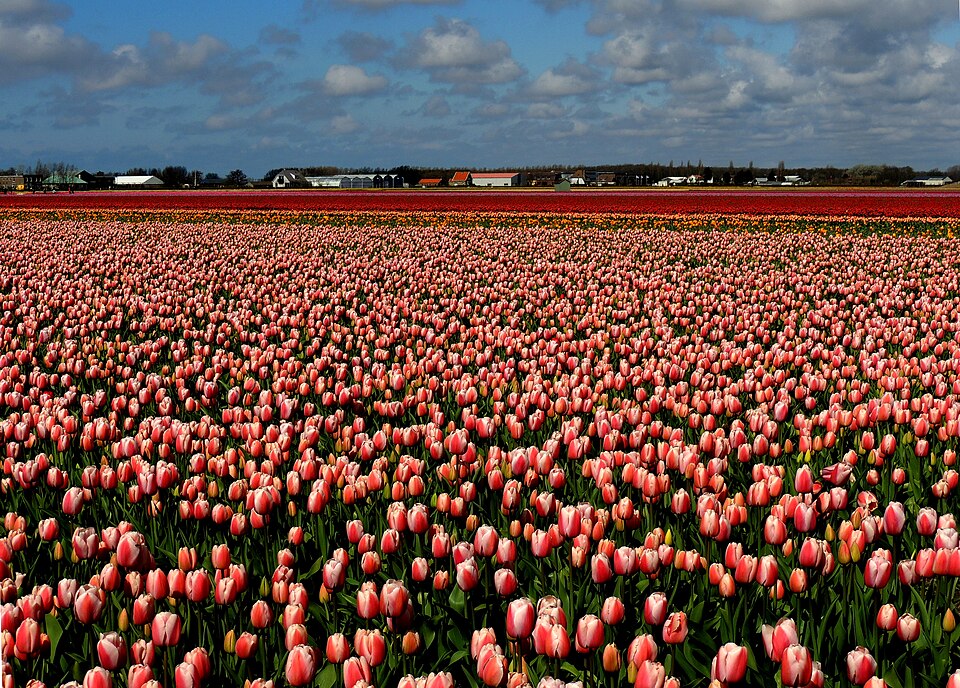 , which are round packages of energy buried in the ground, kind of like an onion. You plant the bulbs in the fall, and they sleep underground all winter long, waiting for spring. The Netherlands grows billions of tulips and is famous for its giant, colorful tulip fields.
Wild tulips are native to the mountainous regions of Central Asia, particularly modern-day Kazakhstan, Uzbekistan, and Kyrgyzstan, where they carpet alpine meadows each spring. The tulip was brought to the Ottoman Empire, where Turkish sultans cultivated hundreds of varieties in their palace gardens, and the flower became a symbol of the Ottoman dynasty. From Turkey, tulips reached the Netherlands in the late 1500s, and the Dutch have been the world’s largest tulip growers ever since, producing billions of bulbs each year. The tulip is the national flower of both the Netherlands and Turkey, and today it is grown in gardens across North America, Europe, Japan, Australia, and New Zealand.
Pollinators and Seeds
Tulips attract bees and other insects with their bright colors and the nectar found at the base of their petals. The wide, open cup shape of tulip flowers makes it easy for bees to land and access the pollen, and many tulips produce a sweet, subtle fragrance. After pollination, tulips develop a three-chambered seed capsule that can contain dozens of flat, papery seeds. Growing a tulip from seed to flowering plant takes five to seven years, which is why gardeners almost always plant bulbs instead for much faster results.
Uses and Symbolism
During the famous Tulip Mania of the 1630s in the Netherlands, rare tulip bulbs became so valuable that a single bulb of the prized Semper Augustus variety reportedly sold for more than the price of a fine house in Amsterdam. Today, the tulip industry is still enormously important to the Dutch economy, with the Netherlands exporting about 2 billion tulip bulbs each year to countries around the world. Tulips symbolize perfect love and spring renewal in many cultures, and they are one of the most popular flowers for arrangements and gifts. The annual Keukenhof garden in the Netherlands plants approximately 7 million bulbs each year, creating one of the largest and most spectacular flower displays on Earth.
Interesting Facts
The streaked and flamed patterns that made tulips so valuable during Tulip Mania were actually caused by a virus called the tulip breaking virus, spread by aphids, which weakened the plants even as it made their flowers more beautiful. Tulip petals are edible and were eaten during the Dutch famine of 1944-1945, when food was desperately scarce, though tulip bulbs could be toxic if not prepared properly. There are now more than 3,000 registered tulip cultivars, organized into 15 official groups based on flower shape, bloom time, and heritage. Some tulip varieties can actually continue to grow and elongate in a vase after being cut, sometimes stretching several centimeters longer while sitting in water on your table.
 OtterKnow Kids Encyclopedia