What It Looks Like
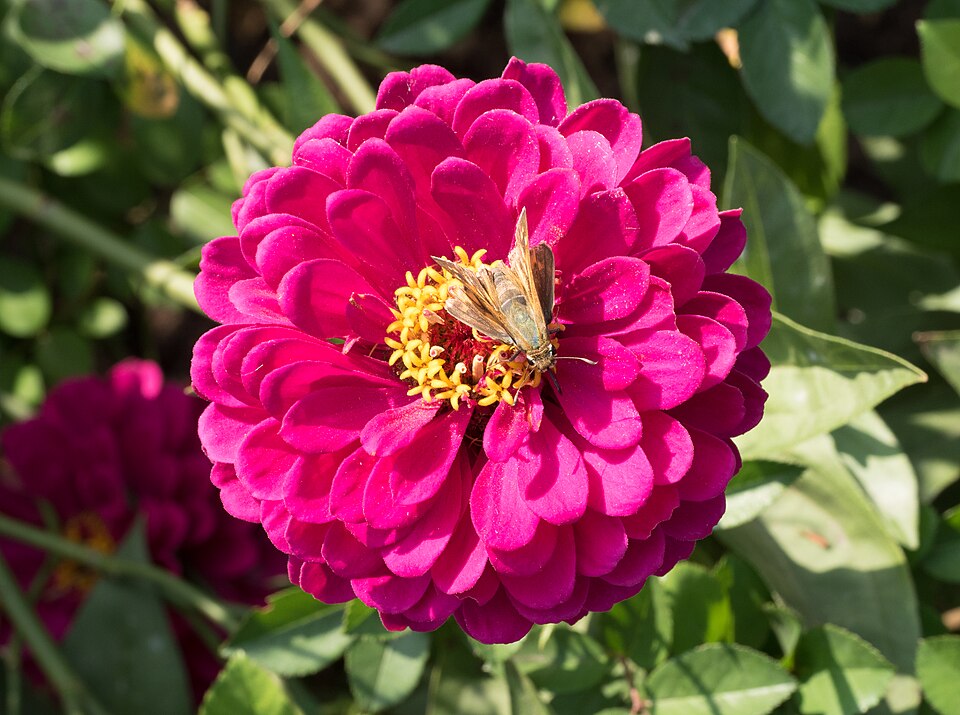
Zinnia flowers come in an incredible array of forms, from small, single-petaled daisylike blooms to large, densely packed pom-pom shapes with hundreds of layered petals. They are available in almost every color except true blue, including red, orange, yellow, pink, purple, white, green, and even lime, with some varieties displaying bicolored or multicolored patterns. Depending on the variety, zinnia plants range from compact 15-centimeter dwarfs perfect for containers to towering 120-centimeter giants with flower heads as wide as 15 centimeters. The stems are sturdy and upright, and the leaves are rough-textured and lance-shaped, arranged in pairs along the stem. Like their relatives the sunflowers and daisies, what appears to be a single zinnia flower is actually a composite of many tiny florets.
How It Grows
Zinnias are annual plants that grow with impressive speed, often sprouting from seed in just four to seven days and producing their first flowers within 60 to 70 days of planting. They thrive in hot weather and full sun, actually performing better in the peak heat of summer when many other flowers begin to wilt and fade. Zinnias prefer well-drained soil and moderate watering, and they are susceptible to powdery mildew if their leaves stay wet, so gardeners are advised to water at the base of the plant rather than from overhead. Deadheading spent blooms encourages the plant to produce more flowers, and a single zinnia plant can produce dozens of blooms over the course of a summer. Zinnias are one of the best flowers for beginning gardeners because they are forgiving, fast-growing, and almost guaranteed to succeed.
Where It Grows
Wild zinnias are found in dry, open habitats from the southwestern United States through Mexico and into Central America. The Aztecs noticed wild zinnias growing in their lands but did not think highly of them, reportedly calling them “plants that are hard to look at” because the early wild species had small, dull flowers. When zinnia seeds reached Europe in the 1700s, plant breeders began transforming them through selective breeding into the large, colorful flowers we know today. Modern zinnias are now grown in gardens, farms, and parks across the world, from the Americas to Europe, Asia, Africa, and Australia.
Pollinators and Seeds
Zinnias are among the best flowers for attracting butterflies, and butterfly gardeners consider them essential plantings alongside milkweed and coneflowers. Bees, hummingbirds, and beneficial insects like ladybugs and parasitic wasps are also frequent zinnia visitors, making these flowers excellent companions in vegetable gardens. Each zinnia flower head produces seeds as the disc florets in the center are pollinated and mature. The seeds are arrow-shaped and flat, easy to harvest by simply pulling apart the dried flower heads at the end of the season.
Uses and Symbolism
Zinnias are grown primarily as ornamental flowers for gardens, borders, containers, and cut flower arrangements, where their long vase life makes them a favorite of florists. In the language of flowers, zinnias symbolize thoughts of absent friends, endurance, and daily remembrance. Cut zinnia stems can last seven to twelve days in a vase with fresh water, making them one of the longest-lasting cut flowers available from a home garden. Zinnia breeding is a competitive field, with seed companies introducing new varieties every year that feature improved disease resistance, novel colors, and unique flower forms.
Interesting Facts
In January 2016, NASA astronaut Scott Kelly successfully grew and bloomed zinnia flowers aboard the International Space Station, making them the first flowers to bloom in the microgravity environment of space. The zinnias almost died from mold before Kelly took over their care, adjusting the watering and air circulation by hand to save them. When early Spanish explorers first encountered zinnias in Mexico, they considered them unattractive weeds, but by the 1800s, European breeders had transformed them into one of the most popular garden flowers in the world. Zinnias are so heat-tolerant that they actually grow faster and produce more blooms in temperatures above 30 degrees Celsius, a temperature range that causes many other flowers to stop blooming entirely.
 OtterKnow Kids Encyclopedia