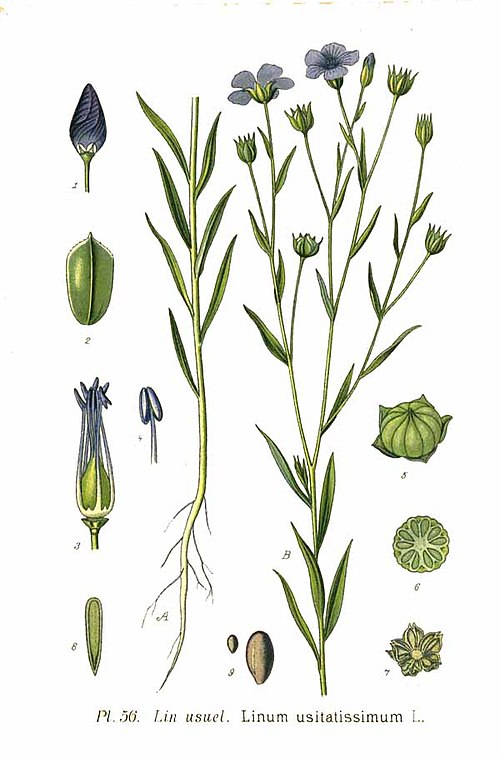
Linen: Fabric from Flax
The elegant fabric called linen is made from fibers found inside the stems of the flax plant. To extract these fibers, farmers pull the entire plant from the ground rather than cutting it, then soak the stems in water for several weeks in a process called retting. The soaking softens the outer stem and allows the long, strong fibers inside to be separated, combed, and spun into thread. Linen fabric is lightweight, breathable, and gets softer with every wash, making it perfect for clothing and bedding in warm climates. It is also one of the strongest natural fibers, about two to three times stronger than cotton.
The Oldest Cultivated Plant
Flax may be one of the very first plants that humans ever learned to grow and use. Archaeologists have discovered dyed flax fibers in a cave in the country of Georgia that are about 30,000 years old, from a time when our ancestors were still living as hunter-gatherers. Ancient Egyptians prized linen so highly that they used it to wrap their mummies, and pharaohs were buried in linen garments for the afterlife. Flax was so important to the Egyptians that images of the plant were carved into temple walls and painted on pottery. The tradition of growing flax spread throughout Europe and became a major industry in countries like Ireland, Belgium, and the Netherlands.
Flaxseed: A Tiny Superfood
While the stems give us linen, flax seeds are a nutritional powerhouse used in food and industry. Flaxseeds are one of the richest plant sources of omega-3 fatty acids, which are important for brain health and heart health. People add ground flaxseed to smoothies, cereals, and baked goods for a nutty, slightly sweet flavor boost. When flaxseeds are crushed, they produce linseed oil, which has been used for centuries to protect and preserve wood, and as a base for oil paints. Even the leftover meal after oil extraction is used as nutritious animal feed.
Flax in the Modern World
Today, Canada is the world’s largest producer of flaxseed, while countries like France and Belgium lead in growing flax for linen fabric. The fashion industry has renewed its interest in linen because it is a sustainable, biodegradable fabric that requires much less water to grow than cotton. Flax plants also need fewer pesticides and can grow in poor soil where other crops struggle. Researchers are finding new uses for flax fibers in composite materials, mixing them with plastics to create lightweight, strong panels for cars and buildings. This ancient plant continues to prove that its scientific name, “most useful,” is as true today as it was thousands of years ago.
 OtterKnow Kids Encyclopedia