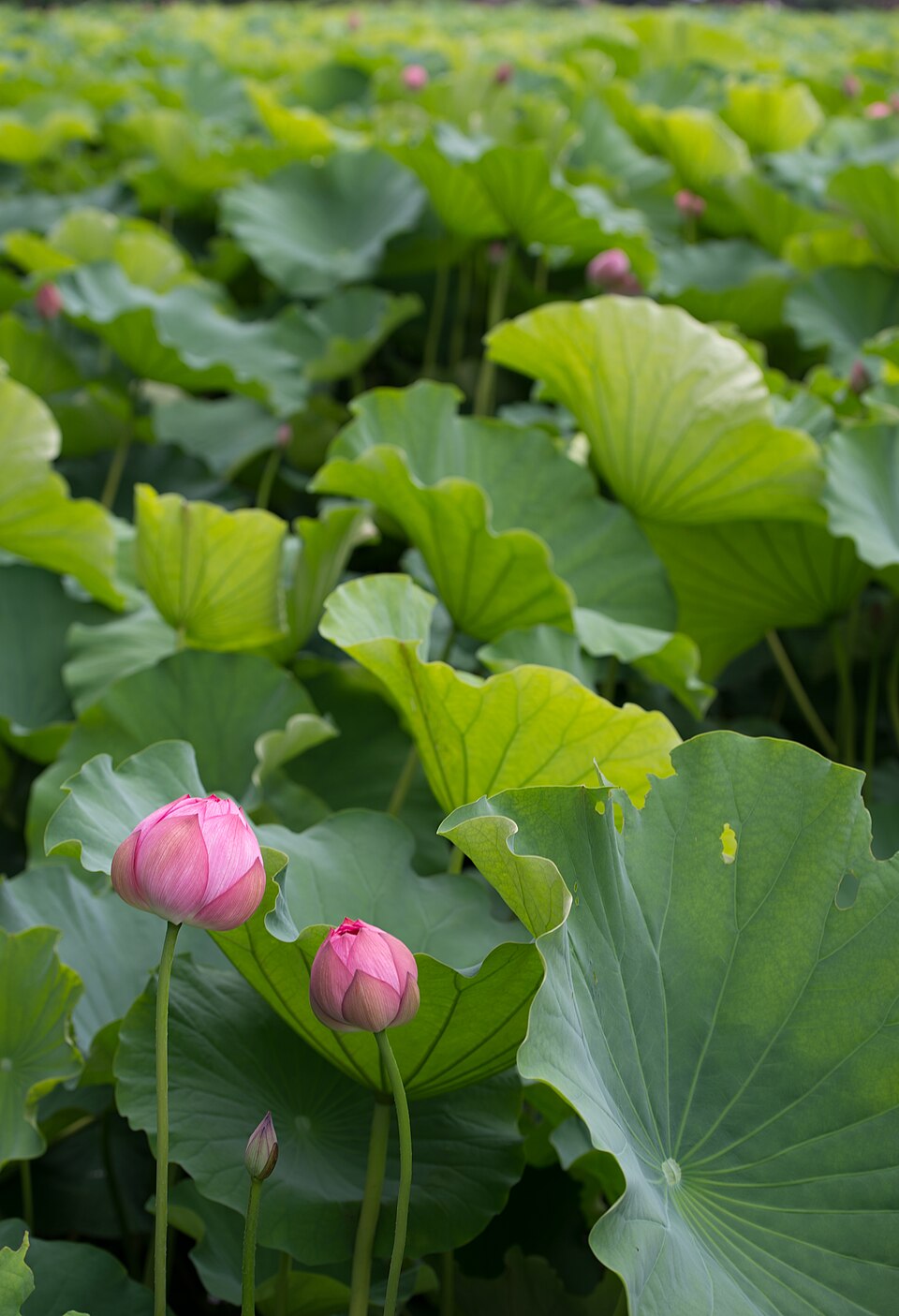
The Lotus Effect
One of the most unusual things about the lotus is that its leaves never get dirty, and scientists have figured out why. The surface of a lotus leaf is covered with millions of tiny wax bumps that are so small you can only see them with a powerful microscope. When water lands on the leaf, it forms perfect round droplets that roll off immediately, picking up any dust or dirt along the way. Scientists call this the “lotus effect,” and it has inspired engineers to create self-cleaning paints, fabrics, and even building materials. This natural superpower means that even in the muddiest pond, a lotus leaf stays perfectly clean and dry.
Seeds That Last for Centuries
Lotus seeds are among the most durable seeds in the entire plant kingdom, capable of surviving for very long periods of time. In 1995, scientists in China successfully germinated a lotus seed that was approximately 1,300 years old, found buried in a dried lake bed. The hard, waterproof seed coat protects the tiny plant embryo inside from bacteria, fungus, and even extreme temperatures. Lotus seeds are also nutritious and have been eaten as a snack and used in traditional medicine across Asia for thousands of years. The seed pod, which looks like a shower head with round holes, is often used in dried flower arrangements and is a well-known symbol of the lotus plant.
Lotus in Culture and Food
Almost every part of the lotus plant can be eaten or used in some way. The thick, crunchy root, called a rhizome, is a popular vegetable in Chinese, Japanese, and Indian cooking and is often sliced to reveal its beautiful pattern of holes. Lotus leaves are used to wrap sticky rice and other foods for steaming, giving the dish a subtle, earthy flavor. The seeds can be roasted like nuts, ground into paste for desserts, or brewed into tea. In ancient Egypt, the blue lotus was considered sacred and appeared in art and temple decorations, showing that people around the world have treasured this plant for thousands of years.
 OtterKnow Kids Encyclopedia