Giant Leaves That Can Hold a Child
The most spectacular water lily in the world is the Victoria amazonica, which grows in the calm backwaters of the Amazon River in South America. Its enormous circular leaves can grow over six feet across, making them the largest of any aquatic plant on Earth. The underside of each leaf is reinforced with a network of thick, radiating ribs that distribute weight evenly, like the beams of a bridge. This clever structure allows a single leaf to support up to 130 pounds, which means a small child could sit on one without sinking. When engineers in the 1800s studied this natural design, it inspired the construction of the Crystal Palace in London, one of the first buildings to use a similar ribbed framework of iron and glass.
A Flower That Opens and Closes
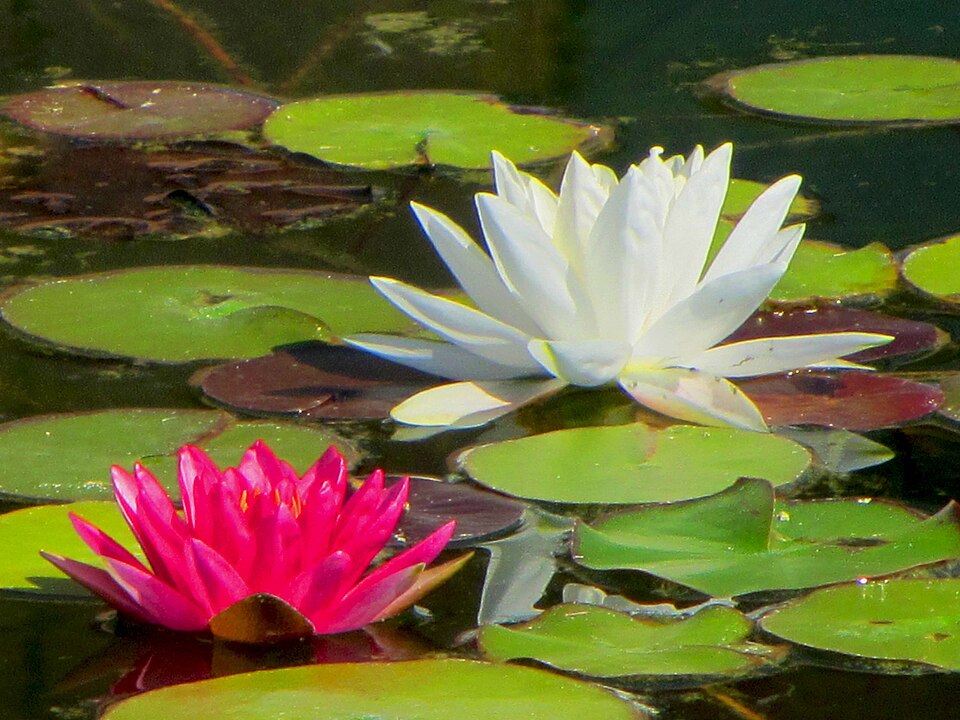
Water lily flowers follow a daily rhythm that sets them apart from most other flowers in the garden. Many species open their petals in the morning as the sun rises and close them again in the late afternoon or evening, repeating this cycle for three to five days before the flower fades. Some tropical water lilies do the opposite — they open at night to attract moths and beetles that pollinate them in the darkness. As a water lily flower ages, it often changes color, starting out white or pale on the first day and becoming pink or deeper in color by the third day. After pollination is complete, the flower stem slowly curls downward, pulling the developing seed pod beneath the surface where the seeds ripen underwater.
Water Lilies and Their World
Water lilies do much more than look pretty — they play important roles in the freshwater ecosystems where they grow. Their broad floating leaves shade the water below, which helps control algae growth and keeps temperatures comfortable for fish, frogs, and aquatic insects. Small creatures like snails and insect larvae cling to the undersides of lily pads, while frogs and dragonflies rest on top. The thick underwater rhizomes and stems provide structure in the soft mud, and decaying plant material feeds the microscopic organisms that form the base of the pond’s food web. People have cultivated water lilies for thousands of years, and today there are hundreds of hybrid varieties created by plant breeders who crossbreed different species to produce new colors and patterns.
 OtterKnow Kids Encyclopedia