What It Looks Like
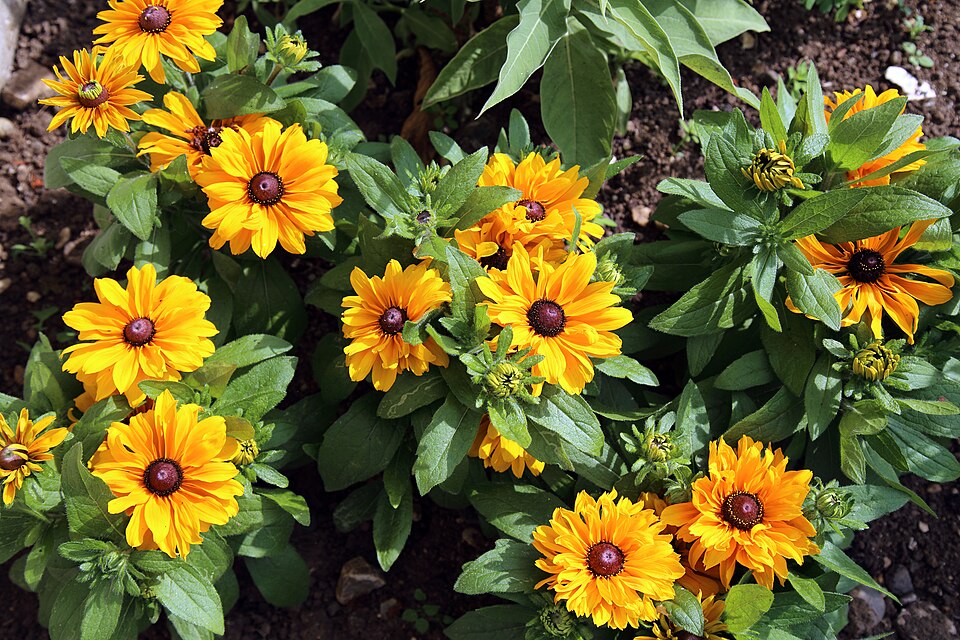
Each black-eyed Susan flower has 8 to 21 ray petals that spread out like the rays of a tiny sun around a raised, dome-shaped center. The petals are a rich golden-yellow color, and the center disk is made up of hundreds of tiny tube-shaped flowers packed tightly together. The plant’s stems and leaves are covered in rough, bristly hairs that feel scratchy to the touch. Black-eyed Susans usually grow between one and three feet tall, and a single plant can produce dozens of flowers during a growing season.
Where It Grows
Black-eyed Susans are native to the prairies and open grasslands of central and eastern North America. They thrive in full sunlight and can handle dry, poor soils that would challenge many other plants. This toughness makes them one of the first wildflowers to appear in disturbed areas like abandoned fields, construction sites, and highway medians. They are considered biennials or short-lived perennials, meaning individual plants typically live for two to three years before producing seeds and dying.
Pollinators and Wildlife
These flowers are a magnet for pollinators, especially butterflies like monarchs and painted ladies, as well as various species of bees. The dark center disk is actually a landing pad made up of many tiny flowers, each one producing nectar and pollen that insects eagerly collect. After the petals drop in fall, the seed heads remain standing through winter, providing food for goldfinches and other seed-eating birds. Small insects also shelter among the dried flower heads during cold months.
Uses and History
Native American peoples used black-eyed Susans in traditional medicine, making teas from the roots to treat colds and to wash sores. Early European settlers quickly adopted this hardy flower for their gardens because it was easy to grow and brightened up any landscape. Today, gardeners plant black-eyed Susans in pollinator gardens, wildflower meadows, and along borders because they attract beneficial insects. The flowers also make long-lasting cut arrangements, holding their cheerful shape for over a week in a vase.
Interesting Facts
The name “black-eyed Susan” may come from an old English poem about a woman named Susan who had dark eyes, though no one knows for certain. If you look closely at the dark center of the flower, you can see that the tiny disk flowers bloom in a spiral pattern from the outside in, following a mathematical pattern found throughout nature. Black-eyed Susans are sometimes confused with sunflowers, but they are much smaller and their center disks are rounder and more dome-shaped. These plants are also drought-resistant because their bristly hairs help reduce water loss from their leaves.
 OtterKnow Kids Encyclopedia