What It Looks Like
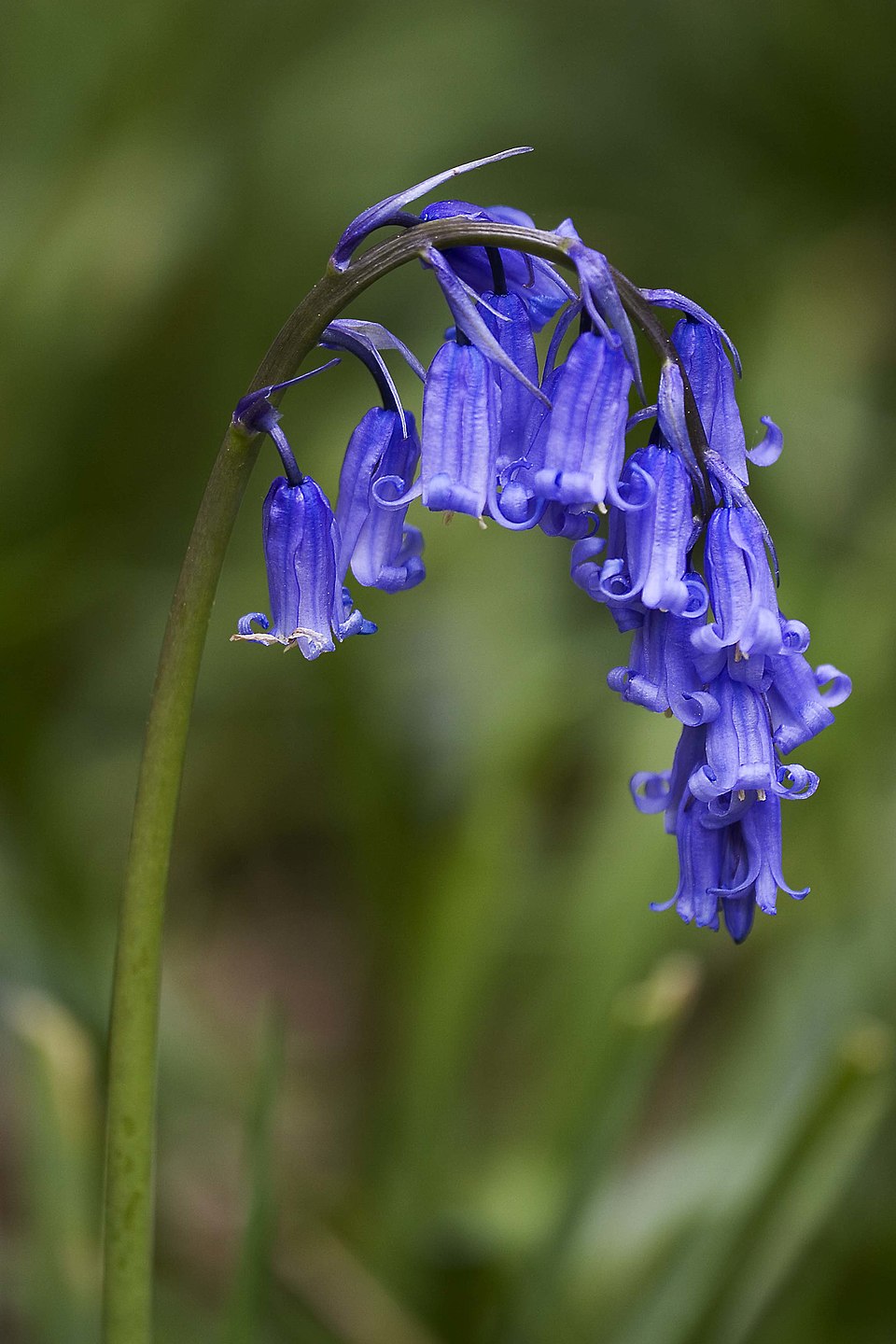
Each bluebell plant sends up a single arching stem lined with 5 to 12 drooping, bell-shaped flowers that curl back at the tips. The flowers are usually a deep violet-blue color, though rare white or pink varieties sometimes appear. The leaves are long, narrow, and glossy, growing in a small cluster at the base of the plant before the flower stalk emerges. A healthy bluebell stands about 12 to 16 inches tall, and the entire flower stalk bends gracefully to one side under the weight of its blossoms.
Where It Grows
Bluebells thrive in the dappled shade of ancient deciduous woodlands, blooming in April and May before the tree canopy fills in and blocks the sunlight. They prefer moist, well-drained soils rich in organic matter from years of fallen leaves. Once established, a bluebell colony spreads very slowly through its underground bulbs, sometimes taking five to seven years to recover if the plants are trampled or disturbed. Besides Britain, bluebells can also be found in parts of western Europe, including France, Belgium, and the Netherlands.
Pollinators and Wildlife
Bluebells are an important early-spring food source for bees and other pollinating insects that emerge from winter dormancy before many other flowers have bloomed. Bumblebees are especially drawn to bluebells because they can push their way inside the bell-shaped flowers to reach the sweet nectar at the base. Butterflies and hoverflies also visit bluebell flowers for nectar. The leaves provide ground cover for small woodland creatures like beetles and spiders.
Uses and History
In centuries past, people extracted a sticky starch from bluebell bulbs and used it as a glue for bookbinding and for attaching feathers to arrows. British folklore is full of stories about bluebells, including the belief that fairies lived among them and that hearing a bluebell ring would bring bad luck. During the Elizabethan era, the starch from bluebell bulbs was also used to stiffen the large ruffled collars that were fashionable at the time. Today, bluebells are valued mainly for their beauty and their role in marking ancient woodlands that deserve conservation.
Interesting Facts
The English bluebell faces a threat from a non-native Spanish bluebell that was introduced to gardens and has spread into the wild, where it can crossbreed with the native species. You can tell the two apart because English bluebells have flowers on just one side of the stem, causing it to droop, while Spanish bluebells have flowers all around the stem and stand straight up. A single bluebell bulb can live for decades, sending up new flowers each spring from the same underground store of energy. Scientists estimate that some bluebell colonies in Britain are over 300 years old.
 OtterKnow Kids Encyclopedia