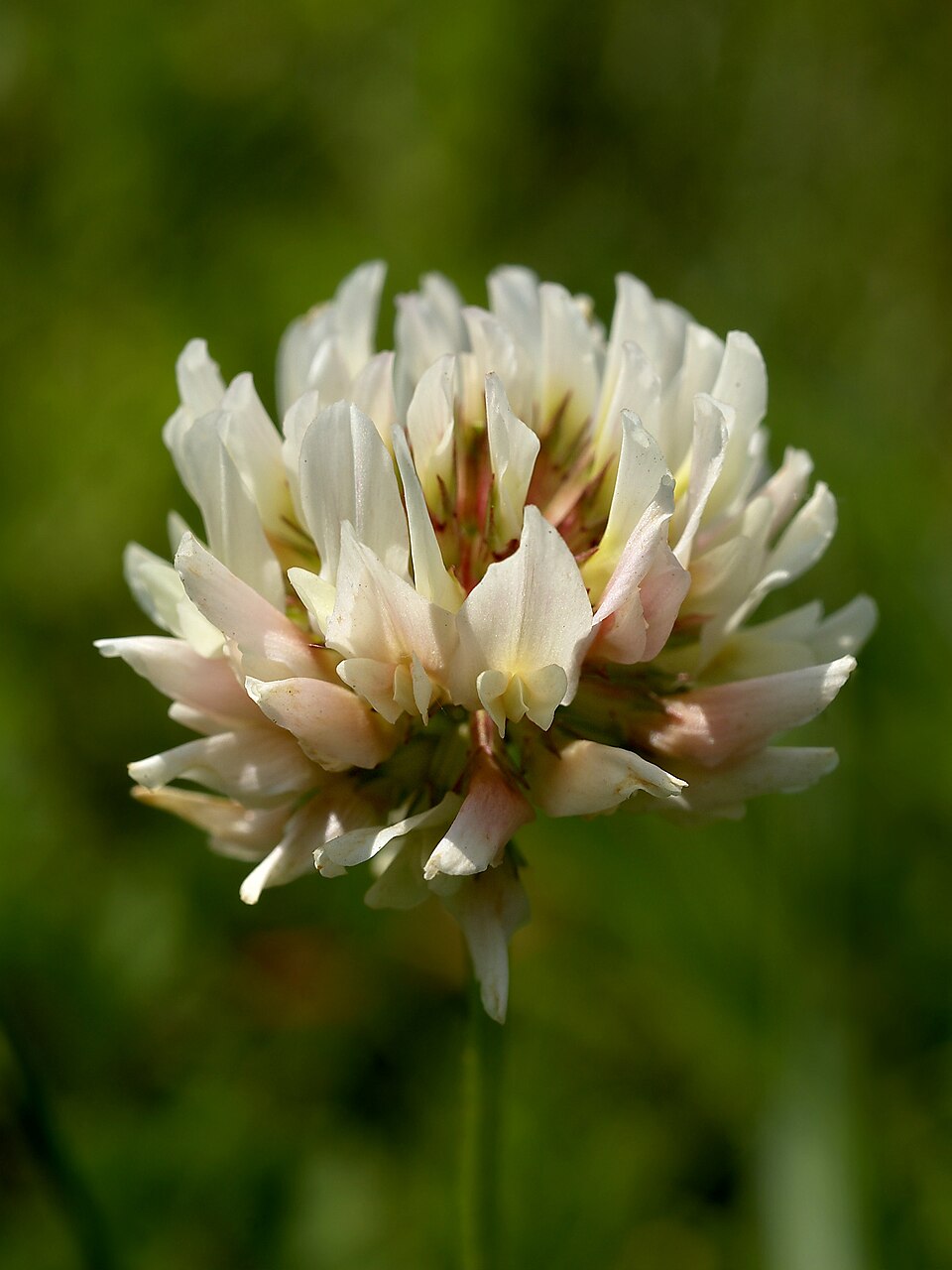
What It Looks Like
Clover leaves are made up of three rounded leaflets attached to a single stem, each leaflet often marked with a lighter green or white V-shaped band. The flowers are actually clusters of many tiny individual blossoms packed together into a round or oval head. White clover produces small white to pinkish flower heads close to the ground, while red clover has taller stems topped with larger rosy-pink flower heads. Clover plants stay low to the ground, usually growing just 4 to 12 inches tall, and they spread by sending out creeping stems called stolons.
Where It Grows
Clover grows on every continent except Antarctica and thrives in a wide range of conditions, from sunny meadows to partly shaded lawns. It prefers moist, slightly acidic to neutral soils but can tolerate poor ground that other plants struggle with. Farmers have grown clover as a cover crop for thousands of years because of its ability to improve soil quality. Clover is also one of the first plants to appear in bare or damaged areas, making it an important pioneer species in ecological recovery.
Pollinators and Wildlife
Clover is one of the most important nectar sources for honeybees, and much of the honey produced around the world comes from clover blossoms. Bumblebees, butterflies, and many other pollinating insects also depend on clover for food throughout the growing season. Rabbits, deer, and groundhogs graze on clover leaves, while birds like grouse and quail eat the seeds. The dense mats of clover that spread across lawns and fields provide shelter for ground-nesting insects and small creatures.
Uses and History
One of clover’s most useful abilities is nitrogen fixation, a process where special bacteria living in nodules on clover’s roots pull nitrogen gas from the air and convert it into a form that enriches the soil. Farmers use clover as a natural fertilizer by planting it between crop seasons, then plowing it into the earth to release its stored nitrogen. Clover has been cultivated since at least the 1500s in Europe and was brought to North America by early colonists. Red clover flowers can be dried and used to make a mild, slightly sweet herbal tea.
Interesting Facts
Finding a four-leaf clover is considered incredibly lucky because they are genuinely rare, occurring in roughly one out of every 10,000 clover plants. The record for the most leaves on a single clover stem is 56 leaves, discovered in Japan in 2009. During World War II, clover was planted extensively in Victory Gardens because it enriched the soil for vegetable growing. Scientists have discovered that the four-leaf trait is caused by a combination of genetics and environmental conditions, which is why some patches of clover produce more four-leaf specimens than others.
 OtterKnow Kids Encyclopedia