What It Looks Like
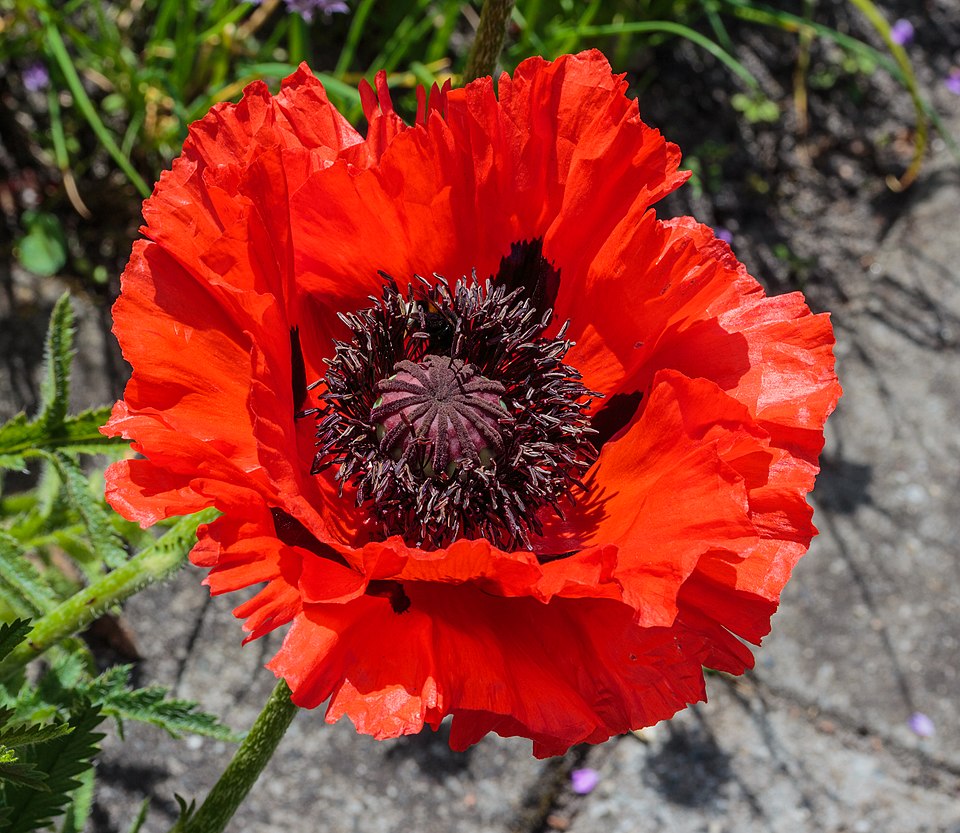
Poppy petals are very thin and papery, often with a crepe-like texture that gives them a crinkled, silky appearance. Most poppy flowers have four large petals surrounding a central cluster of dark stamens, though some species have more. The colors range from the classic scarlet red of the corn poppy to the golden orange of the California poppy and the pale pastels of ornamental garden varieties. After the petals fall, the flower leaves behind a distinctive round or oval seed pod with a flat cap on top, pierced with tiny holes like a salt shaker that releases seeds when the wind shakes the stem.
Where It Grows
Poppies are found across Europe, Asia, and North America, growing in meadows, fields, disturbed soils, and along roadsides. The corn poppy, also called the Flanders poppy, thrives in agricultural fields and freshly turned earth, which is why it appeared so abundantly on the churned-up battlefields of World War I. California poppies bloom best in dry, sandy soils with full sun and are drought-tolerant, which makes them well-suited to the Mediterranean climate of the American West. Many poppy species are annuals, completing their entire life cycle from seed to seed in a single growing season.
Pollinators and Wildlife
Poppies attract bees, beetles, and hoverflies with their bright colors and abundant pollen, though most species produce little or no nectar. Bees roll around in the center of poppy flowers, covering themselves in pollen, which they carry back to their nests as food for their young. The tiny seeds that pour from poppy seed heads provide food for small birds like finches and sparrows. Poppies are especially important for solitary bees, which visit them early in the morning when the flowers first open.
Uses and History
After World War I, the red poppy became a symbol of remembrance after a Canadian soldier wrote a poem describing poppies blooming among the graves in Flanders, Belgium. Today, people in many countries wear red paper poppies on Remembrance Day and Veterans Day to honor fallen soldiers. Poppy seeds from the bread seed poppy are widely used in baking, adding a nutty crunch to breads, muffins, and cakes. The California poppy was sacred to several Native American groups, who used it in traditional remedies and cuisine, and Spanish explorers reportedly called the California coast the “land of fire” because of the vast orange poppy fields they saw from their ships.
Interesting Facts
Poppy seeds can remain dormant in the soil for decades, springing to life only when the ground is disturbed and fresh light reaches them, which is why they appear so quickly on construction sites and plowed fields. A single corn poppy plant can produce up to 60,000 seeds, ensuring that even if only a tiny fraction survive, the species continues. The seed pod’s pepper-shaker design is an elegant example of wind dispersal: as the breeze sways the tall, dried stem, seeds are flung out through the holes a few at a time over a wide area. California poppies close their petals at night and on cloudy days, reopening each morning to greet the sun.
 OtterKnow Kids Encyclopedia