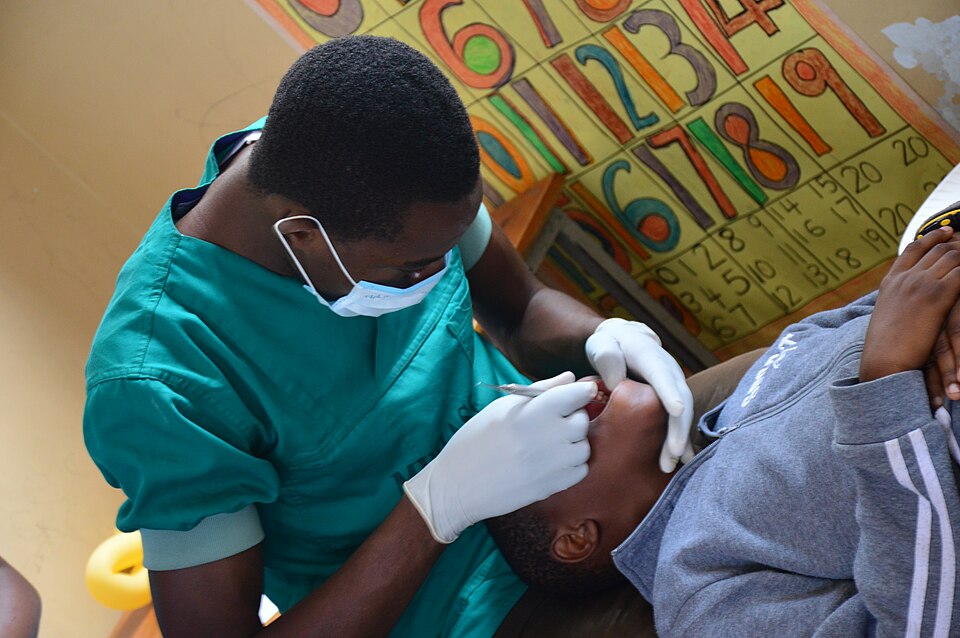
Inside a Dental Office
When you visit a dental office, you sit in a special chair that can tilt back so the dentist can see inside your mouth easily. The dentist uses a small mirror on a stick to look at the backs of your teeth and a tool called an explorer to gently check for soft spots. An X-ray machine can take pictures of the teeth and bones hidden under your gums, showing problems you cannot see from the outside. A dental hygienist usually cleans your teeth first, scraping away a sticky film called plaque and polishing each tooth until it shines. The whole visit is usually quick and painless, even though the tools might look a little unusual.
The Dental Team
Dentists do not work alone — they rely on a whole team of trained professionals. Dental hygienists clean teeth, take X-rays, and teach patients how to brush and floss properly. Dental assistants hand tools to the dentist during procedures and help keep patients comfortable. The office also has a front-desk staff who schedule appointments and handle paperwork. Some dental teams include orthodontists, who specialize in straightening teeth, or oral surgeons, who perform more complex operations.
Why Oral Health Matters
Taking care of your mouth is about much more than having a nice smile. Healthy teeth help you chew food properly, which is the first step in getting the nutrition your body needs. Problems in the mouth, like infections in the gums, can actually spread to other parts of the body and cause serious health issues. Tooth decay is one of the most common childhood diseases in the United States, affecting about 1 in 5 children between ages 5 and 11. Good oral health also helps you speak clearly, since your teeth and tongue work together to form many sounds.
How to Take Care of Your Teeth
Brushing your teeth at least twice a day with fluoride toothpaste is the most important thing you can do for your oral health. You should brush for about two minutes each time, making sure to reach every surface of every tooth. Flossing once a day removes bits of food and plaque from between your teeth where a toothbrush cannot reach. Eating fewer sugary snacks and drinks also helps, because the bacteria in your mouth feed on sugar and produce acid that wears away tooth enamel. Drinking water, especially water that contains fluoride, helps rinse away food particles and strengthens your teeth.
The History of Dentistry
People have been trying to fix tooth problems for thousands of years. Ancient Egyptians wrote about toothaches and tooth remedies more than 5,000 years ago, and the earliest known dental filling dates back about 6,500 years. In the 1700s, a French surgeon named Pierre Fauchard wrote a famous book about dental science and is often called the “Father of Modern Dentistry.” Before modern anesthesia was invented, having a tooth pulled was extremely painful, and many people feared visiting the dentist. Today, dentists use numbing medicine, gentle tools, and even laughing gas to make sure patients feel as comfortable as possible.
Becoming a Dentist
Becoming a dentist takes many years of education and training. After finishing college, a person must attend dental school for four more years to earn a Doctor of Dental Surgery or Doctor of Dental Medicine degree. During dental school, students study subjects like anatomy, biology, and chemistry while also practicing on models and real patients. After graduating, new dentists must pass exams to get a license before they can treat patients on their own. Some dentists continue studying for two or three more years to become specialists, such as pediatric dentists who focus on children’s health.
Fun Facts About Teeth
Humans grow two sets of teeth during their lifetime — 20 baby teeth and 32 adult teeth. Your tooth enamel is the hardest substance in your entire body, even harder than bone. Sharks, on the other hand, can grow thousands of teeth over their lifetimes because new ones constantly replace old ones. Every person’s set of teeth is unique, just like fingerprints, which is why dental records can be used to identify people. The average American spends about 38 days brushing their teeth over the course of their lifetime.
 OtterKnow Kids Encyclopedia