The Birth of Democracy
One of the greatest gifts ancient Greece gave the world was democracy, a system of government where citizens help make the rules. Around 508 BC, a leader named Cleisthenes reformed the government of Athens so that free male citizens could vote on laws and important decisions. Citizens gathered in a large open-air assembly to debate and vote. This was different from most other places in the ancient world, where kings or emperors made all the decisions by themselves. However, not everyone in Athens could participate. Women, enslaved people, and foreigners were not allowed to vote. Even with those limits, Athenian democracy inspired the governments that many countries use today.
Greek Gods and Myths
The ancient Greeks believed in many gods and goddesses who lived on top of Mount Olympus, the highest mountain in Greece. Zeus was the king of the gods and ruler of the sky. Athena was the goddess of wisdom, and the city of Athens was named after her. Poseidon controlled the seas, and Apollo drove the sun across the sky each day. The Greeks told exciting stories called myths about their gods, heroes, and monsters. These myths explained things the Greeks wondered about, like why seasons change or why earthquakes happen. Many of these stories, such as the adventures of Hercules and the tale of the Trojan War, are still read and enjoyed today.
The Olympic Games
The ancient Greeks invented the Olympic Games, which were first held in 776 BC at the city of Olympia to honor Zeus. Athletes from different city-states traveled to Olympia every four years to compete in events like running, wrestling, javelin throwing, and chariot racing. Only men were allowed to compete, and the winners received a simple crown made of olive leaves. Winning brought great honor to the athlete and his city-state. During the games, even city-states that were at war with each other agreed to a truce so athletes could travel safely. The ancient Olympics continued for nearly 1,200 years and inspired the modern Olympic Games that we watch today.
Amazing Buildings and Art
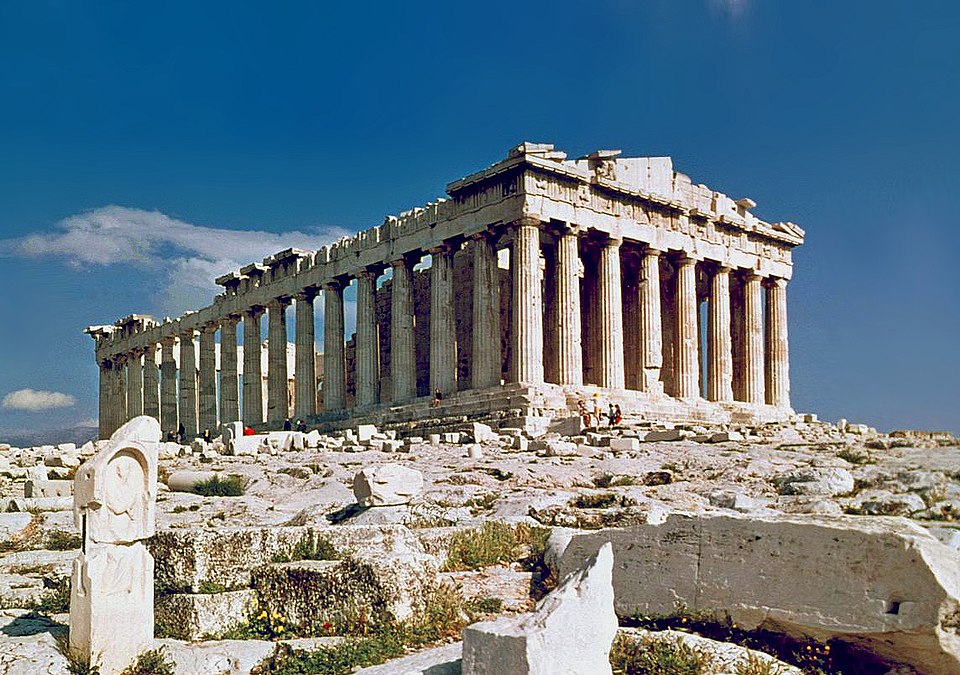
The ancient Greeks were talented builders and artists. Their most famous building is the Parthenon, a magnificent temple built in Athens between 447 and 432 BC. It was dedicated to the goddess Athena and decorated with beautiful sculptures. Greek architects designed buildings with tall columns that are still copied in courthouses, museums, and government buildings around the world. Greek sculptors carved incredibly lifelike statues of people and gods from marble and bronze. Greek potters decorated vases with detailed scenes from daily life and mythology. These works of art tell us a great deal about how the ancient Greeks lived.
Great Thinkers and Discoveries
Ancient Greece produced thinkers whose ideas are still taught in schools today. Philosophers like Socrates, Plato, and Aristotle asked big questions about life, truth, and how people should treat each other. Aristotle studied plants, animals, and the stars, and he started one of the first schools for older students. Greek mathematicians like Pythagoras and Euclid made discoveries about shapes and numbers that students still learn in school. Greek doctors, especially Hippocrates, changed medicine by looking for natural causes of illness instead of blaming the gods. Many ideas from ancient Greece became the foundation of science, math, and philosophy in the Western world.
The Legacy of Ancient Greece
Although the age of ancient Greece ended more than two thousand years ago, its ideas are still all around us. The word “democracy” comes from the Greek words meaning “rule by the people.” The Olympic Games still bring athletes from around the world together. Greek columns appear on buildings in cities everywhere. Scientists and doctors still take an oath named after Hippocrates. Even many English words come from ancient Greek, including “school,” “music,” “theater,” and “alphabet.” By asking questions, celebrating human achievement, and believing that citizens should have a voice in their government, the ancient Greeks helped shape the world we live in today.
 OtterKnow Kids Encyclopedia