Father Junipero Serra and the Mission System
The mission system was led by Franciscan priests, the most well-known being Father Junipero Serra. Born on the Spanish island of Mallorca in 1713, Serra came to the Americas as a missionary. In 1769, he founded Mission San Diego de Alcala, the first of the 21 California missions. Over the next several years, Serra personally founded nine missions before his death in 1784. His successors continued the work, with the final mission, Mission San Francisco Solano in Sonoma, completed in 1823.
Serra is a complicated historical figure. The Catholic Church made him a saint in 2015, honoring his religious work. However, many people, especially Native Americans, view him as someone who helped destroy Indigenous cultures and forced Native peoples into a harsh way of life. Understanding Serra means holding both of these truths at the same time.
The 21 Missions
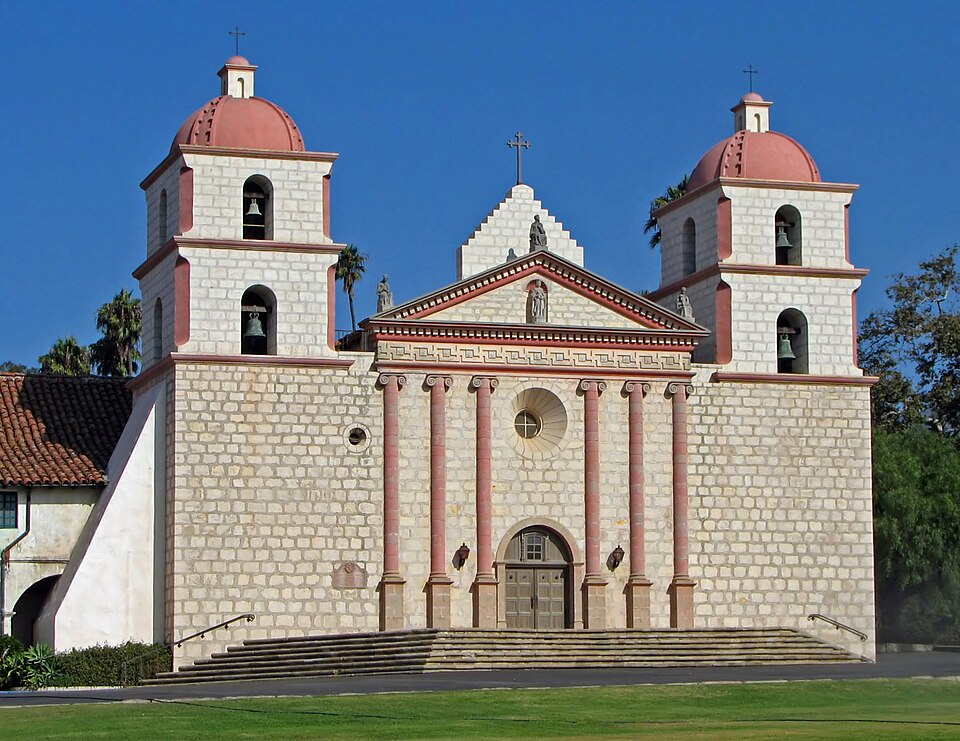
The 21 missions were spaced roughly a day’s journey apart along El Camino Real. They stretched from Mission San Diego de Alcala in the south, founded in 1769, to Mission San Francisco Solano in Sonoma in the north, founded in 1823. Some of the most famous missions include Mission Santa Barbara, known as the “Queen of the Missions” for its beautiful architecture, and Mission San Juan Capistrano, famous for the swallows that return there every year. Each mission was built around a central courtyard and typically included a church, living quarters, workshops, storerooms, and farmland. The missions grew crops like wheat, corn, and grapes, and raised cattle, sheep, and horses.
Impact on Native Americans
Before the missions arrived, California was home to an estimated 300,000 Native Americans belonging to dozens of distinct groups, including the Ohlone, Chumash, Tongva, and many others. These peoples had their own languages, governments, and cultural traditions that had developed over thousands of years.
The mission system devastated Native communities. Spanish soldiers and missionaries pressured or forced Native people to move into the missions. Once inside, they were expected to convert to Christianity, speak Spanish, and perform hard labor building structures, farming fields, and tending livestock. They were often forbidden from practicing their own traditions, speaking their own languages, or leaving the mission grounds. Those who tried to escape were pursued and punished.
The consequences were catastrophic. European diseases like measles, smallpox, and influenza swept through the mission communities. Overcrowded and unsanitary living conditions made the outbreaks even worse. Historians estimate that the Native American population in the mission regions declined by as much as 60 to 70 percent during the mission period. The loss of life, culture, and freedom during this era is one of the most painful chapters in California history.
Secularization and Decline
In 1821, Mexico won its independence from Spain and took control of California. The new Mexican government began secularizing the missions in 1834, meaning they took the missions away from the Catholic Church and turned them into regular settlements. The plan was to distribute mission lands to Native Americans and Mexican settlers. In practice, most of the land ended up in the hands of wealthy Mexican ranchers, while Native Americans received little or nothing. Many mission buildings fell into disrepair, and some were nearly destroyed. The mission period was officially over, but its effects on the land and its people lasted far longer.
The Missions Today
Today, all 21 California missions still stand in some form, though many have been rebuilt or restored over the years. They are popular historical landmarks and educational sites. Mission Santa Barbara continues to operate as an active parish church. Mission San Juan Capistrano is a major tourist attraction. Many fourth graders in California study the missions as part of their state history curriculum.
The missions also remain a source of ongoing conversation about history, memory, and justice. In recent years, there has been growing recognition of the harm the mission system caused to Native peoples. Some mission sites now include exhibits and educational programs that present Native American perspectives alongside the traditional narrative. Statues of Father Serra have been removed in several cities as communities reconsider how to honor a complex and painful history. Understanding the missions means learning about both the architecture and ambition of the Spanish colonizers and the courage and resilience of the Native peoples whose lives were forever changed.
 OtterKnow Kids Encyclopedia