The History of Kwanzaa
Kwanzaa was created in 1966 by Dr. Maulana Karenga, a professor of African American studies at California State University, Long Beach. He wanted to give African Americans a holiday that honored their African heritage and brought communities together. Dr. Karenga was inspired by traditional African harvest festivals, where communities would gather to celebrate the land and give thanks. The first Kwanzaa was celebrated by a small group of families in Los Angeles, California. Today, millions of people in the United States and around the world observe the holiday.
The Seven Principles
Each day of Kwanzaa focuses on one of seven guiding principles, called the Nguzo Saba in Swahili. The principles are Umoja (Unity), Kujichagulia (Self-Determination), Ujima (Collective Work and Responsibility), Ujamaa (Cooperative Economics), Nia (Purpose), Kuumba (Creativity), and Imani (Faith). Families discuss one principle each day and think about how it applies to their lives. These principles encourage people to work together, support their communities, and take pride in their heritage. Children often learn about the principles through stories, songs, and activities.
Symbols of Kwanzaa
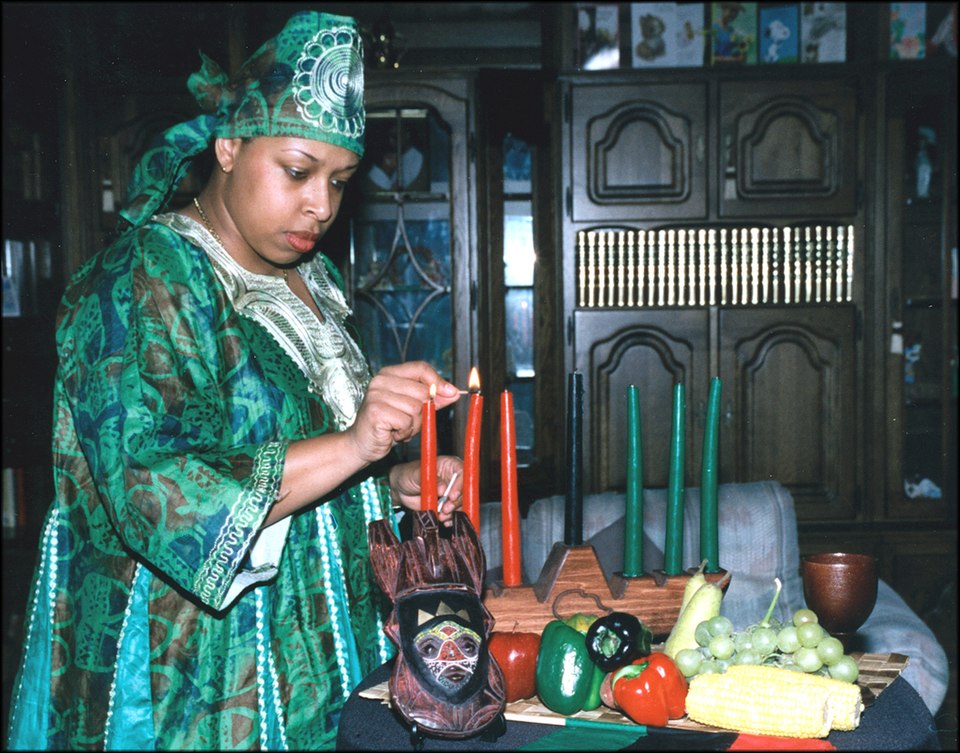
Kwanzaa has seven main symbols that are displayed during the celebration. The Kinara is a candleholder that holds seven candles called Mishumaa Saba, with three red candles, three green candles, and one black candle in the center. The Mkeka is a straw mat that represents the foundation of African traditions. Mazao are fruits and vegetables that symbolize the harvest, and Muhindi are ears of corn that represent children. The Kikombe cha Umoja is a unity cup used to pour a drink in honor of ancestors. Each symbol has a special meaning connected to African culture and values.
How People Celebrate
During Kwanzaa, families gather each evening to light a candle on the Kinara. The black candle is lit first, followed by the red and green candles, one each day. As each candle is lit, the family discusses the principle for that day. Many families decorate their homes in the colors of Kwanzaa: black, red, and green. Black stands for the people, red stands for their struggles, and green stands for hope and the future. People often exchange handmade gifts, especially on the sixth day, which celebrates Kuumba (Creativity).
The Karamu Feast
On December 31st, the sixth day of Kwanzaa, families and communities come together for a large feast called the Karamu. This is the biggest celebration of the entire holiday. The feast often features dishes inspired by African, Caribbean, and Southern American cooking traditions. Music, dancing, drumming, and storytelling are all part of the Karamu celebration. People use the Kikombe cha Umoja (unity cup) to pour a libation, which is a small offering of drink to honor ancestors. The evening is filled with joy, laughter, and a strong sense of togetherness.
Kwanzaa and African Heritage
Kwanzaa helps African Americans connect with their roots in Africa, even though their ancestors were taken from many different parts of the continent. The use of Swahili, a widely spoken African language, is an important part of the celebration. Many of the holiday’s traditions are inspired by harvest festivals from countries like Nigeria, Ghana, and Tanzania. By celebrating Kwanzaa, families pass down knowledge about African history and culture to the next generation. The holiday reminds people that their heritage is something to be proud of and to share with others.
Why Kwanzaa Matters Today
Kwanzaa gives families and communities a special time to reflect on their values and strengthen their bonds. The seven principles encourage people to think about how they can make their communities better places. Even though Kwanzaa was created in the 1960s, its message of unity, purpose, and creativity is still important today. Schools, libraries, and community centers across the country hold Kwanzaa events so that everyone can learn about this meaningful holiday. Kwanzaa shows that celebrating your culture and heritage is a powerful way to build a brighter future.
 OtterKnow Kids Encyclopedia