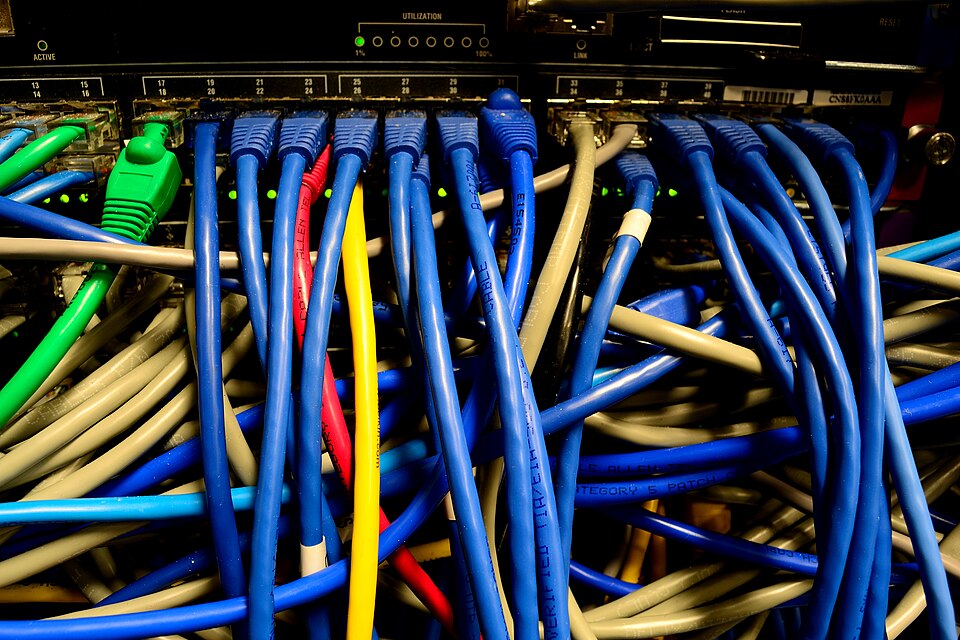
When you type a website address into your browser, your device sends a request through your home network to your Internet Service Provider, or ISP. The ISP sends that request across the internet to the server where the website is stored. A server is a powerful computer designed to hold website files and send them to anyone who asks. The server finds the information you need and sends it back to your device. All of this happens in just a fraction of a second!
Cables, Wires, and Wireless Signals
Most internet data travels through physical cables, including fiber optic cables that use pulses of light to carry information at very high speeds. More than 600 undersea cables stretch across the ocean floor, connecting continents together. If you lined up all the undersea cables end to end, they would stretch over 870,000 miles, enough to wrap around the Earth more than 35 times. At home, you might connect to the internet using Wi-Fi, which sends data through invisible radio waves between your device and a router.
Packets and Protocols
When you send a photo or load a video, the data does not travel as one big chunk. Instead, it gets broken into tiny pieces called packets. Each packet takes its own path through the network and they all meet up at the destination, where they are reassembled in the correct order. This system is fast and reliable because if one path is blocked, the packets can take a different route. Computers follow a set of rules called protocols, like TCP/IP, to make sure all the packets arrive correctly.
The History of the Internet
The internet started as a small experiment. On October 29, 1969, a researcher at UCLA tried to send the word “login” to a computer at Stanford Research Institute using a network called ARPANET. The system crashed after just two letters, so the very first internet message was just “LO.” Over the following decades, the network grew, and in 1991, Tim Berners-Lee invented the World Wide Web, making the internet much easier for regular people to use. Today, the internet has grown from those two connected computers to billions of devices worldwide.
Servers and Data Centers
The websites, apps, and videos you use every day are stored on servers inside large buildings called data centers. These data centers can be as big as several football fields and contain thousands of servers working together. They need powerful cooling systems to keep all those computers from overheating. Major technology companies operate data centers in many countries so that information can reach users quickly no matter where they live.
The Internet in Everyday Life
The internet is part of daily life in ways you might not even notice. It powers video calls with family, helps drivers navigate with GPS maps, lets doctors share medical information, and connects students to online learning tools. Even smart home devices like voice assistants and thermostats use the internet to work. As the internet continues to grow, it keeps finding new ways to connect people and make life easier.
 OtterKnow Kids Encyclopedia