Johannes Gutenberg and His Invention
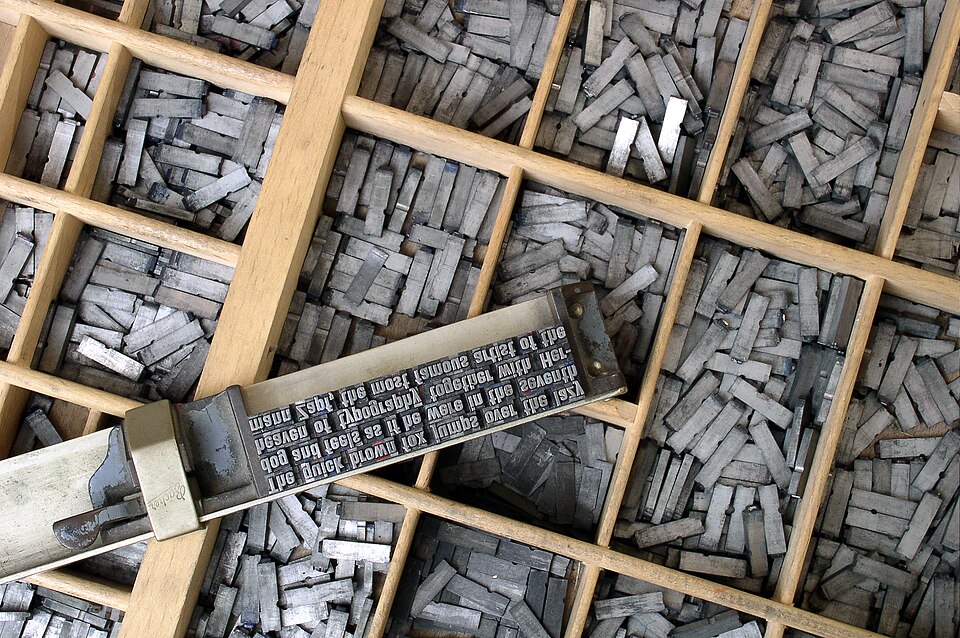
Johannes Gutenberg was a German goldsmith and inventor who created the first movable-type printing press in Europe around the year 1440. He was born in the city of Mainz, Germany, sometime between 1393 and 1406, and he used his skills working with metal to develop a brilliant new system. Gutenberg designed small metal blocks, each with a single raised letter on top, that could be arranged to spell out words, locked into a frame, coated with ink, and pressed onto paper. After printing one page, the letters could be rearranged to create an entirely different page. He also invented a special oil-based ink that stuck to the metal type much better than the water-based inks used before, and he adapted a wooden screw press similar to those used for making wine.
The Gutenberg Bible
Gutenberg’s most famous project was the Gutenberg Bible, completed around 1455. It is believed that he printed about 180 copies, with roughly three-quarters printed on paper and the rest on a material called vellum, which is made from animal skin. Each Bible was about 1,300 pages long, and the printing was so beautiful that many people at first thought the pages had been written by hand. The Gutenberg Bible proved that the printing press could produce books of the highest quality. Today, only about 49 copies of the Gutenberg Bible survive, and they are among the most valuable books in the world.
How the Printing Press Spread Across Europe
After Gutenberg demonstrated his invention, the technology spread rapidly. Printers traveled from Mainz to other cities to set up their own workshops, and within just a few decades, printing presses appeared in more than 200 cities across a dozen European countries. A single printing press could produce up to 3,600 pages in one workday, compared to about 40 pages by older hand-printing methods. By the year 1500, printing presses across Western Europe had already produced more than 20 million books. Cities like Venice, Paris, and London became major centers of printing, and the cost of books dropped dramatically, making them available to ordinary people for the first time.
How the Printing Press Changed the World
The printing press sparked what historians call the Printing Revolution, one of the most important turning points in human history. Because books became cheaper and easier to produce, more people learned to read, and literacy rates climbed across Europe. Scientists could share their discoveries with other researchers far away, which helped speed up the Scientific Revolution. New ideas about religion, government, and philosophy spread faster than ever before. Newspapers and pamphlets gave ordinary citizens access to information about current events. The printing press helped create a world where knowledge was not limited to the wealthy and powerful but could belong to everyone.
Printing Before Gutenberg
Gutenberg was not the first person in the world to experiment with printing. In China, woodblock printing was used as early as the 600s, and a Chinese inventor named Bi Sheng created the first known movable-type system around the year 1040, using pieces made from baked clay. In Korea, printers developed metal movable type in the 1200s. However, these earlier systems did not spread as widely, partly because Chinese and Korean writing uses thousands of characters, making movable type much more difficult to manage. Gutenberg’s system worked especially well with the Latin alphabet, which has only 26 letters, and his combination of metal type, oil-based ink, and a screw press made printing faster and more practical than any method before it.
The Legacy of the Printing Press
The printing press is often called one of the most important inventions in history. It laid the foundation for the modern world by making information accessible to millions of people. Without it, the spread of education, science, and democracy would have been much slower. The basic technology Gutenberg invented remained largely unchanged for more than 300 years, until steam-powered presses arrived in the 1800s. Today, we live in a digital age where information travels instantly through the internet, but it all started with Gutenberg’s simple yet revolutionary idea of pressing inked letters onto paper.
 OtterKnow Kids Encyclopedia