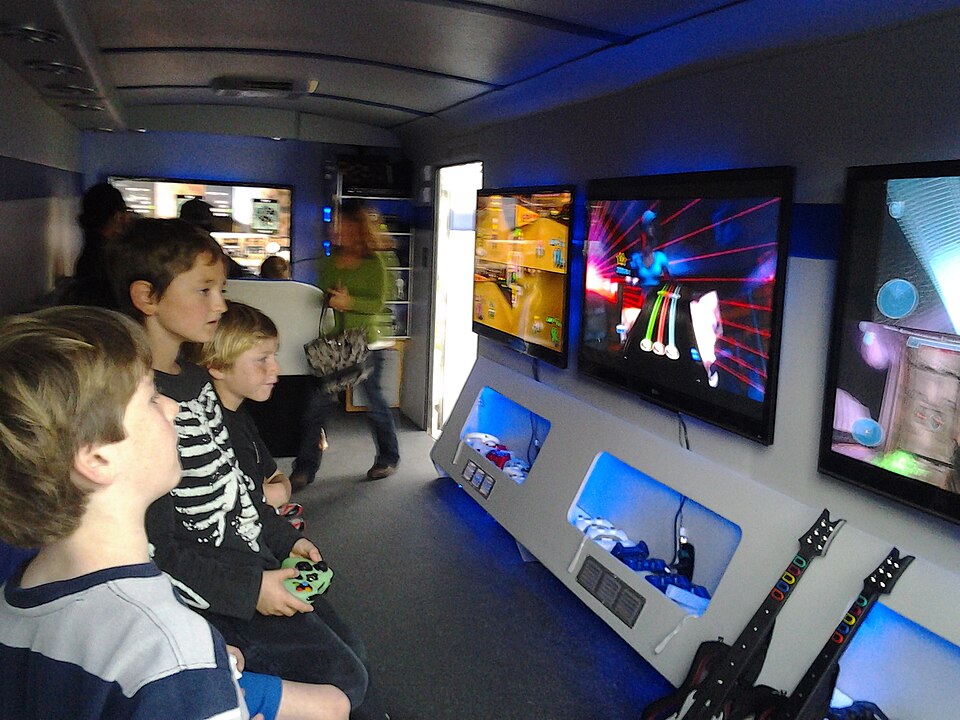
The History of Video Games
Video games have been around longer than you might think. One of the earliest video games, called Tennis for Two, was created in 1958 by a physicist named William Higinbotham. It was a simple tennis game played on a small screen called an oscilloscope. In 1972, a company called Atari released a game called Pong, which was one of the first commercially successful arcade video games. Pong was a simple table tennis game created by engineer Allan Alcorn. Over the following decades, home consoles like the Nintendo Entertainment System, PlayStation, and Xbox brought gaming into living rooms everywhere. The video game industry has grown into a massive business worth nearly 200 billion dollars each year.
How Video Games Are Made
Creating a video game takes a team of people with many different skills working together. Game designers come up with the idea for the game, including the rules, the story, and how the game will be played. Artists create the characters, environments, and visual effects that make the game world come alive. Programmers write the computer code that makes everything work, from how characters move to how the physics of the game world behaves. Sound designers create music and sound effects that help set the mood. Before a game is released, testers play it over and over to find and fix problems called bugs.
Learning to Design Games
You do not have to be a grown-up to start making your own video games. Programs like Scratch, which was created at MIT in 2007, let kids design games by snapping together colorful blocks of code instead of typing complicated programming languages. Scratch has grown to over 100 million users worldwide and is available in more than 70 languages. Other tools like Roblox Studio and GameMaker also help beginners create their own game worlds. Making games teaches valuable skills like problem-solving, creativity, and logical thinking, because you have to plan out how your game works and figure out what to do when something goes wrong.
Games That Teach and Connect
Video games are not just for fun. Educational games help students practice math, reading, science, and many other subjects in ways that feel like play. Simulation games let players build cities, manage farms, or explore the ocean, teaching them about real-world systems. Many games also bring people together by allowing players to cooperate, solve puzzles, or compete in teams. Researchers have found that certain video games can improve hand-eye coordination, decision-making speed, and the ability to solve problems creatively.
Playing Games Responsibly
While video games can be a great hobby, it is important to play them in a balanced way. Taking breaks to stretch, move around, and rest your eyes helps keep your body healthy. It is also important to follow age ratings on games, since some games are designed for older players and may not be appropriate for everyone. Being a good sport in online games means treating other players with kindness and respect, just like you would in a real-life game. Setting a time limit for gaming each day leaves room for other activities like reading, playing outside, and spending time with family and friends.
 OtterKnow Kids Encyclopedia