What Bald Eagles Look Like
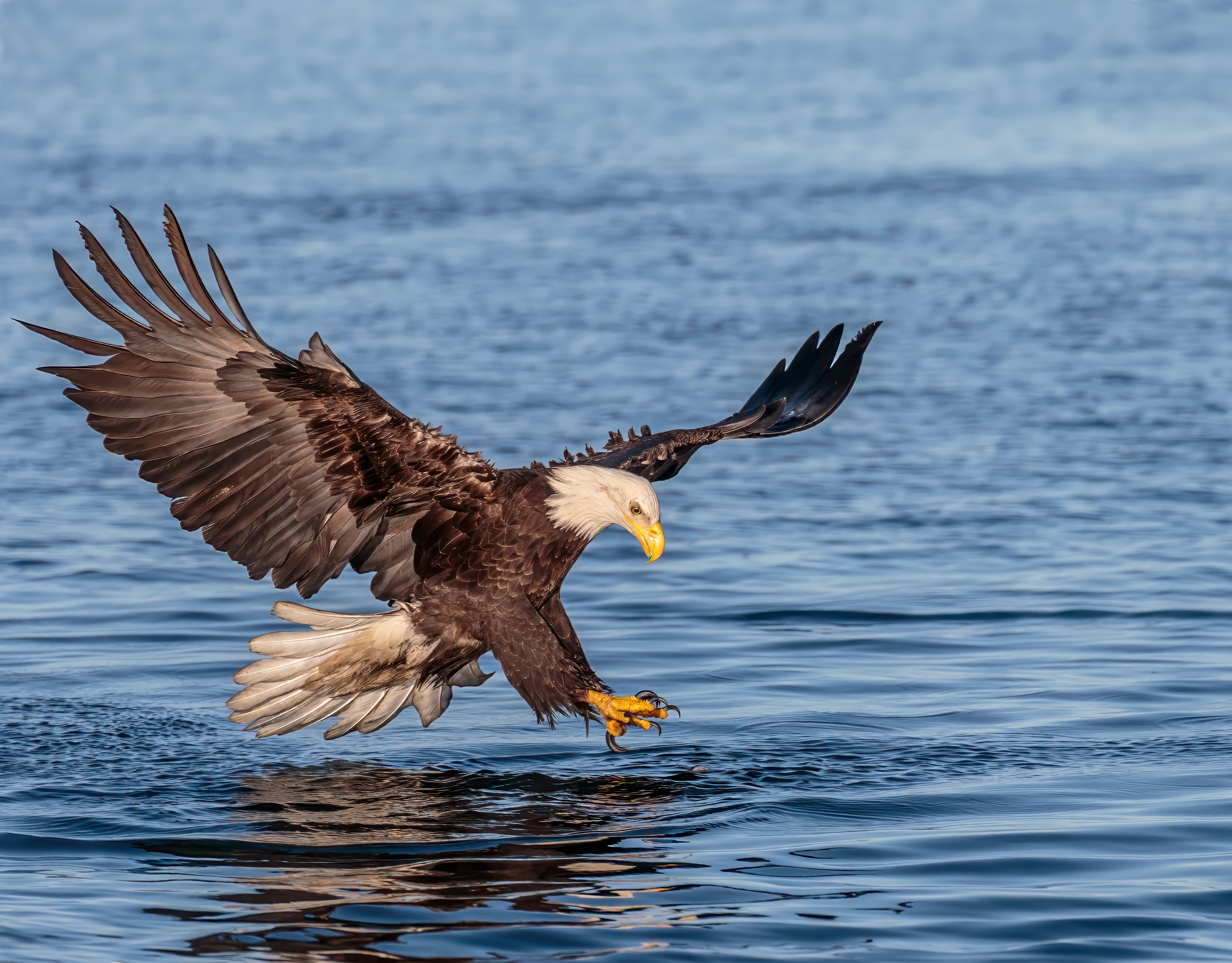
Despite their name, bald eagles are not actually bald. The word “bald” comes from an old English word meaning “white,” which describes the bright white feathers on their heads. Adult bald eagles have dark brown bodies with white heads and tails, along with bright yellow beaks and feet. They have a wingspan of about 6 to 7.5 feet, which is wider than most adults are tall. Young bald eagles are mostly brown all over and do not get their white head feathers until they are about four or five years old.
Skilled Hunters
Bald eagles are skilled predators that mainly eat fish, which they catch by swooping down and grabbing them out of the water with their sharp talons. Their eyesight is about four to eight times stronger than a human’s, allowing them to spot a fish from more than a mile away. Bald eagles can dive at speeds of up to 100 miles per hour when chasing prey. They also eat small mammals, waterfowl, and carrion, which is the remains of dead animals. Their strong, hooked beaks are perfectly designed for tearing apart their food.
Where They Live
Bald eagles are found across the United States, Canada, and northern Mexico, making them the only eagle species unique to North America. They prefer to live near large bodies of water like lakes, rivers, and coastlines where they can find plenty of fish. Bald eagles build enormous nests called eyries, usually high up in tall trees near the water’s edge. These nests can be up to 10 feet across and weigh as much as 2,000 pounds, making them the largest tree nests of any bird in the world. Eagles often return to the same nest year after year, adding new sticks and materials each season.
Family Life
Bald eagles usually mate for life, staying with the same partner for many years. The female typically lays one to three eggs each spring, and both parents take turns keeping the eggs warm for about 35 days. Eagle chicks are covered in soft gray down when they hatch and depend on their parents for food and protection. The young eagles, called eaglets, learn to fly when they are about 10 to 12 weeks old. Even after they can fly, eaglets may stay near the nest for several more weeks while their parents continue to feed them.
A Major Comeback
By the 1960s, bald eagles were in serious danger of disappearing from the United States. A chemical pesticide called DDT was poisoning the food chain and causing eagle eggshells to become so thin that they broke before the chicks could hatch. In 1963, there were only about 417 nesting pairs of bald eagles left in the lower 48 states. The government banned DDT in 1972 and passed laws like the Endangered Species Act to protect the eagles and their habitats. Thanks to these efforts, bald eagle numbers recovered dramatically, and they were removed from the endangered species list in 2007.
The Eagle in American Culture
The bald eagle has been a symbol of power and leadership since before the United States was founded. Many Native American nations have honored the eagle for centuries, using eagle feathers in important ceremonies and considering the bird sacred. Benjamin Franklin famously suggested the wild turkey as the national bird instead, but the bald eagle won out because of its majestic appearance. Today, you can find the bald eagle on the Great Seal, the one-dollar bill, military uniforms, and the logos of many government agencies. The eagle reminds Americans of the values of strength and freedom that the country was built on.
Bald Eagles Today
Today, there are more than 300,000 bald eagles in the lower 48 states, a tremendous success story for wildlife conservation. Bald eagles are still protected by federal laws, including the Bald and Golden Eagle Protection Act, which makes it illegal to harm them or disturb their nests. Many states have set up eagle watching programs where families can observe these magnificent birds in the wild. Scientists continue to monitor eagle populations to make sure they stay healthy and their habitats are protected. The recovery of the bald eagle shows what can happen when people work together to save a species.
 OtterKnow Kids Encyclopedia