How the Memorial Was Built
Congress approved the construction of a memorial to Abraham Lincoln in 1911, and the building was designed by architect Henry Bacon. Construction began in 1914 and took about eight years to complete. The memorial was dedicated on May 30, 1922, in a ceremony attended by Lincoln’s only surviving son, Robert Todd Lincoln. The entire project cost about $3 million, which would be equal to roughly $53 million today.
The Design and Architecture
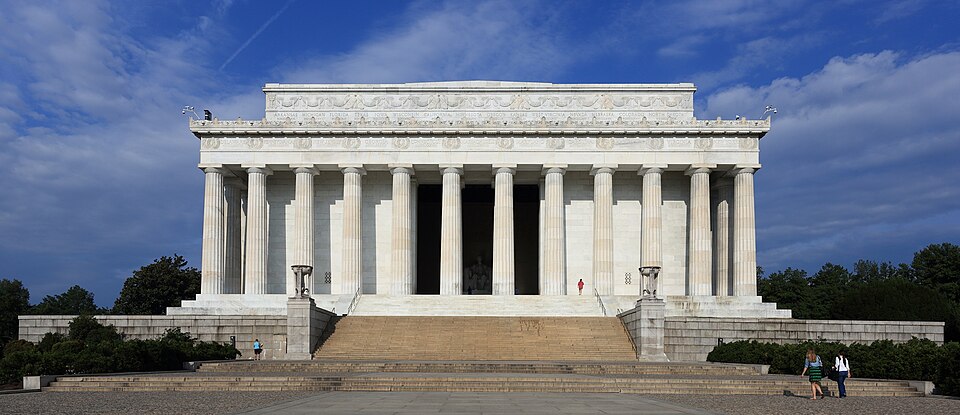
The Lincoln Memorial was designed to look like a Greek temple, inspired by the ancient Parthenon in Athens, Greece. It has 36 tall columns on the outside, one for each of the 36 states that were part of the Union when Lincoln died in 1865. The names of those 36 states are carved along the top of the building. Above the colonnade, the names of the 48 states that existed when the memorial was completed in 1922 are also inscribed. The building is made from white Colorado marble on the outside and Indiana limestone and marble on the inside.
The Statue of Lincoln
Inside the memorial sits a massive statue of Abraham Lincoln in a large chair. The statue was carved by sculptor Daniel Chester French and is 19 feet tall and 19 feet wide. It is made of 28 blocks of white Georgia marble that were carefully assembled inside the memorial. Lincoln’s face shows a serious but thoughtful expression, and his hands rest on the arms of the chair. One hand is clenched in a fist, representing his strength, while the other hand is open, representing his compassion.
The Inscriptions Inside
The Lincoln Memorial contains two of Abraham Lincoln’s most famous speeches carved into the interior walls. On the south wall is the full text of the Gettysburg Address, which Lincoln gave in 1863 during the Civil War. On the north wall is Lincoln’s Second Inaugural Address from 1865, in which he called for peace and healing after the war. Above each speech is a large mural painted by Jules Guerin that represents important ideas like freedom, unity, and justice.
A Place for Civil Rights History
The Lincoln Memorial has been the site of many important moments in the civil rights movement. On August 28, 1963, Dr. Martin Luther King Jr. stood on the memorial’s steps and delivered his famous “I Have a Dream” speech to more than 250,000 people. In 1939, singer Marian Anderson performed a concert at the memorial after she was denied the right to sing at Constitution Hall because she was Black. These events made the memorial not just a tribute to Lincoln, but a symbol of the ongoing struggle for equality in America.
The Reflecting Pool
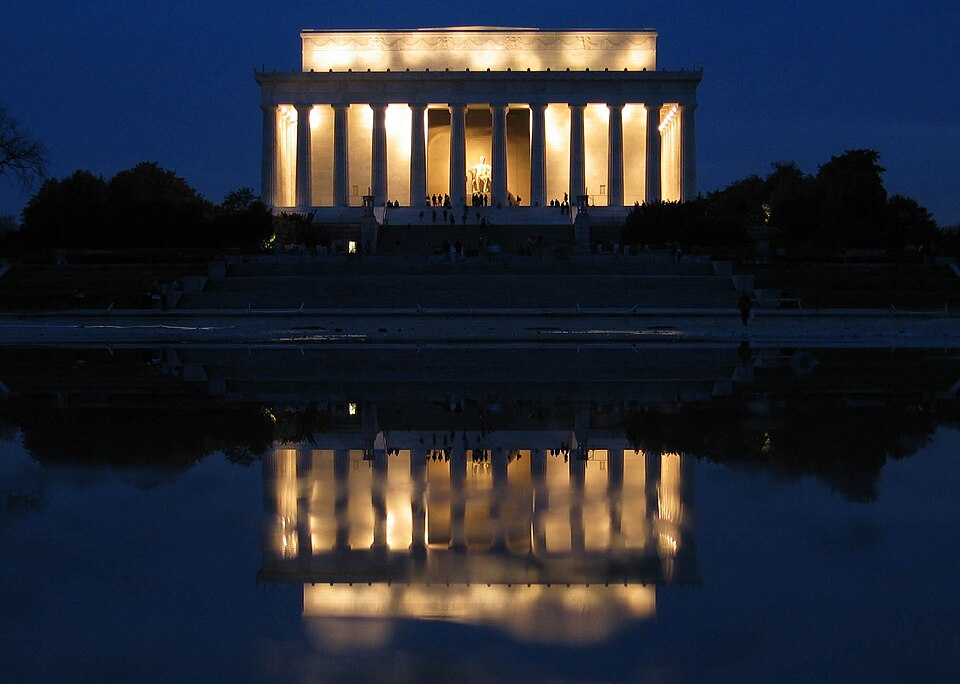
In front of the Lincoln Memorial stretches the Lincoln Memorial Reflecting Pool, one of the largest reflecting pools in the country. The pool is about 2,029 feet long and 167 feet wide, and it holds approximately 6.75 million gallons of water. It was designed to mirror the image of the memorial and the Washington Monument in its still water. The pool was rebuilt and updated in 2012 with a new circulation system to keep the water clean. It is a popular spot for visitors to walk along and take photographs.
Why the Lincoln Memorial Matters
The Lincoln Memorial is much more than a beautiful building — it is a symbol of unity, freedom, and equal rights. It reminds Americans of Lincoln’s belief that all people are created equal and deserve to be free. The memorial has served as a gathering place for people seeking justice and change throughout American history. It appears on the back of the U.S. penny and the five-dollar bill, making it one of the most recognized landmarks in the country. Visiting the memorial helps people connect with the ideals that Lincoln fought to protect.
 OtterKnow Kids Encyclopedia