Who Wrote the Pledge?
The Pledge of Allegiance was written in 1892 by Francis Bellamy, a Baptist minister and magazine writer. He created it for a national celebration of the 400th anniversary of Christopher Columbus arriving in the Americas. Bellamy wanted a simple pledge that any citizen could say to express love for their country. His original version was shorter than the one Americans recite today. The pledge was first published in a magazine called The Youth’s Companion on September 8, 1892.
How the Words Have Changed
The original Pledge written by Bellamy said, “I pledge allegiance to my Flag and the Republic for which it stands, one Nation, indivisible, with liberty and justice for all.” In 1923, the words “my Flag” were changed to “the Flag of the United States of America” so that immigrants would know which flag was meant. The most recent change came in 1954, when Congress added the words “under God” to the Pledge. President Dwight D. Eisenhower supported this change during the Cold War era. These changes show how the Pledge has evolved over more than a century.
The Pledge and the Flag
The Pledge of Allegiance is closely connected to the American flag, which is a symbol of the entire nation. When people recite the Pledge, they are not just honoring a piece of cloth but the country and the values it represents. The flag’s stars stand for the 50 states, and the stripes represent the original 13 colonies. By pledging allegiance to the flag, Americans are promising to support the unity and principles of the United States. Flag etiquette, or proper behavior around the flag, is an important part of saying the Pledge respectfully.
How It Became Official
For many years, the Pledge of Allegiance was used informally in schools and at public events without any official government backing. In 1942, Congress formally recognized the Pledge as part of the United States Flag Code. This meant it had an official place in American customs and ceremonies. In 1945, the Pledge received its official title, “The Pledge of Allegiance,” by an act of Congress. Over time, many states also passed laws encouraging or requiring schools to offer students the chance to recite the Pledge each day.
The Pledge in Schools
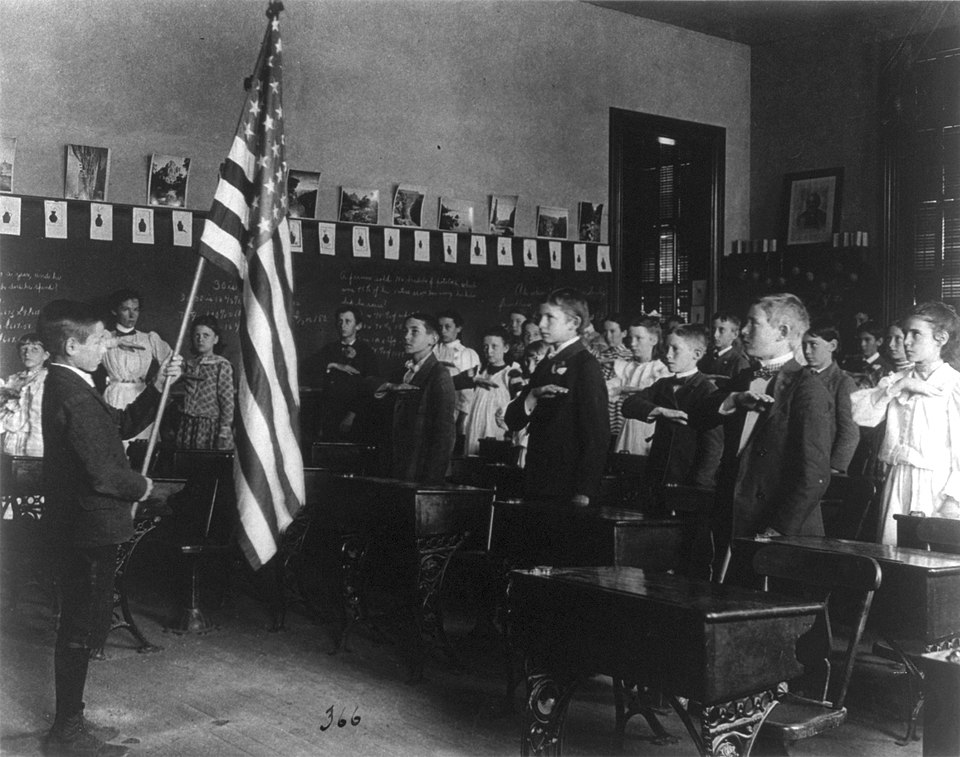
Many American schools begin the day by reciting the Pledge of Allegiance together over the morning announcements or in individual classrooms. Students typically stand, face the flag, and say the words in unison. However, no student can be forced to say the Pledge against their will. In 1943, the Supreme Court ruled in West Virginia State Board of Education v. Barnette that students have the right to remain silent during the Pledge. This decision is based on the First Amendment, which protects freedom of speech, including the right not to speak.
Rights and Responsibilities
The Pledge of Allegiance brings up important ideas about rights and responsibilities in a democracy. While the Pledge asks citizens to be loyal to their country, the Constitution also protects the freedom of individuals to choose whether or not to participate. Some people choose not to say the Pledge for personal, religious, or political reasons, and that choice is legally protected. This balance between patriotism and individual freedom is a key part of what makes American democracy work. Understanding both sides helps students think critically about citizenship.
Why the Pledge Matters Today
The Pledge of Allegiance remains an important tradition that connects Americans to their shared values of unity, liberty, and justice. It gives people a moment to reflect on what it means to be part of a democratic nation. Whether said at school, at government meetings, or at special events, the Pledge reminds citizens of the ideals the country strives to uphold. It also sparks important conversations about patriotism, freedom, and what it means to belong to a community. Learning about the Pledge helps students understand both American history and the rights they hold as citizens.
 OtterKnow Kids Encyclopedia