History of the Capitol
The idea for a grand building to house Congress began in 1793, when President George Washington laid the cornerstone. The original architect was William Thornton, whose design was chosen through a national competition. Construction took many years, and Congress first met in the building in November 1800, even though it was not yet finished. During the War of 1812, British troops set fire to the Capitol in August 1814, causing major damage. The building was rebuilt and expanded over the following decades, with the large dome we see today completed during the Civil War in 1863.
The Famous Dome
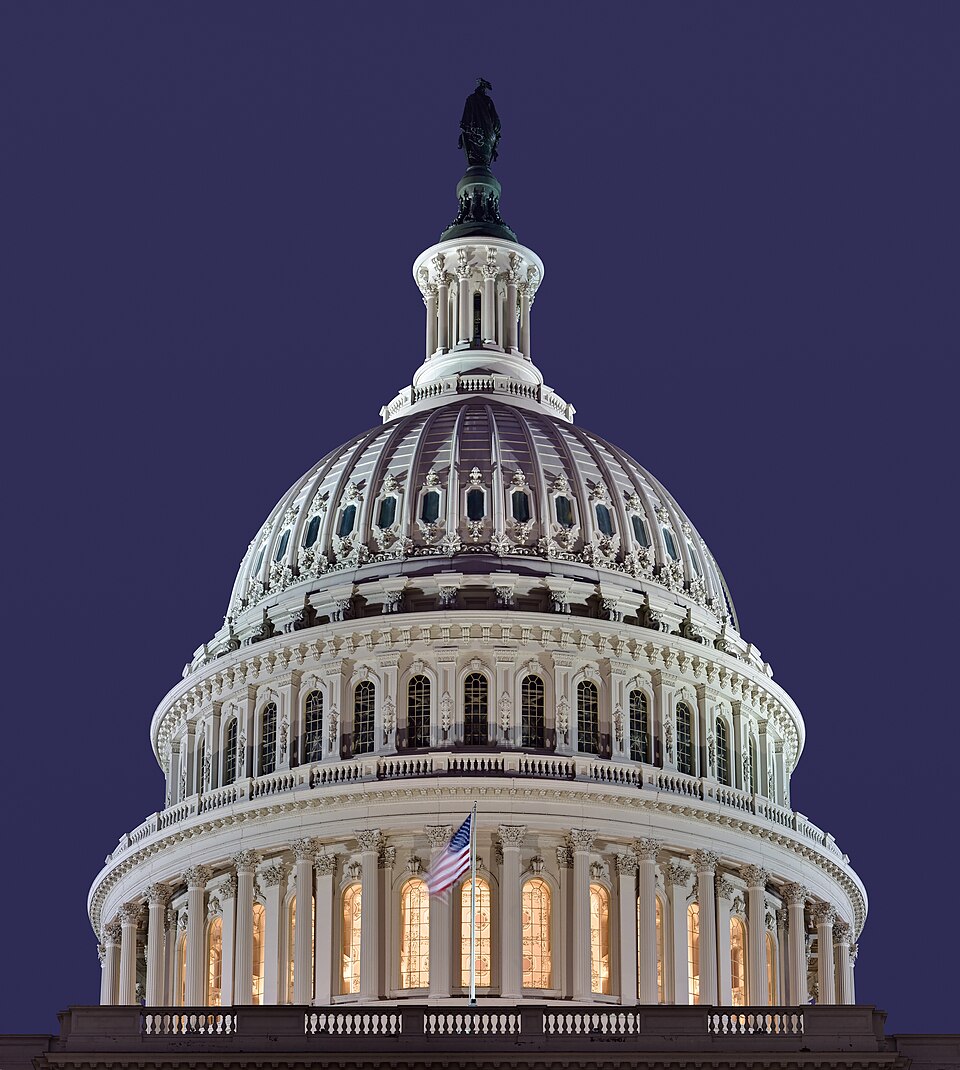
The Capitol’s dome is one of its most striking features and can be seen from miles away across Washington, D.C. The current dome was designed by architect Thomas U. Walter and is made of cast iron, weighing about 4,000 tons. At the very top of the dome stands the Statue of Freedom, a bronze figure that is 19 feet and 6 inches tall. Inside the dome is a large painting called The Apotheosis of Washington, created by artist Constantino Brumidi in 1865. The dome was built during the Civil War, and President Abraham Lincoln insisted that construction continue as a sign that the Union would endure.
Inside the Capitol
The Capitol has more than 600 rooms spread across five levels, including the House and Senate chambers where lawmakers meet. The National Statuary Hall is a large, circular room where states have placed statues of important people from their history. The Capitol Rotunda, located beneath the dome, is a grand circular room used for ceremonies and where important Americans have lain in state. The building also contains beautiful artwork, including paintings and frescoes that tell the story of American history. Underground tunnels connect the Capitol to nearby congressional office buildings so lawmakers can travel quickly between them.
The Two Chambers of Congress
The Capitol is divided into two wings, one for each chamber of Congress. The north wing is home to the Senate, which has 100 members, two from each state. The south wing houses the House of Representatives, which has 435 members based on each state’s population. Each chamber has its own meeting room where members debate and vote on proposed laws. The two chambers must work together to pass legislation, which is then sent to the President to be signed into law. This system of two chambers is called a bicameral legislature.
The Capitol Grounds
The Capitol sits on a large campus of about 274 acres that includes gardens, walkways, and other important buildings. The landscape was designed by Frederick Law Olmsted, who is also famous for designing Central Park in New York City. The grounds include the Capitol Reflecting Pool, tree-lined pathways, and seasonal flower plantings that attract visitors year-round. Several other important buildings are nearby, including the Library of Congress and the Supreme Court. The Capitol grounds serve as a gathering place for inaugurations, concerts, and public celebrations.
Visiting the Capitol
The U.S. Capitol is open to visitors, who can take free guided tours through the Capitol Visitor Center. The Visitor Center, which opened in 2008, is one of the largest underground buildings in the world and includes exhibits about the history of Congress. During tours, visitors can see the Rotunda, National Statuary Hall, and the Crypt on the ground floor. To watch Congress in action, visitors can request passes from their senators or representatives to sit in the gallery and observe debates. Visiting the Capitol is a great way to see democracy at work and learn about the people who shaped the nation.
The Capitol as a Symbol
The U.S. Capitol represents the idea that in a democracy, the people govern themselves through elected representatives. Its grand architecture was inspired by ancient Roman and Greek buildings, connecting American democracy to the democratic traditions of the ancient world. The building has witnessed some of the most important moments in American history, from presidential inaugurations to landmark legislation. It appears on the back of the U.S. fifty-dollar bill, showing its importance as a national symbol. The Capitol stands as a reminder that the power of government comes from the people and their right to choose their leaders.
 OtterKnow Kids Encyclopedia