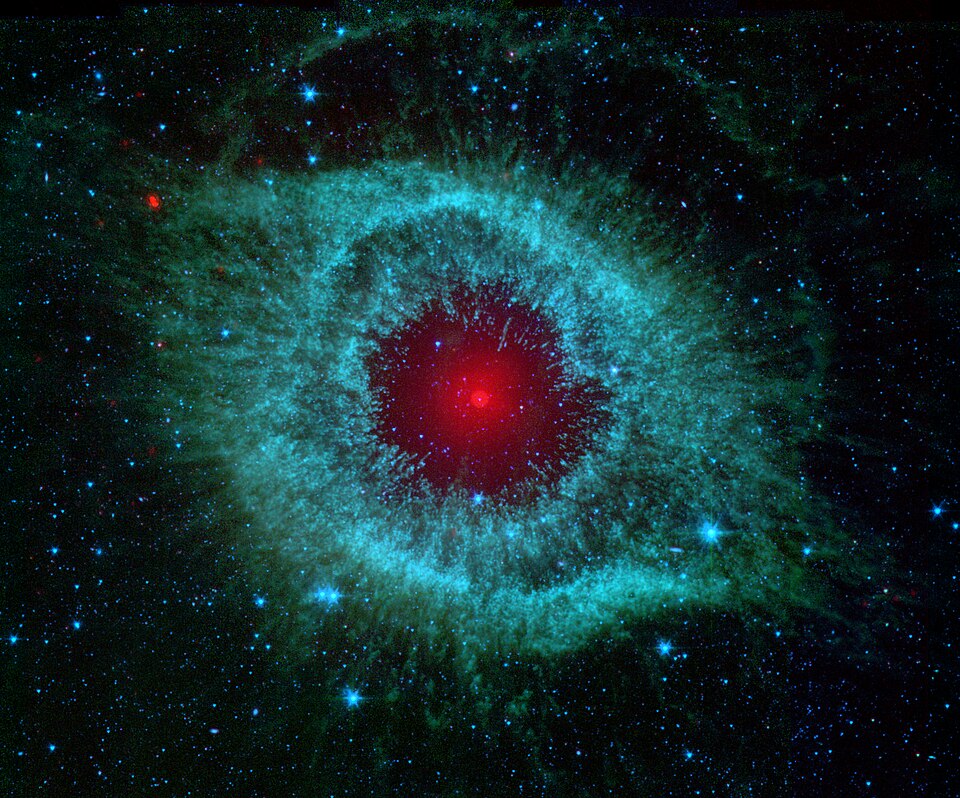
How Stars Are Born in Nebulae
Nebulae are often called “stellar nurseries” because new stars are born inside them. Over millions of years, gravity slowly pulls gas and dust particles together into dense clumps. As a clump gets bigger and heavier, it squeezes tighter and grows hotter in its center. When the core reaches about 18 million degrees Fahrenheit, hydrogen atoms begin to fuse together, and a new star ignites. A single nebula can give birth to hundreds or even thousands of stars at the same time.
Types of Nebulae
There are several different types of nebulae, each formed in a different way. Emission nebulae glow brightly because nearby hot stars heat up the gas and make it shine in vivid colors. Reflection nebulae do not produce their own light but instead reflect the light of nearby stars, often appearing blue. Dark nebulae are so thick with dust that they block the light from stars and other objects behind them, appearing as dark patches against the sky. Planetary nebulae form when a dying star gently puffs off its outer layers in glowing rings of gas.
Famous Nebulae
The Orion Nebula is one of the most well-known nebulae and can even be seen with the naked eye as a fuzzy patch in the constellation Orion. It is about 1,344 light-years from Earth and is one of the closest star-forming regions to our planet. The Eagle Nebula is famous for its “Pillars of Creation,” towering columns of gas and dust where new stars are being born. The Crab Nebula is the remains of a star that exploded as a supernova in the year 1054, and it was recorded by Chinese astronomers at the time. The Horsehead Nebula in Orion is shaped like a horse’s head and is one of the most photographed objects in space.
What Nebulae Are Made Of
Nebulae are made mostly of hydrogen and helium, the two lightest and most common elements in the universe. They also contain small amounts of heavier elements like carbon, nitrogen, oxygen, and iron. Tiny grains of dust, sometimes smaller than grains of sand, are mixed throughout the gas. These dust grains are made of minerals like silicates and carbon compounds. Even though nebulae are enormous, the gas and dust are spread so thin that a cubic inch of nebula contains far fewer particles than the air you breathe.
How We Study Nebulae
Astronomers use powerful telescopes to study nebulae in different kinds of light. Optical telescopes show us the visible light that nebulae emit or reflect, revealing their colors. Infrared telescopes can peer through the dust to see baby stars hidden deep inside nebulae. The Hubble Space Telescope has taken some of the most detailed and famous images of nebulae ever captured. NASA’s James Webb Space Telescope, launched in 2021, uses infrared vision to reveal parts of nebulae that have never been seen before.
Nebulae and the Life Cycle of Stars
Nebulae play a role in both the birth and death of stars. Stars are born when parts of a nebula collapse under gravity, and they die by creating new nebulae. When a massive star runs out of fuel, it explodes as a supernova, blasting its outer layers into space and forming a supernova remnant nebula. Smaller stars like our Sun will one day shed their outer layers gently, creating a planetary nebula. The material from these dying stars mixes back into space, eventually becoming part of new nebulae where future stars and planets will form.
Our Connection to Nebulae
The atoms in your body were once part of a nebula billions of years ago. About 4.6 billion years ago, a nebula collapsed to form our Sun and the planets of our solar system, including Earth. The iron in your blood, the calcium in your bones, and the oxygen you breathe were all forged inside ancient stars and scattered into nebulae when those stars died. Scientists sometimes say we are made of “star stuff” because every element heavier than hydrogen was created inside a star. When you look at a nebula, you are seeing the same process that created everything around you.
 OtterKnow Kids Encyclopedia