Measuring with Light
One of the most important units in astronomy is the light-year, which is the distance that light travels in one year. Light is the fastest thing in the universe, moving at about 186,000 miles per second. In just one second, a beam of light could travel around Earth more than seven times. In a full year, light covers about 5.88 trillion miles, and that distance is one light-year. Even at this incredible speed, light from the nearest star beyond our Sun, Proxima Centauri, takes more than four years to reach us.
Our Solar System
Our solar system stretches much farther than most people realize. The distance from the Sun to Earth is about 93 million miles, which scientists call one astronomical unit (AU). Neptune, the farthest planet from the Sun, orbits at about 30 AU, or roughly 2.8 billion miles away. The Voyager 1 spacecraft, launched in 1977, is the farthest human-made object from Earth and has traveled more than 15 billion miles. Even at that incredible distance, Voyager 1 has barely left our solar system compared to the distances between stars.
The Vastness Between Stars
The spaces between stars are almost unimaginably empty. If our Sun were the size of a basketball, the nearest star would be another basketball about 4,300 miles away. Most of the space between stars is nearly a perfect vacuum, with only a few atoms scattered here and there. It would take our fastest spacecraft tens of thousands of years to reach even the closest star. This enormous emptiness is one of the biggest challenges for scientists who dream about traveling to other star systems someday.
Galaxies and Galaxy Clusters
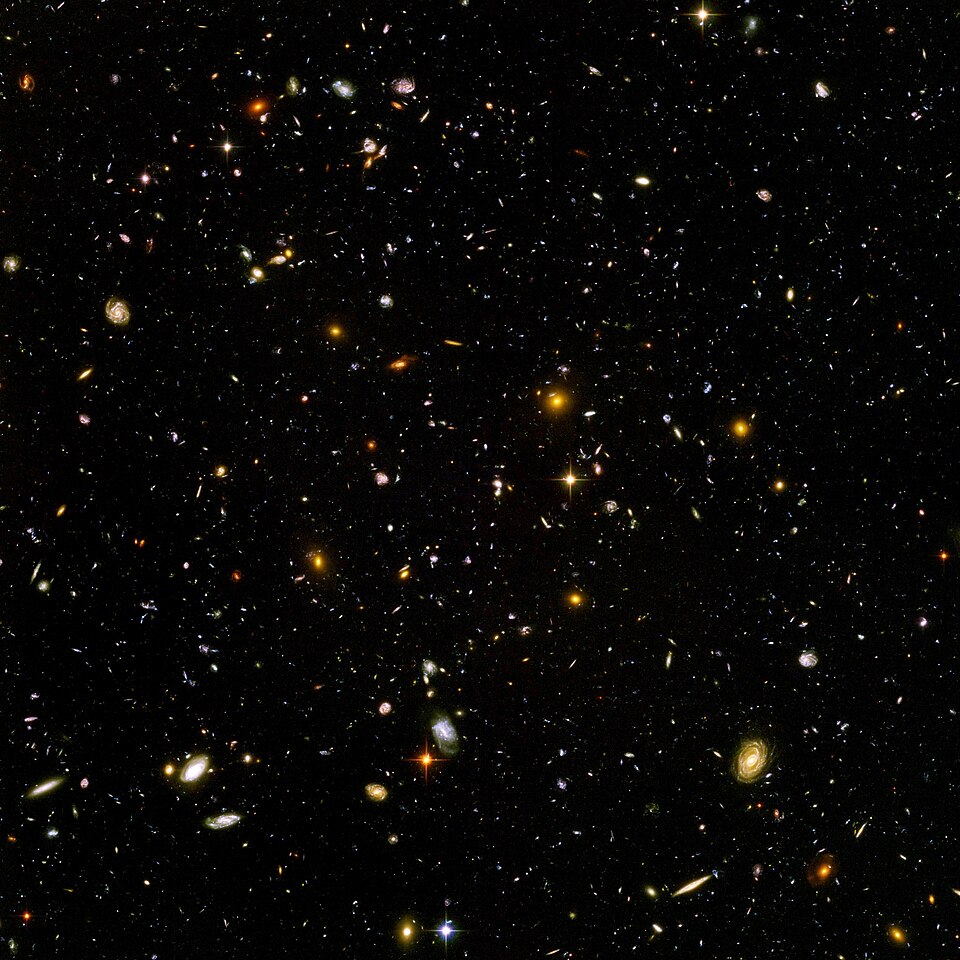
Stars group together into galaxies, and galaxies themselves gather into even larger structures called galaxy clusters. Our Milky Way galaxy is about 100,000 light-years across and contains hundreds of billions of stars. The nearest large galaxy, Andromeda, is about 2.5 million light-years away. Galaxy clusters can contain hundreds or even thousands of galaxies stretching across millions of light-years. These clusters are connected by enormous threads of gas and dark matter, forming a cosmic web that stretches across the entire universe.
The Observable Universe
The observable universe is the part of the universe that we can see from Earth. It stretches about 93 billion light-years across in every direction. The universe has been expanding ever since the Big Bang, which happened about 13.8 billion years ago. Light from the most distant objects we can detect has been traveling toward us for almost the entire age of the universe. There may be even more universe beyond what we can observe, but that light has not had enough time to reach us yet.
Putting It All Together
One fun way to understand the scale of the universe is to think about zooming out step by step. Start with yourself, then zoom out to your city, your country, Earth, the solar system, nearby stars, the Milky Way, the Local Group of galaxies, and finally the entire observable universe. At each step, the previous level becomes a tiny dot that almost disappears. If the entire observable universe were shrunk to the size of Earth, our Milky Way galaxy would be smaller than a single grain of sand. These comparisons help show just how much space there is between the objects in the universe.
Why Scale Matters
Understanding the scale of the universe helps scientists answer some of the biggest questions about our existence. By measuring distances to faraway galaxies, astronomers discovered that the universe is expanding and getting bigger every day. Knowing how far apart objects are helps scientists figure out how old the universe is and how it has changed over time. The study of cosmic scale also helps us appreciate how special and rare our little planet Earth truly is. Every time we look up at the stars, we are seeing light from objects so far away that it left them years, centuries, or even billions of years ago.
 OtterKnow Kids Encyclopedia