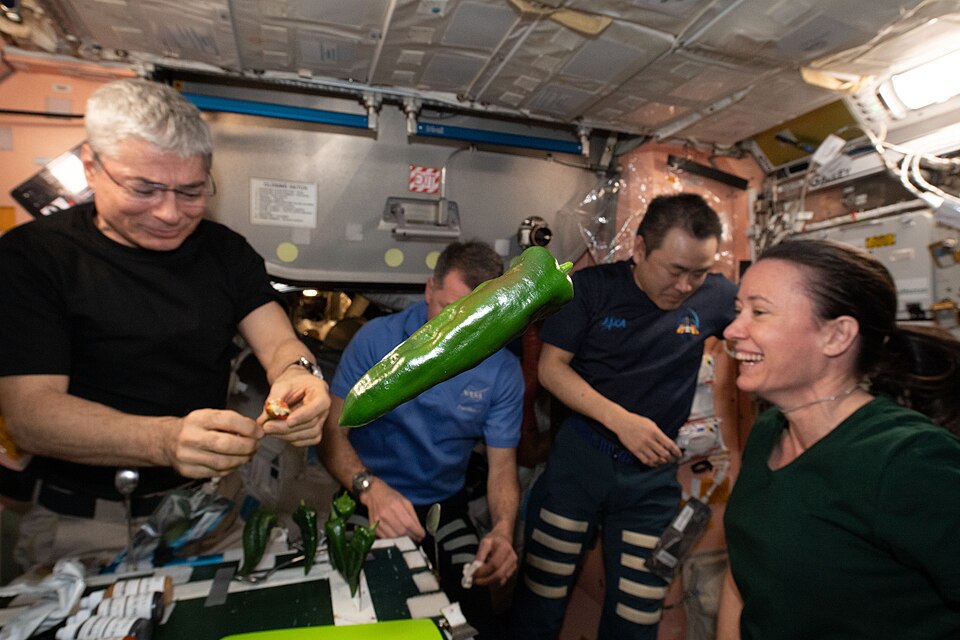
Eating in Space
Space food has come a long way since the early days of squeezable tubes and freeze-dried cubes. Today astronauts eat tortillas instead of bread because bread creates floating crumbs that can clog air vents or get into equipment. Many meals come in sealed pouches that astronauts add hot water to before eating, and the ISS has a small oven for heating food. Crews from different countries bring their own favorite dishes, so the space station menu includes foods from American, Russian, Japanese, and other cuisines. Astronauts use magnets, Velcro, and clips to keep their food containers from floating away during meals.
Sleeping in Space
Getting a good night’s sleep in space is quite different from sleeping on Earth. Astronauts sleep inside small phone-booth-sized crew quarters, where they zip themselves into sleeping bags attached to the wall. Without gravity, there is no “up” or “down,” so astronauts can sleep in any direction — some even sleep upside down compared to their crewmates. The ISS orbits Earth every 90 minutes, which means the crew sees a sunrise or sunset about every 45 minutes, so they cover their windows to block the light. Most astronauts are scheduled to sleep for about eight hours each night, though many report that floating while sleeping feels surprisingly comfortable.
Staying Clean
Keeping clean in space requires some creative solutions since showers and sinks do not work without gravity. Astronauts wash their hair using a special no-rinse shampoo — they squeeze water from a pouch onto their scalp, work in the shampoo, and then towel it dry. For bathing, crew members use damp washcloths and body wipes to clean their skin. Brushing teeth works almost normally, except astronauts either swallow the toothpaste or spit it into a tissue since water cannot flow down a drain. Dirty clothes cannot be washed on the station, so astronauts wear their clothes for several days before packing them into cargo ships that burn up in Earth’s atmosphere.
Exercise and Health
Astronauts must exercise about two hours every day to keep their muscles and bones strong. In microgravity, the body does not have to work against gravity, so muscles can weaken and bones can lose density at a rate of about one to two percent per month. The ISS has special exercise equipment including a treadmill with bungee cords to hold runners down, a stationary bicycle, and a weightlifting machine that uses vacuum cylinders instead of actual weights. Regular exercise helps astronauts stay healthy enough to perform their missions and makes it easier for their bodies to readjust when they return to Earth. Doctors on the ground monitor each astronaut’s health and fitness throughout the mission.
Working on the Station
A typical workday on the ISS starts around 6:00 a.m. Greenwich Mean Time and lasts until about 7:30 p.m. Astronauts spend their days conducting science experiments, maintaining the station’s equipment, and sometimes performing spacewalks to make repairs on the outside of the ISS. They communicate with mission control centers around the world through radio and video links throughout the day. Science experiments on the station cover topics from growing plants in space to studying how the human body changes in microgravity. Crew members also take amazing photographs of Earth, which help scientists study weather patterns, city lights, and natural disasters from above.
Free Time and Fun
Even in space, astronauts get some time to relax and enjoy themselves. After their work shifts and on weekends, crew members can watch movies, read books on tablets, listen to music, or play musical instruments. One of the favorite activities is looking out the cupola, a large window module on the ISS that gives a full 360-degree view of Earth below. Astronauts also stay in touch with their families through video calls and email, which helps with the loneliness of being so far from home. Some crew members have even posted videos on social media showing off fun tricks with floating water droplets and spinning objects in microgravity.
Coming Home
Returning to Earth after months in space is a big adjustment for astronauts’ bodies. When a crew’s mission ends, they climb into a capsule that separates from the station and reenters Earth’s atmosphere, experiencing intense heat and strong forces of gravity during the descent. After landing, many astronauts feel dizzy and heavy because their bodies have gotten used to floating in microgravity for months. It can take several weeks or even months for their muscles, bones, and sense of balance to fully recover. Despite the challenges, most astronauts say that the experience of living in space is absolutely worth it and many dream of going back.
 OtterKnow Kids Encyclopedia