How Earth Rotates
Earth rotates on an imaginary line called its axis, which runs from the North Pole to the South Pole. It takes about 24 hours, or one full day, for Earth to complete one rotation. The side of Earth facing the Sun experiences daytime, while the side facing away is in darkness and has nighttime. Earth spins from west to east, which is why the Sun appears to rise in the east and set in the west.
Earth’s Tilt
Earth’s axis is not straight up and down. Instead, it is tilted at an angle of about 23.5 degrees. This tilt is one of the most important features of our planet because it is the reason we have seasons. As Earth orbits the Sun, different parts of the planet lean toward or away from the Sun at different times of the year. The tilt stays pointed in the same direction throughout the entire orbit.
Earth’s Orbit Around the Sun
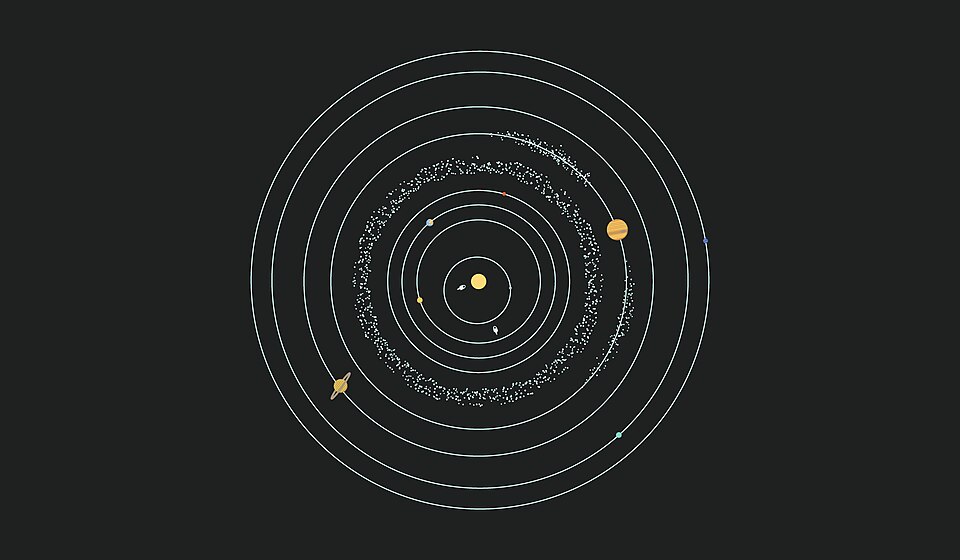
Earth travels around the Sun in an elliptical, or slightly oval-shaped, orbit. It takes about 365.25 days, or one year, to complete one full trip around the Sun. Earth moves through space at about 67,000 miles per hour during this journey. The extra quarter day each year is why we add a leap day to February every four years, giving us a 366-day year.
What Causes the Seasons
The seasons change because of Earth’s tilted axis, not because of how close or far Earth is from the Sun. When the Northern Hemisphere tilts toward the Sun, it receives more direct sunlight and experiences summer, while the Southern Hemisphere has winter. Six months later, the situation reverses, and the Southern Hemisphere tilts toward the Sun for its summer. Near the equator, the seasons do not change much because that part of Earth gets fairly direct sunlight all year long.
Solstices and Equinoxes
Four special days mark the changing of the seasons each year. The summer solstice, around June 21, is the longest day of the year in the Northern Hemisphere. The winter solstice, around December 21, is the shortest day. The two equinoxes happen around March 20 and September 22, when day and night are nearly equal in length everywhere on Earth. These events have been celebrated by cultures around the world for thousands of years.
Time Zones
Because Earth rotates and different places face the Sun at different times, the world is divided into 24 time zones. Each time zone is roughly 15 degrees of longitude wide, matching the 360 degrees Earth rotates in 24 hours. When it is noon in New York, it is already evening in London and the middle of the night in Tokyo. Time zones help people around the world coordinate their clocks so that noon is always close to when the Sun is highest in the sky.
How Scientists Learned About Earth’s Motion
For thousands of years, people believed that Earth stood still and the Sun moved around it. In the 1500s, a Polish astronomer named Nicolaus Copernicus proposed that Earth and the other planets actually orbit the Sun. Later, Galileo Galilei used a telescope to find evidence supporting this idea, and Johannes Kepler discovered that orbits are elliptical rather than perfectly circular. Today, scientists can measure Earth’s rotation and orbit with extreme precision using satellites and atomic clocks.
 OtterKnow Kids Encyclopedia