The Sun: Our Star
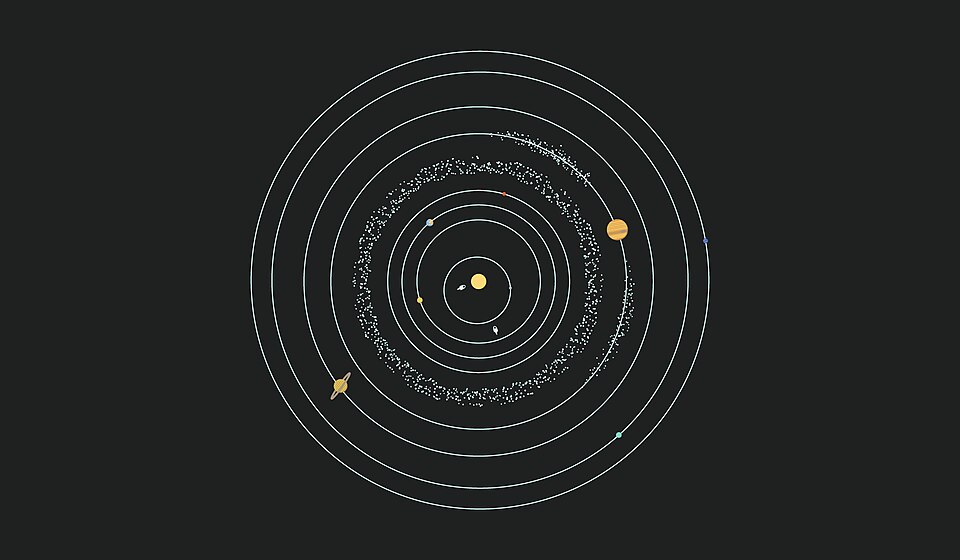
The Sun is a medium-sized star that provides the light and heat that make life possible on Earth. It is by far the largest object in the solar system, containing more than 99% of the solar system’s total mass. The Sun is made mostly of hydrogen and helium, and it produces energy through a process called nuclear fusion. Even though the Sun is about 93 million miles from Earth, its light reaches us in just over eight minutes.
The Inner Planets
The four planets closest to the Sun are called the inner planets, and they are all made of rock and metal. Mercury is the smallest planet and the closest to the Sun, with temperatures that swing wildly between scorching hot and freezing cold. Venus is the hottest planet because its thick atmosphere traps heat like a blanket. Earth is the only planet known to have liquid water on its surface and support life, while Mars is known as the Red Planet because of its rusty, iron-rich soil.
The Outer Planets
Beyond Mars lie the four outer planets, which are much larger than the inner planets and made mostly of gas and ice. Jupiter is the biggest planet in the solar system and has a famous storm called the Great Red Spot that has been raging for hundreds of years. Saturn is known for its beautiful rings, which are made of billions of pieces of ice and rock. Uranus and Neptune are called ice giants because they contain large amounts of water, ammonia, and methane ice beneath their thick atmospheres.
Moons, Asteroids, and Comets
Moons are natural objects that orbit planets, and our solar system has more than 200 known moons. Earth has one moon, but Jupiter has at least 95 moons, more than any other planet. The asteroid belt between Mars and Jupiter contains millions of rocky objects left over from the solar system’s formation. Comets are icy objects that develop glowing tails when they travel close to the Sun and its heat causes their ice to turn into gas.
Dwarf Planets
Dwarf planets are round objects that orbit the Sun but have not cleared the area around their orbit of other debris. Pluto was once considered the ninth planet but was reclassified as a dwarf planet in 2006 by the International Astronomical Union. Other dwarf planets include Eris, which is slightly smaller than Pluto but more massive, and Ceres, which sits in the asteroid belt. Scientists believe there may be many more dwarf planets waiting to be discovered in the outer reaches of the solar system.
Exploring the Solar System
Humans have been exploring the solar system with spacecraft for more than 60 years. NASA’s Voyager 1 and Voyager 2 probes, launched in 1977, have traveled farther from Earth than any other human-made objects. Robotic rovers like Curiosity and Perseverance have driven across the surface of Mars, studying its rocks and searching for signs of ancient life. The James Webb Space Telescope, launched in 2021, helps scientists study planets, moons, and other objects in sharp detail.
Why the Solar System Matters
Studying the solar system helps scientists understand how planets form and what conditions are needed for life. By comparing Earth to other planets, researchers learn more about our own planet’s climate, weather, and geology. Space exploration has also led to inventions that we use every day, from water filters to scratch-resistant lenses. As technology improves, future missions may one day send astronauts to Mars and beyond, opening up new chapters in human exploration.
 OtterKnow Kids Encyclopedia